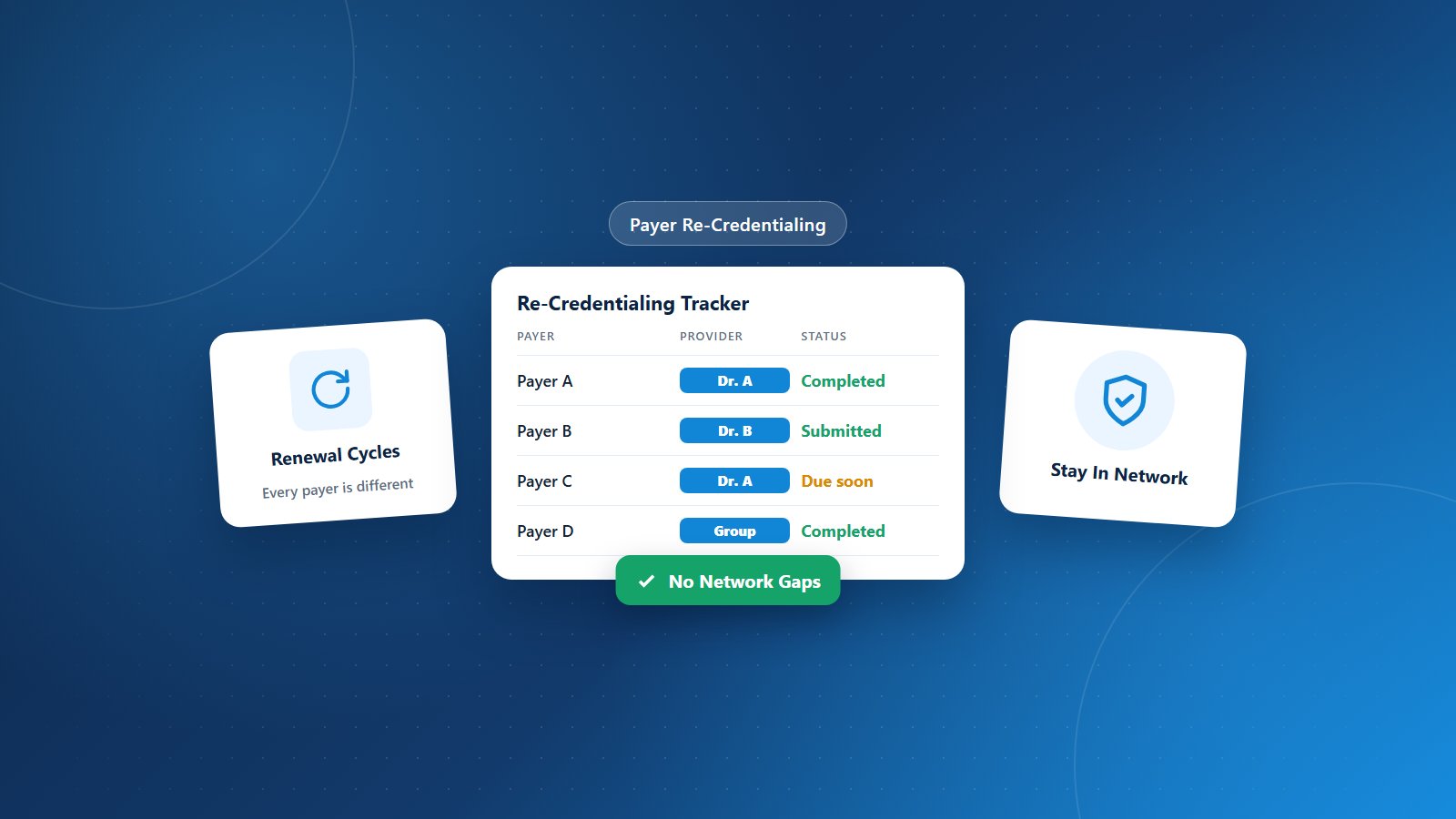
Getting credentialed with a payer is a major milestone, but it isn’t permanent. Health plans periodically re-credential network providers to confirm their qualifications remain current. If a re-credentialing request is missed or incomplete, a provider can be terminated from the network, and claims may be denied until participation is restored. Restoring participation can take months.
Here’s how to track payer re-credentialing cycles and stay in network.
What Is Re-Credentialing?
Re-credentialing is the periodic review payers conduct to verify that providers continue to meet network standards. Payers typically re-verify licenses, board certification, malpractice coverage and history, sanctions and other qualifications. Re-credentialing cycles commonly occur every few years, but timing varies by payer.
Why Providers Miss Re-Credentialing
- Requests sent to an old address or a former employee’s email.
- CAQH profiles not attested or missing current documents.
- Different cycles for every payer, making deadlines hard to track.
- Staff turnover in credentialing roles.
- Assuming the payer will automatically renew participation.
Step 1: Build a Payer Participation Inventory
List every payer each provider participates with, including effective dates, provider identifiers and last credentialing or re-credentialing dates.
Step 2: Determine Each Payer’s Cycle
Find out when each payer re-credentials and how they notify providers. Some rely on CAQH data, while others send applications directly.
Step 3: Keep CAQH Current
Many payers pull re-credentialing information from CAQH. Keep profiles complete, documents current and attestations up to date. See our CAQH maintenance guide.
Step 4: Keep Contact Information Current
Make sure payers and CAQH have current correspondence addresses and emails that are actively monitored.
Step 5: Add Deadlines to Your Credentialing Calendar
Track re-credentialing alongside license renewals, DEA, malpractice and Medicare revalidation. Read about building an annual credentialing calendar.
Step 6: Respond Promptly
When a re-credentialing request arrives, complete it quickly and confirm receipt. Follow up until the payer confirms completion.
Step 7: Watch for Warning Signs
- Claims denied for provider not in network.
- Providers missing from payer directories.
- Payer letters requesting updated documents.
Step 8: Know What to Do If Terminated
If a provider is terminated for a missed re-credentialing, contact the payer immediately, submit required information and ask about reinstatement and retroactive effective dates.
Credentialing Maintenance With PRCM
Physicians Revenue Cycle Management’s provider credentialing services track re-credentialing cycles for every provider and payer, maintain CAQH profiles and respond to payer requests so your providers stay in network and claims keep getting paid.
Want the complete picture? Read our guide: Credentialing a New Physician: A Step-by-Step Timeline.
Do you know when each payer re-credentials your providers? Let’s connect.