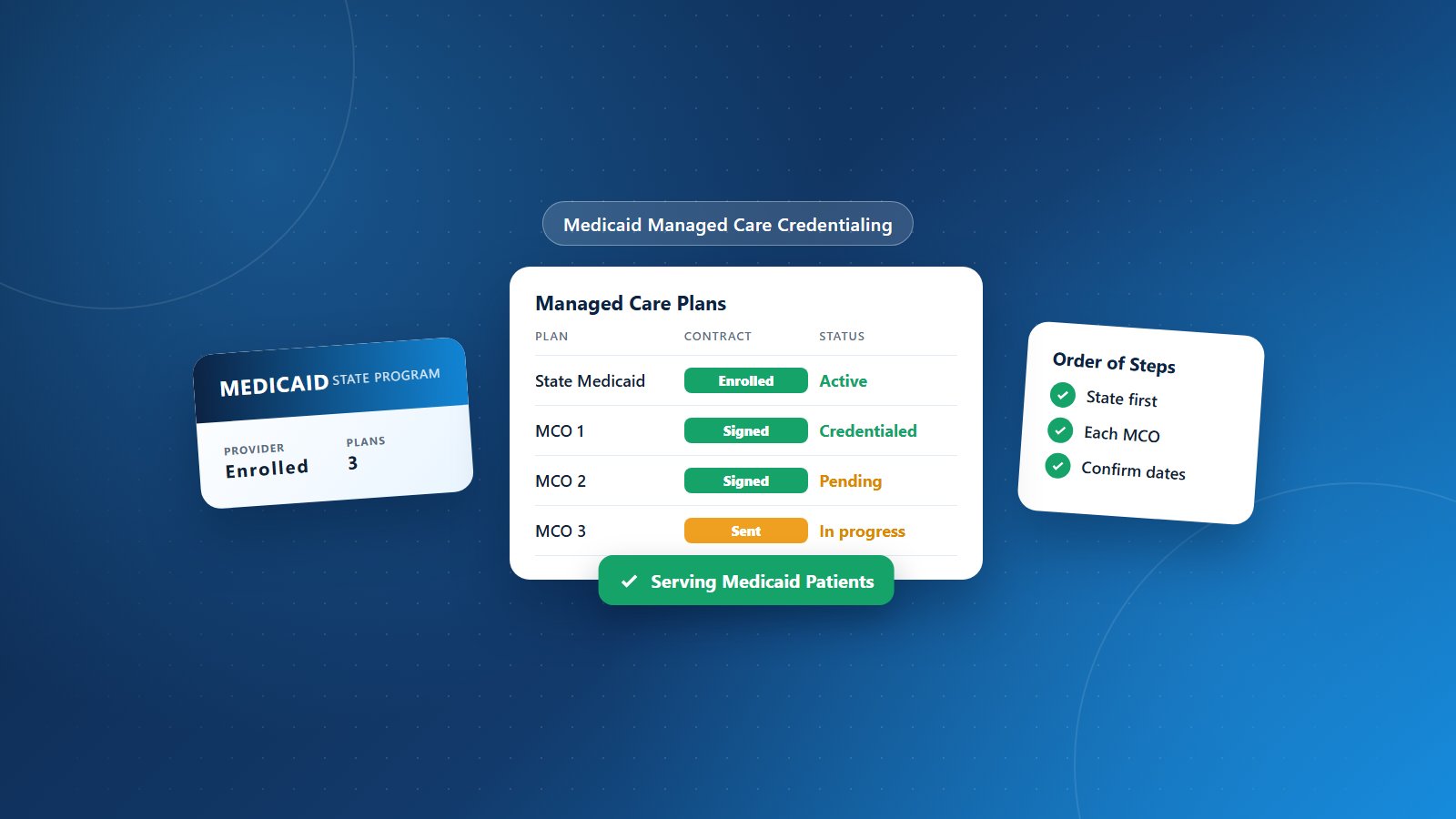
In many states, most Medicaid members are enrolled in managed care organizations (MCOs) rather than traditional fee-for-service Medicaid. For practices, this means enrolling with the state Medicaid program is only the first step. Each Medicaid managed care plan typically has its own credentialing process, contracts, provider manuals and requirements. Missing one plan can mean being unable to see, or get paid for, a significant share of Medicaid patients.
Here’s what to expect when credentialing with Medicaid managed care plans and how to avoid delays.
Step 1: Enroll With State Medicaid First
Most Medicaid managed care plans require providers to be enrolled with the state Medicaid program before they can be credentialed with the plan. Complete state enrollment for the group and every provider, and keep identifiers handy.
Step 2: Identify the Plans in Your Area
Determine which Medicaid managed care plans serve your region and which ones your patients use. Prioritize plans with the largest membership among your patients.
Step 3: Understand Each Plan’s Process
Each plan may have:
- Its own contracting process and fee schedule.
- Different credentialing applications, often using CAQH data.
- Specific requirements for provider types, such as behavioral health clinicians or advanced practice providers.
- Network adequacy considerations that affect whether panels are open.
Step 4: Keep CAQH Current
Many plans rely on CAQH for credentialing data. Keep profiles complete and attested. See our CAQH guide.
Step 5: Complete Contracts and Credentialing
Submit contract and credentialing applications, respond quickly to requests for information and track every application with reference numbers and dates.
Step 6: Confirm Effective Dates and Load Plans
Confirm each provider’s effective date with each plan and set up the plan correctly in your practice management system before billing.
Step 7: Understand Plan Rules
Review each plan’s provider manual for authorization requirements, referral rules, covered services, claim submission requirements and timely filing limits.
Step 8: Verify Plan Assignment at Every Visit
Medicaid members can change plans. Verify which plan is responsible before each visit. Read our Medicaid eligibility verification guide.
Step 9: Maintain Credentialing
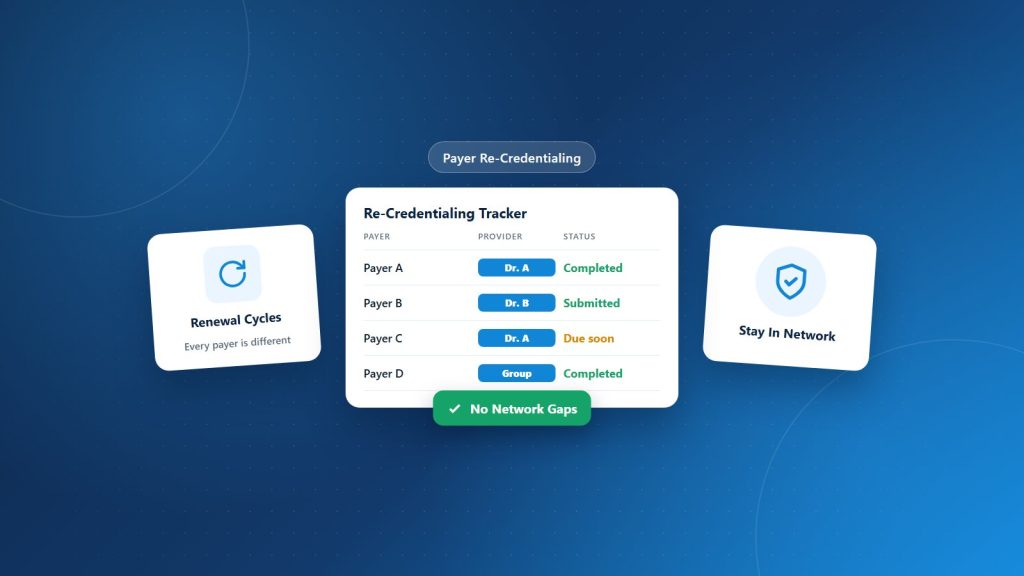
Track re-credentialing cycles and state revalidation requirements for every plan. See our article on payer re-credentialing.
Common Delays to Avoid
- Applying to plans before state Medicaid enrollment is complete.
- Inconsistent information across state enrollment, CAQH and plan applications.
- Missing plan-specific forms or attachments.
- Not following up on pending applications.
Medicaid Credentialing Support From PRCM
Physicians Revenue Cycle Management’s credentialing services handle state Medicaid enrollment and managed care plan credentialing so practices can serve Medicaid patients and get paid.
Want the complete picture? Read our guide: Credentialing a New Physician: A Step-by-Step Timeline.
Need help enrolling with Medicaid managed care plans? Let’s connect.