Key takeaways
- A new practice can’t get paid by payers until enrollment is complete, so start months before opening day.
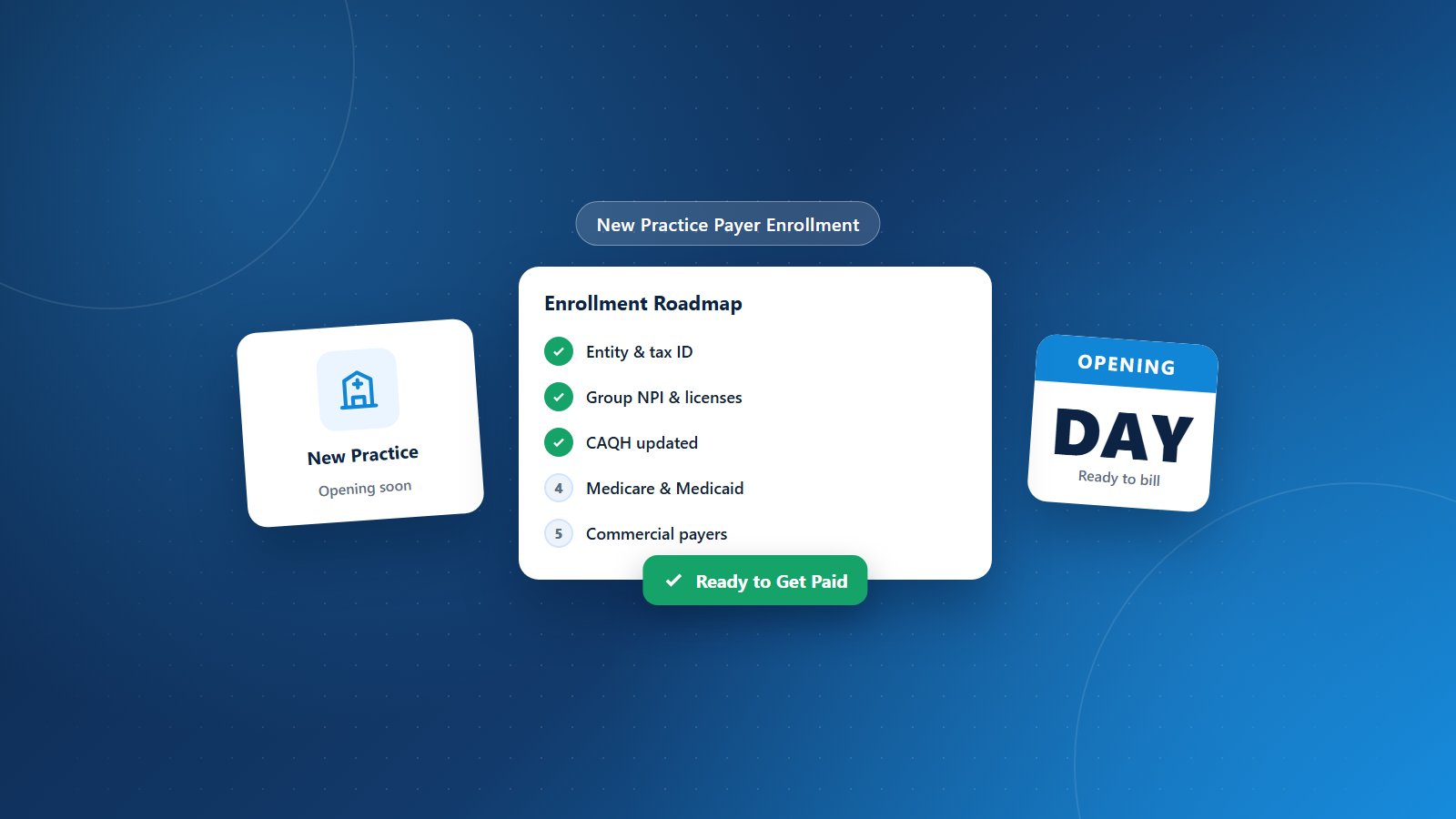
- Follow a clear order: entity and tax ID, identifiers and licenses, CAQH, government payers, commercial payers, electronic transactions.
- Choose commercial payers deliberately based on your patient population and fee schedules.
- Confirm effective dates and load fee schedules before submitting the first claim.
Opening a new medical practice is an exciting milestone, but one step often determines how quickly the practice becomes financially viable: payer enrollment. A new practice can have a beautiful office, great staff and a full schedule, yet still be unable to get paid if enrollment isn’t complete. Because enrollment takes time, it needs to start long before opening day.
This roadmap walks through each phase of payer enrollment for a new practice, in the order that keeps the process moving.
Phase 1: Establish the Practice Entity
Form the business entity
Choose and form your legal entity with guidance from legal and tax advisors. The entity type affects taxes, liability and how payers contract with the practice. Read about choosing a practice entity.
Obtain a tax identification number
Get the practice’s federal employer identification number. It will appear on payer applications, contracts and claims, so make sure the legal name matches exactly everywhere.
Secure the practice location
Payers need a physical service location. Many applications can’t be completed without a confirmed address, and some payers verify the site.
Open business bank accounts
Payers require banking details for electronic payments. Set up practice accounts early.
Phase 2: Obtain Identifiers and Licenses
- Group NPI: Obtain an organizational National Provider Identifier for the practice.
- Individual NPIs: Confirm each provider has an individual NPI with current information.
- State licenses and DEA: Confirm licenses and controlled substance registrations reflect the new practice address.
- Business licenses: Obtain any required local or state business licenses.
- Malpractice coverage: Secure professional liability coverage for the practice and providers.
Phase 3: Prepare Provider Profiles
Update each provider’s CAQH profile with the new practice location, tax ID and group information, upload current documents and re-attest. Many commercial payers pull credentialing data directly from CAQH. See our CAQH guide.
Phase 4: Enroll With Government Payers
Medicare
Enroll the group and each provider, and reassign provider benefits to the group so payments go to the practice. Obtain billing identifiers once approved.
Medicaid
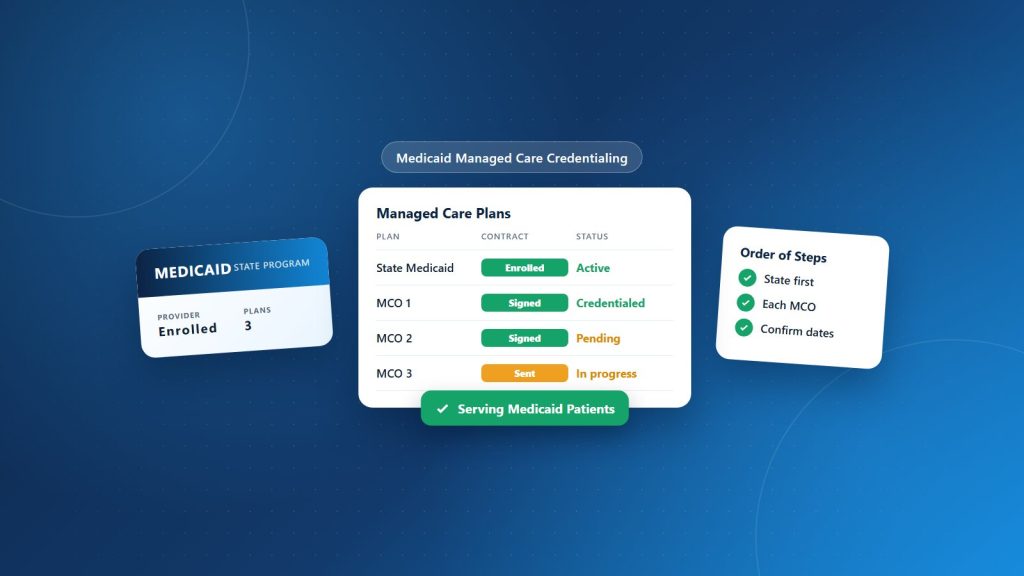
Enroll with your state Medicaid program, and then with the Medicaid managed care plans that serve your area. Each managed care plan may have its own credentialing process.
Phase 5: Enroll With Commercial Payers
Identify the commercial plans most common among your target patients. For each payer:
- Request participation and confirm whether the network is open for your specialty and area.
- Review the contract and fee schedule before signing.
- Complete credentialing applications for each provider.
- Track every application with reference numbers and follow-up dates.
Phase 6: Set Up Electronic Transactions
- Enroll with a clearinghouse.
- Complete electronic claim submission enrollment with payers that require it.
- Set up electronic remittance advice and electronic funds transfer.
- Test claim submission before go-live when possible.
Phase 7: Confirm Before You Bill
Confirm effective dates, provider numbers and contracted fee schedules for each payer before submitting claims. Load everything into your practice management system and verify that claims will route to the right payers.
Sample New Practice Enrollment Checklist
| Item | Status to confirm |
|---|---|
| Legal entity and tax ID | Names match on all documents |
| Group and individual NPIs | Current address and taxonomy |
| Licenses, DEA and malpractice | Updated with new practice address |
| CAQH profiles | Complete and attested |
| Medicare enrollment and reassignment | Approved with effective dates |
| Medicaid and managed care plans | Enrolled and credentialed |
| Commercial contracts | Signed, credentialed, fee schedules loaded |
| Clearinghouse, ERA and EFT | Enrolled and tested |
Planning for Gaps
If some enrollments aren’t complete by opening day, decide how to handle patients with those payers, whether by scheduling them after enrollment is confirmed or explaining their options, so revenue isn’t lost and patients aren’t surprised.
Common New Practice Enrollment Mistakes
- Starting enrollment after signing the lease and hiring staff, rather than in parallel
- Mismatched legal names between the tax ID, bank account and applications
- Forgetting Medicare reassignment, so payments don’t reach the group
- Signing commercial contracts without reviewing fee schedules
- Submitting claims before effective dates are confirmed
Frequently Asked Questions
When should a new practice start payer enrollment?
As early as possible, ideally several months before opening, once the entity, tax ID and location are established.
Should we join every commercial network?
Not necessarily. Review which plans your target patients use and whether the contracted rates support your practice.
Can providers bill under their old practice while the new one is enrolling?
Billing must reflect where and by whom services are actually provided. Discuss transition arrangements with qualified advisors before making assumptions.
New Practice Support From PRCM
Physicians Revenue Cycle Management helps new practices with payer enrollment and credentialing, billing setup and practice management, so you can open your doors ready to get paid. Avoid common pitfalls with our list of credentialing mistakes that delay revenue.
Want the complete picture? Read our guide: Credentialing a New Physician: A Step-by-Step Timeline.
Opening a new practice? Let’s connect early.