Key takeaways
- Most credentialing delays come from small, preventable errors rather than payer backlogs alone.
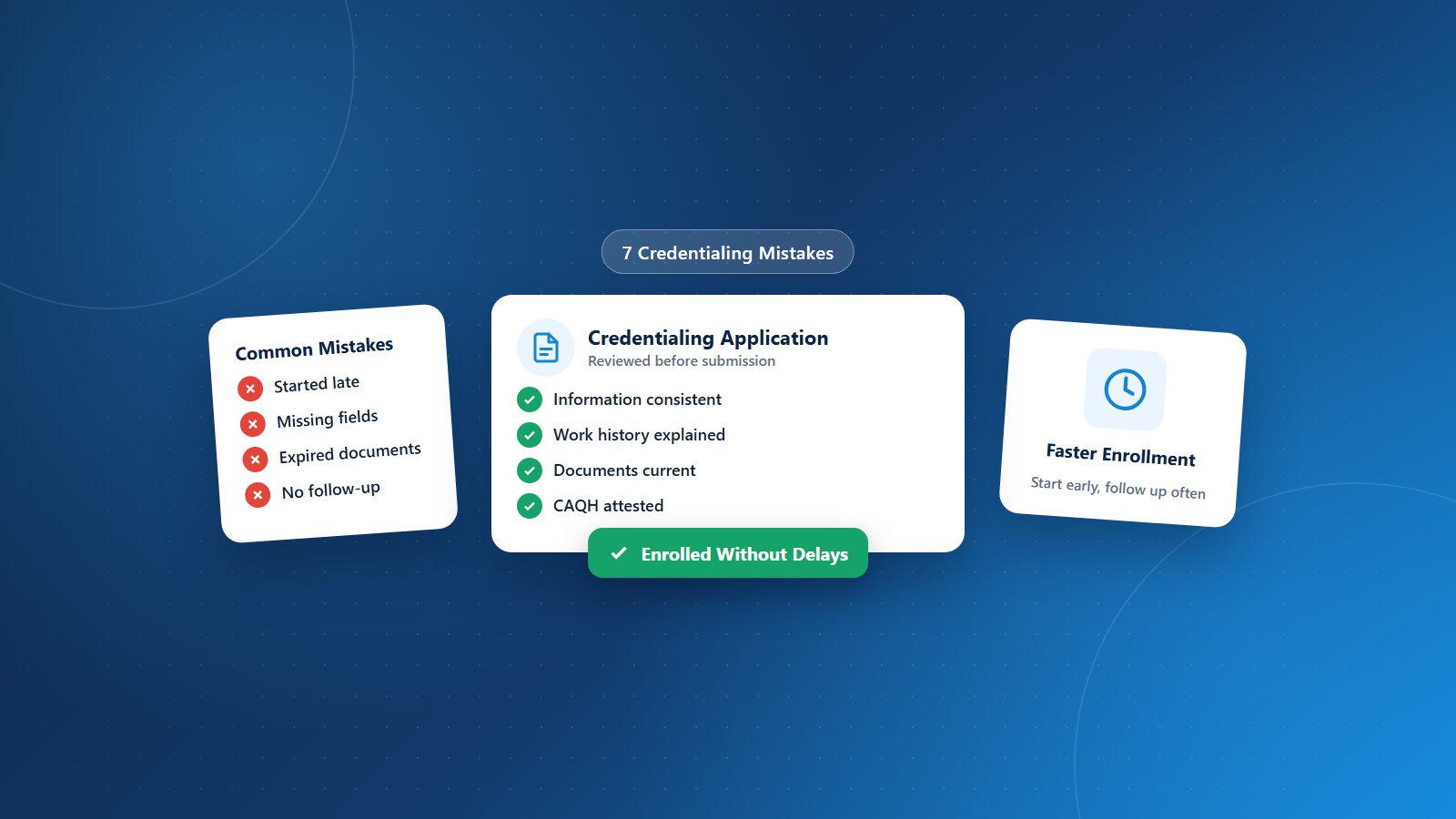
- The biggest mistakes: starting late, incomplete or inconsistent applications, expired documents, neglected CAQH profiles and no follow-up.
- Billing before effective dates are confirmed can create denials that are hard to recover.
- A checklist, a single source of provider data and a follow-up routine prevent most problems.
Credentialing problems rarely look urgent at first. A missing document here, an outdated address there. But small errors can delay payer enrollment by weeks or months, and every day a provider isn’t credentialed is a day their services may not be paid. For a new physician, that can add up to substantial lost revenue, along with frustrated patients and a frustrated provider.
Here are seven common credentialing mistakes, why they happen and how to avoid them.
1. Starting Too Late
Credentialing with multiple payers commonly takes months. Practices that wait until a provider’s first day to begin face long gaps where the provider can see patients but claims for certain payers can’t be paid.
Why it happens: Hiring timelines move fast, and credentialing feels like an administrative detail.
Avoid it: Start the process as soon as the employment agreement is signed. Read our step-by-step credentialing timeline.
2. Incomplete Applications
Missing signatures, blank fields, unanswered questions and missing attachments are the most common reasons applications stall. Payers may not notify you quickly, and the application simply sits.
Avoid it: Use a checklist for each payer and have a second person review every application before submission.
3. Inconsistent Information
When a provider’s name, address, license number or practice location differs across the application, CAQH, Medicare enrollment and licenses, payers flag discrepancies and request clarification.
Example: A provider’s license lists a middle name, the CAQH profile uses a middle initial and the application omits it. Small differences like this can trigger verification delays.
Avoid it: Maintain a single source of truth for provider data and make sure every record matches exactly.
4. Unexplained Work History Gaps
Payers typically require a complete work history, and gaps without explanation lead to follow-up requests and delays.
Avoid it: Explain any gaps in writing up front, such as for training, family leave, relocation or research.
5. Expired Documents
Uploading an expired license, malpractice certificate or DEA registration stops the process until current documents are provided.
Avoid it: Track expiration dates for every provider and upload renewals immediately.
6. Neglecting CAQH
An incomplete or unattested CAQH profile prevents many commercial payers from processing applications. Attestation must be kept current, and reminders often go to outdated email addresses.
Avoid it: Keep CAQH profiles complete and attested, and keep contact emails current. See our CAQH maintenance guide.
7. Failing to Follow Up
Applications can sit untouched for weeks without anyone noticing. Payers may request additional information that goes unanswered because nobody is checking.
Avoid it: Follow up regularly with every payer, log reference numbers and contact names, and respond to requests immediately.
Bonus Mistake: Billing Before Enrollment Is Confirmed
Submitting claims under a provider before their effective date with a payer leads to denials that may not be recoverable. Confirm effective dates and provider numbers before billing.
Mistakes vs. Fixes at a Glance
| Mistake | Prevention |
|---|---|
| Starting late | Begin when the agreement is signed |
| Incomplete applications | Payer checklists and second-person review |
| Inconsistent information | One source of truth for provider data |
| Work history gaps | Written explanations up front |
| Expired documents | Expiration tracking and reminders |
| Neglected CAQH | Regular attestation and current contacts |
| No follow-up | Scheduled follow-up with a status log |
| Billing too early | Confirm effective dates before claims |
The Cost of Credentialing Delays
Delays affect more than revenue. Providers may have to turn away patients from certain plans, schedules may be restricted and staff spend time working around enrollment gaps. Efficient credentialing protects revenue, patient access and provider satisfaction.
Build a Credentialing Routine
- Create a credentialing file for every provider with all current documents.
- Maintain a tracker of applications, reference numbers and statuses.
- Schedule weekly follow-up for pending applications.
- Track expirations and re-credentialing dates on a shared calendar.
- Review the tracker monthly with practice leadership.
Frequently Asked Questions
What is the most common cause of credentialing delays?
Incomplete or inconsistent applications, followed closely by slow responses to payer requests for more information.
Can we speed up credentialing?
You can’t control payer processing times, but you can eliminate the delays caused by errors, missing documents and slow follow-up.
What should we do if an application seems stuck?
Contact the payer, confirm the application was received and complete, and ask whether any information is outstanding. Escalate through provider relations if needed.
Credentialing Done Right With PRCM
Physicians Revenue Cycle Management’s provider credentialing services handle applications, CAQH profiles, payer follow-up and ongoing maintenance for Medicare, Medicaid, commercial and workers’ compensation payers. We help new providers start billing faster. Also see our guide to Medicare revalidation.
Adding providers this year? Let’s connect.