
Physicians Revenue Cycle Management
Chronic Care Management
Care plans, medication reviews and monthly check-ins for patients with multiple chronic conditions, delivered and billed compliantly to support lasting care relationships.
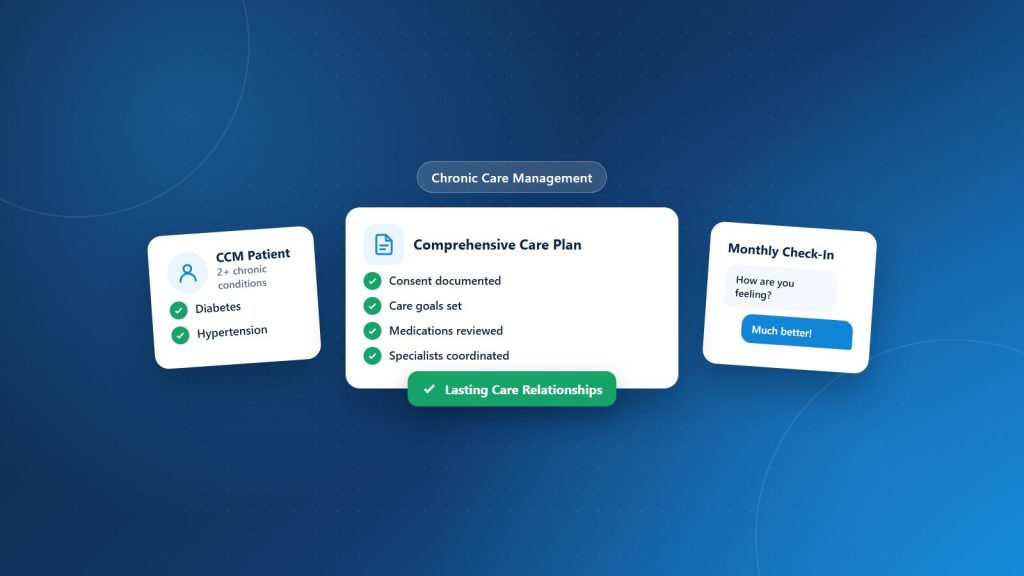
Chronic care management
Ongoing support for patients with chronic conditions
Patients living with two or more chronic conditions need more than an office visit every few months. They need medication reviews, care coordination, education and someone to call when questions come up. Chronic Care Management (CCM) makes that support possible, and reimbursable.
PRCM helps practices deliver and bill CCM for patients with chronic conditions, sustaining lasting relationships between patients and their care teams. We support every step, from identifying eligible patients and documenting consent to monthly outreach, time tracking and compliant billing.
What CCM includes
- A comprehensive, person-centered care plan
- Medication reconciliation and adherence support
- Coordination with specialists and hospitals
- Support after hospital discharges
- Regular check-ins between visits
- Access to the care team for urgent needs
Benefits
Why practices invest in chronic care management
Better health between visits
Regular support helps patients stay on track with medications, appointments and care plans.
Fewer avoidable emergencies
Early outreach and coordination can prevent complications, emergency visits and hospital stays.
Stronger patient loyalty
Patients who hear from their care team regularly are more engaged and more likely to stay with your practice.
Support for quality measures
Proactive chronic disease management supports quality reporting and value-based programs.
Team-based care
Clinical staff deliver much of the work under physician direction, freeing physicians for complex care.
Recurring monthly revenue
CCM is billed monthly for eligible patients when requirements are met, creating steady revenue.
How it works
Building your CCM program
- Identify eligible patientsPatients with two or more qualifying chronic conditions at risk of decline.
- Document consentExplain the program, cost sharing and the right to stop at any time.
- Create the care planGoals, interventions, medications and community resources in one plan.
- Monthly outreachScheduled check-ins, coordination and care plan updates.
- Track time and billAccurate time tracking and documentation for compliant monthly billing.
Who qualifies
Common conditions in CCM programs
CCM is designed for patients with two or more chronic conditions expected to last at least 12 months that place them at significant risk. Many practices also pair CCM with remote patient monitoring and behavioral health integration.
- Diabetes
- Hypertension
- Heart failure
- Chronic kidney disease
- COPD
- Asthma
- Depression
- Arthritis
- Hyperlipidemia
- Dementia
- Osteoporosis
- Atrial fibrillation
Questions
Chronic care management FAQs
Which patients are eligible for CCM?
Generally, patients with two or more chronic conditions expected to last at least 12 months that place them at significant risk of decline, who have an established relationship with the billing practitioner.
Is patient consent required?
Yes. Patients must be informed about the service, possible cost sharing and their right to stop, and consent must be documented before services begin.
Who delivers CCM services?
CCM is usually delivered by clinical staff such as nurses or medical assistants under the direction of the billing physician or qualified practitioner.
Can CCM be combined with other services?
Often, yes. Many patients receive CCM along with remote patient monitoring when each service’s requirements are met separately.
Insights
Related reading
Support your chronic care patients every month
Let’s build a chronic care management program that works for your practice.