Key takeaways
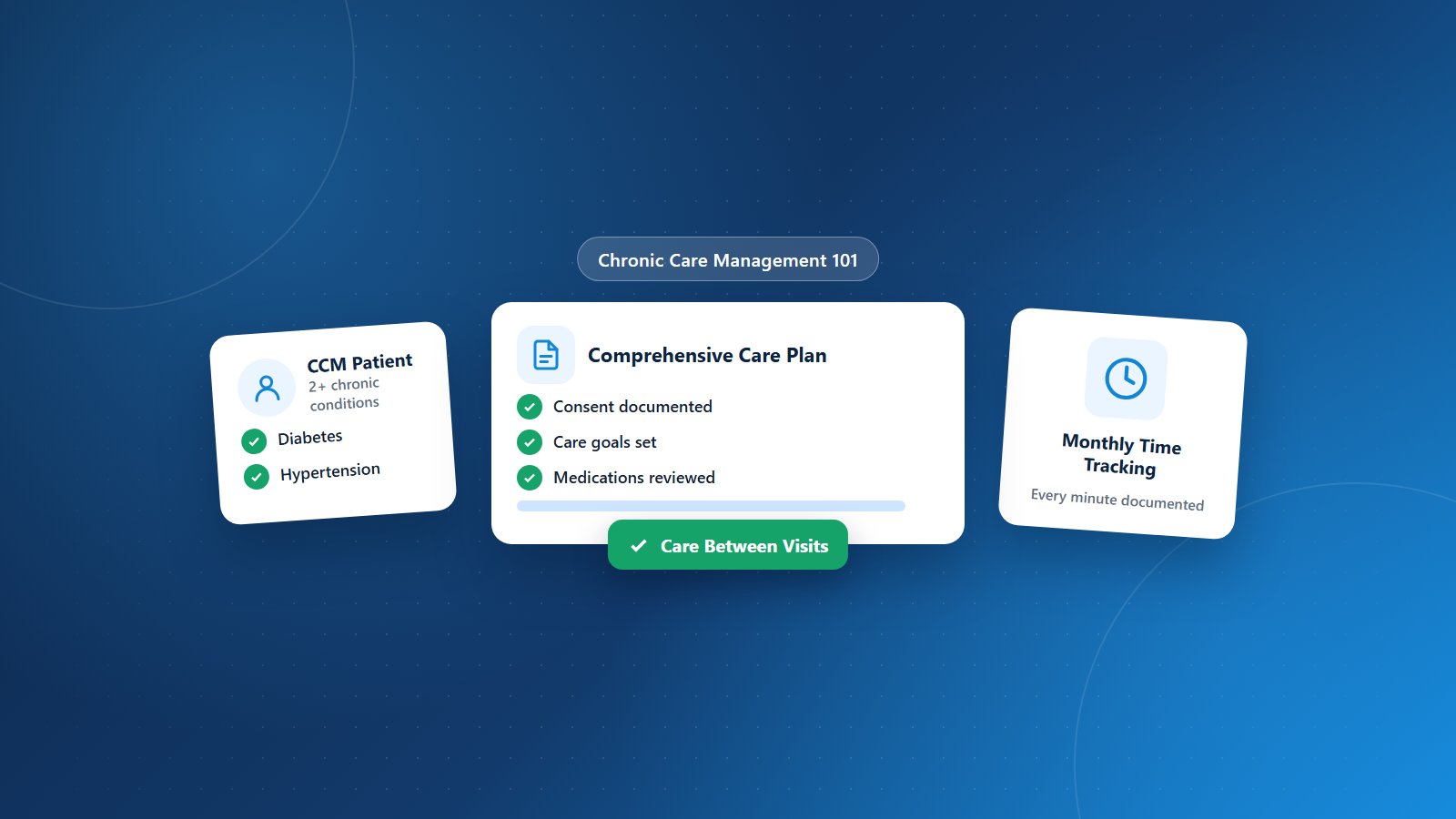
- Chronic Care Management (CCM) supports patients with two or more chronic conditions between visits.
- Core requirements include eligibility, an initiating visit when needed, documented consent and a comprehensive care plan.
- CCM is billed based on care management time in a calendar month, so accurate time tracking is essential.
- Most compliance problems come from missing consent, outdated care plans and poor time documentation.
Chronic conditions such as diabetes, hypertension, heart disease and COPD account for a large share of healthcare visits and costs. Patients living with multiple chronic conditions need ongoing support between appointments: medication management, care coordination, education and someone to call when questions come up. Chronic Care Management (CCM) is designed to make that support possible and reimbursable.
For practices new to CCM, understanding the requirements is essential. This guide covers patient eligibility, consent, care plans, documentation and the workflows that keep a CCM program compliant from day one.
What Is Chronic Care Management?
CCM is a set of non-face-to-face care management services provided to patients with two or more chronic conditions expected to last at least 12 months, or until death, that place the patient at significant risk of decline, exacerbation or death. Services are typically delivered by clinical staff under the direction of a billing practitioner and include activities such as:
- Developing and maintaining a comprehensive care plan
- Medication management and reconciliation
- Coordinating care with specialists, hospitals and community services
- Managing care transitions after hospital or facility discharges
- Providing patients with 24/7 access to the care team for urgent needs
CCM Requirements at a Glance
| Requirement | What it means in practice |
|---|---|
| Eligible patient | Two or more qualifying chronic conditions with significant risk |
| Initiating visit | A face-to-face visit with the billing practitioner when required |
| Consent | Patient informed and consent documented before services start |
| Care plan | Comprehensive, person-centered plan shared with the patient |
| Access and continuity | Patients can reach the care team and see a consistent provider |
| Time tracking | Care management time recorded by calendar month |
| Documentation | Activities, communications and care plan updates recorded |
Patient Eligibility
To qualify for CCM, patients generally must:
- Have two or more chronic conditions that are expected to last at least 12 months
- Be at significant risk of decline or complications from those conditions
- Have an established relationship with the billing practitioner
Common qualifying combinations include diabetes and hypertension, heart failure and chronic kidney disease, COPD and depression, or arthritis and high cholesterol, among many others.
Initiating Visit
For new patients or those not seen recently, CCM typically begins with a face-to-face visit with the billing practitioner, such as a comprehensive evaluation or annual wellness visit. This is when the provider discusses CCM with the patient and determines that it’s appropriate.
Patient Consent
Consent is a core CCM requirement. Before services begin, the patient must be informed about:
- The availability of CCM services and what they include
- That cost sharing may apply
- That only one practitioner can bill for CCM during a given period
- Their right to stop CCM services at any time
Consent may be verbal or written depending on payer requirements, but it must be documented in the medical record.
Sample consent conversation
“Dr. Lee would like to enroll you in our chronic care management program. A nurse from our team will check in with you each month, review your medications, help coordinate with your specialists and be available if you have questions between visits. Your insurance may apply a copay or coinsurance for this service, and you can stop at any time. Would you like to participate?”
The Comprehensive Care Plan
Every CCM patient needs a person-centered, comprehensive care plan. It typically includes:
- Problem list and expected outcomes
- Symptom management and planned interventions
- Medication management
- Community and social resources
- Coordination with other providers
- Patient goals and preferences
The care plan should be shared with the patient and updated as their needs change.
Documentation Requirements
Strong documentation protects your practice and supports billing. For every CCM patient, document:
- Patient consent and the date it was obtained
- The qualifying chronic conditions
- The comprehensive care plan and updates
- Time spent by clinical staff and practitioners each month, with dates and activities
- Communications with the patient, caregivers and other providers
Time tracking is particularly important because CCM services are billed based on the time spent in a calendar month.
Staffing Your CCM Program
CCM is usually delivered by nurses, medical assistants or care coordinators working under the supervision of a physician or qualified practitioner. Practices can staff programs internally or partner with an experienced CCM provider. Either way, clear workflows, scheduled outreach and good care management software keep the program running smoothly.
A Typical Monthly CCM Workflow
- Review the patient’s care plan and recent activity.
- Call the patient to check on symptoms, medications and goals.
- Coordinate any needed follow-up with specialists or pharmacies.
- Update the care plan and escalate concerns to the provider.
- Record all activities and time before month-end.
Common CCM Mistakes
- Billing without documented consent
- Missing or outdated care plans
- Insufficient or estimated time tracking
- Billing CCM for the same patient as another practitioner during the same period
- Inconsistent monthly outreach
Frequently Asked Questions
Can CCM be provided by phone?
Yes. CCM is a non-face-to-face service, and much of the work happens by phone, portal messages and coordination with other providers.
Does the physician have to do the work personally?
No. Clinical staff typically perform CCM activities under the direction of the billing practitioner.
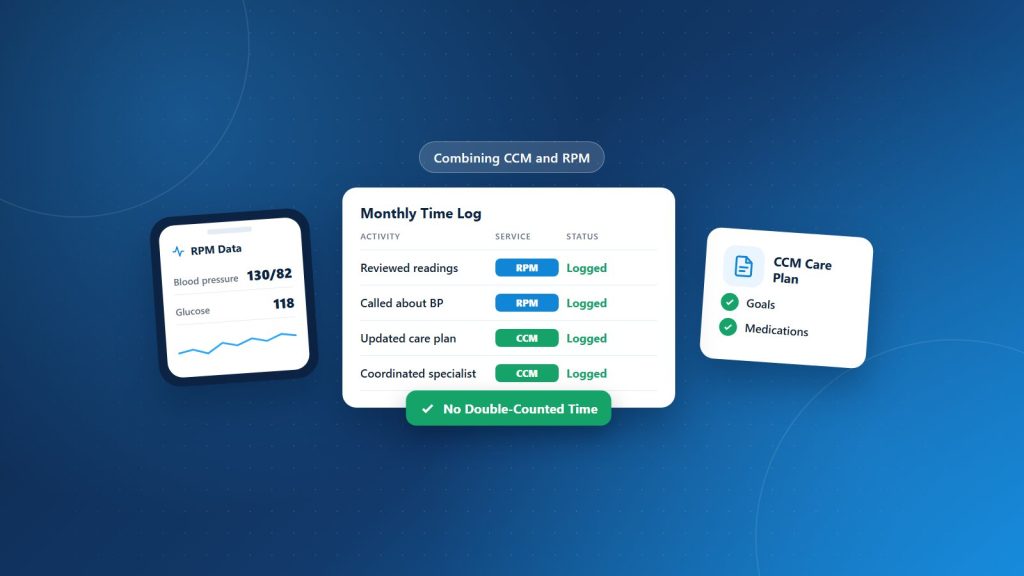
Can CCM be combined with remote patient monitoring?
Often, yes, when each service’s requirements are met separately. Learn more in our RPM beginner’s guide.
What if a patient declines?
Patients can decline or stop at any time. Document their decision and continue providing standard care.
Launch CCM With PRCM
Physicians Revenue Cycle Management provides end-to-end chronic care management support, from identifying eligible patients and documenting consent to care coordination, time tracking and billing. CCM pairs well with remote patient monitoring for patients who benefit from both.
Interested in starting a CCM program? Let’s connect to discuss the right approach for your practice.