Key takeaways
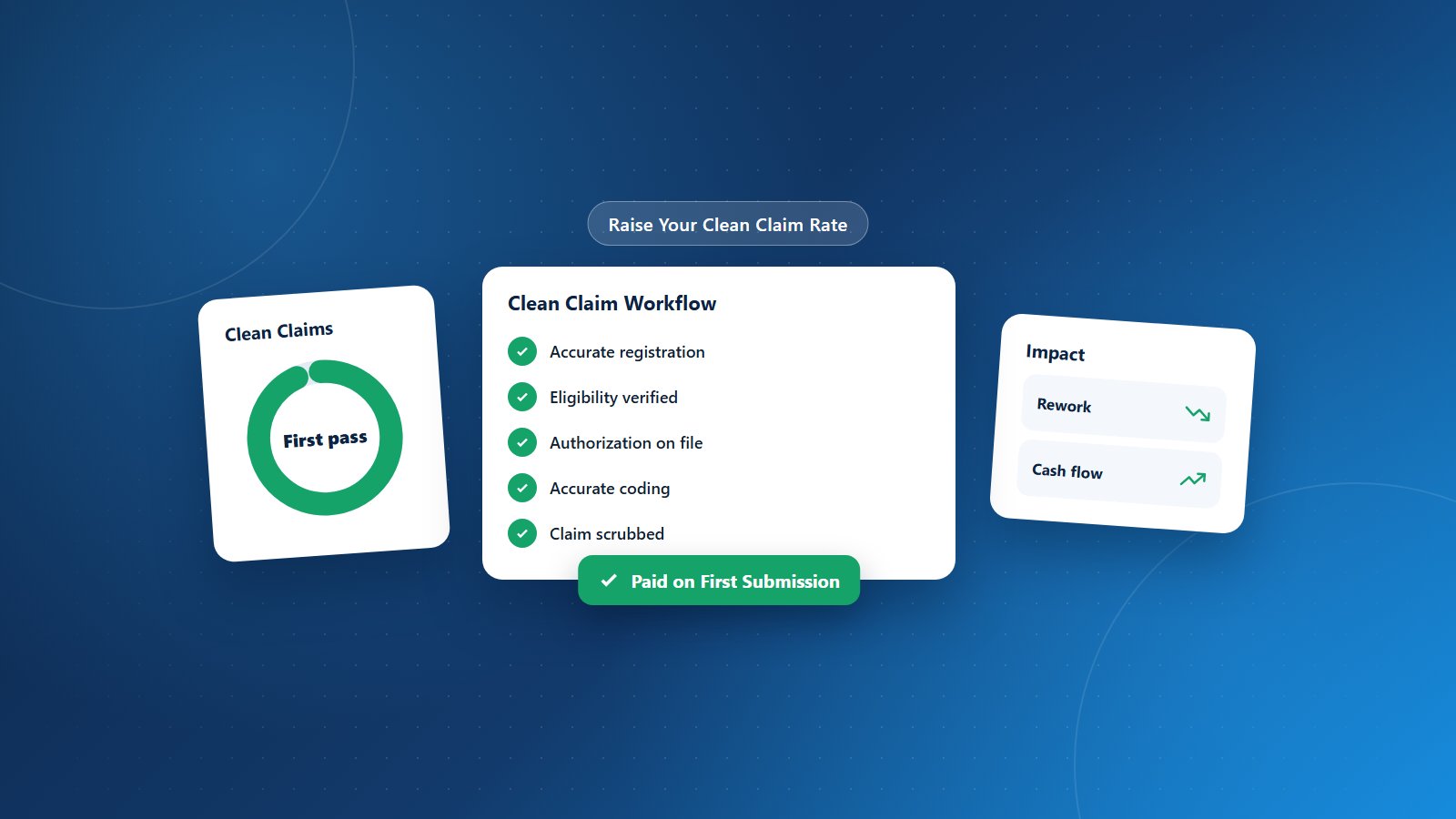
- A clean claim is accepted and processed on first submission with no errors, rejections or requests for information.
- Clean claim rate is one of the clearest indicators of billing efficiency and a strong predictor of cash flow.
- Most claim errors start upstream at registration, eligibility, authorization, coding or documentation.
- Claim scrubbing, daily rejection work and root-cause fixes raise the rate over time.
A clean claim is one that’s accepted and processed by the payer on first submission, without errors, rejections or requests for more information. Your clean claim rate, the percentage of claims that meet this standard, is one of the most important indicators of billing efficiency. Every claim that isn’t clean requires rework, delays payment and increases cost to collect.
This guide explains how to measure your clean claim rate and the practical steps that raise it.
How to Measure Clean Claim Rate
Divide the number of claims accepted on first submission by total claims submitted over a period. Track it by payer, provider and location to find where problems concentrate. Clearinghouse acceptance and rejection reports are a good source of data.
Example: If a practice submits 1,000 claims in a month and 60 are rejected or returned for errors, its clean claim rate for that month is 94%. Tracking that number monthly shows whether process changes are working.
Where Unclean Claims Come From
| Stage | Common errors |
|---|---|
| Registration | Misspelled names, wrong birth dates, outdated addresses |
| Insurance | Wrong payer, invalid member ID, missing subscriber details |
| Authorization | Missing or mismatched authorization numbers |
| Coding | Invalid codes, missing modifiers, diagnosis mismatches |
| Provider data | Wrong identifiers, unenrolled rendering providers |
| Submission | Missing fields, formatting errors, late claims |
Step 1: Get Registration Right
Many claim errors start with patient demographics and insurance information. Standardize registration, confirm details at each visit and scan insurance cards. See our article on front-desk errors.
Step 2: Verify Eligibility Before Every Visit
Coverage problems are a leading cause of rejected and denied claims. Verify eligibility and benefits in advance. Read our eligibility verification best practices.
Step 3: Secure Authorizations and Referrals
Confirm required authorizations and referrals are on file and match the services performed. Include authorization numbers on claims when required.
Step 4: Code Accurately
Use current code sets, apply modifiers correctly and code diagnoses to the highest specificity supported by documentation.
Step 5: Complete Documentation Promptly
Unsigned or incomplete notes delay coding and push claims toward filing limits. Set expectations for timely documentation and monitor charge lag.
Step 6: Use Claim Scrubbing
Claim scrubbing software checks claims against payer rules, coding edits and required fields before submission. Keep edits updated and add custom rules for recurring payer-specific issues you discover.
Step 7: Work Rejections Daily
Clearinghouse rejections should be reviewed and corrected every day. Rejected claims haven’t reached the payer, so delays push claims toward filing limits.
Step 8: Analyze and Fix Root Causes
Group rejections and denials by reason and trace each back to its source. Fix the process, not just the claim. If one registration field causes repeated rejections, add a required field or validation rule.
Step 9: Keep Provider and Payer Data Current
Incorrect provider identifiers, addresses or enrollment information cause rejections. Keep credentialing and system data accurate.
Step 10: Train and Share Results
Share clean claim metrics with front-desk staff, coders and billers. When everyone understands their impact on payment, accuracy improves.
A 30-Day Clean Claim Improvement Plan
- Week 1: Pull rejection and denial reports and group errors by source.
- Week 2: Fix the top three error sources with workflow or system changes.
- Week 3: Add claim scrubber rules for recurring payer-specific issues.
- Week 4: Train staff on changes and re-measure the clean claim rate.
The Payoff
A higher clean claim rate means faster payments, fewer denials, lower administrative costs and more predictable cash flow. Learn about other important revenue cycle KPIs.
Frequently Asked Questions
What’s a good clean claim rate?
Many well-run practices aim for a high clean claim rate, but the most important thing is your trend. Measure it monthly and keep pushing it upward.
Is clean claim rate the same as first-pass resolution?
They’re related. Clean claim rate measures claims accepted without errors; first-pass resolution measures claims paid on first submission.
Do clearinghouse rejections count against the clean claim rate?
Yes. Rejections mean the claim wasn’t clean on first submission, even though it never reached the payer.
Cleaner Claims With PRCM
Physicians Revenue Cycle Management improves clean claim rates through front-end verification, certified coding, claim scrubbing and root-cause analysis as part of our revenue cycle management. Read more about common claim denial reasons.
Want more claims paid on the first try? Let’s connect.