Key takeaways
- Most claim denials are preventable and trace back to a small set of causes.
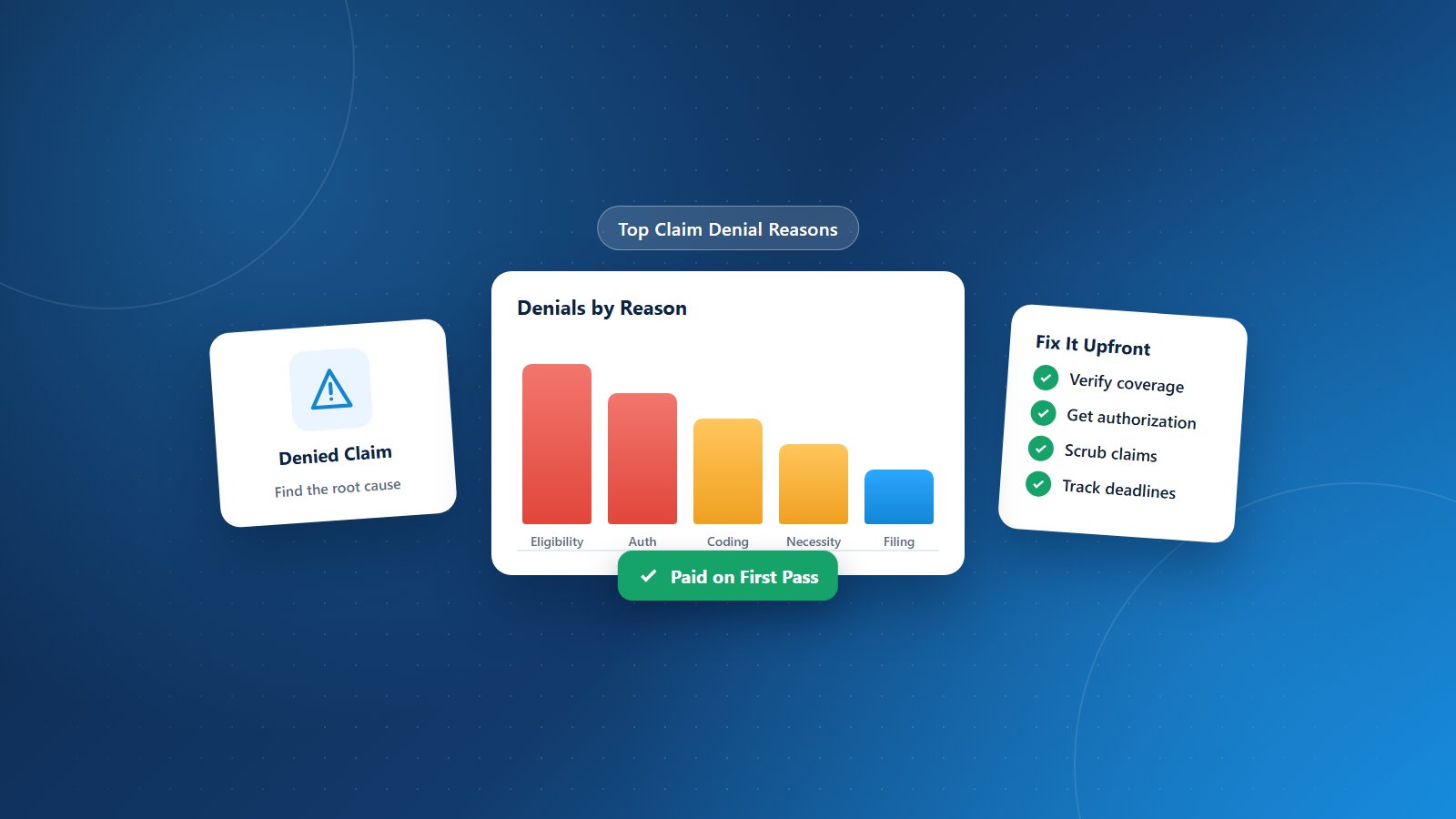
- Eligibility, registration, authorization, coding and medical necessity issues account for many denials.
- Fix the process behind each denial type, not just the individual claim.
- Track denials by reason, payer and provider to see where to focus first.
Claim denials are one of the biggest drains on medical practice revenue. Every denied claim must be researched, corrected and resubmitted or appealed, which costs staff time and delays payment. Worse, a significant share of denied claims are never reworked at all, which means that revenue is simply lost.
The encouraging news is that most denials are preventable. This guide covers the most common claim denial reasons, why they happen and how to fix them for good.
Denial Reasons at a Glance
| Denial reason | Where it starts | Primary fix |
|---|---|---|
| Eligibility issues | Front desk | Verify before every visit |
| Registration errors | Front desk | Standardized registration |
| Missing authorization | Scheduling | Authorization lists and tracking |
| Medical necessity | Documentation and coding | Specific diagnoses and policy review |
| Coding errors | Coding | Certified coders and claim scrubbing |
| Duplicate claims | Billing | Check status before resubmitting |
| Timely filing | Billing | Prompt submission and tracking |
| Bundling and non-covered | Coding and front desk | Edits and coverage checks |
| Coordination of benefits | Front desk | Ask about all coverage |
| Credentialing | Enrollment | Credential before patients are seen |
1. Patient Eligibility Issues
Why it happens: Coverage was inactive, terminated or changed, or the patient’s plan doesn’t cover the service.
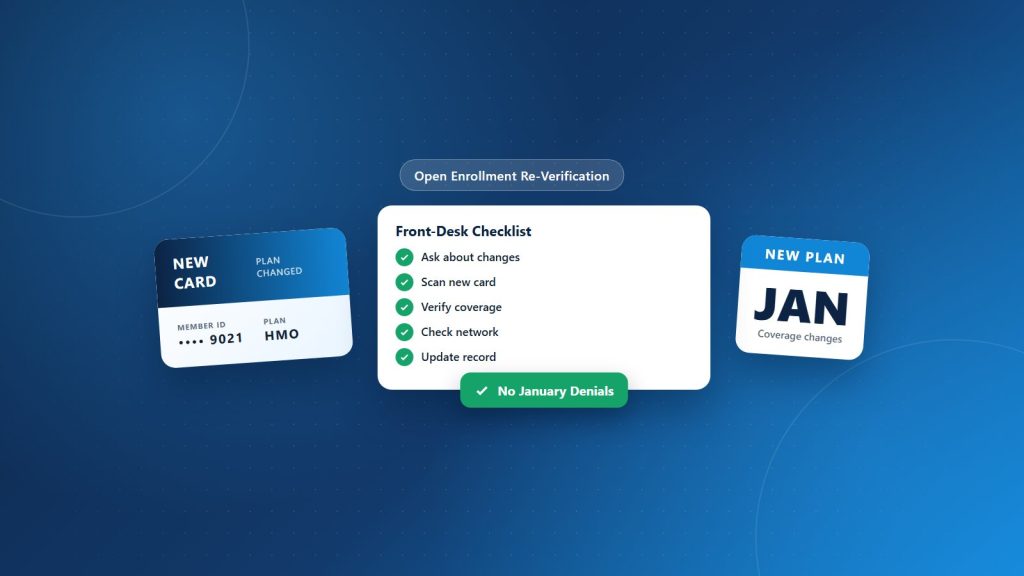
Fix: Verify eligibility and benefits before every visit, re-verify for recurring patients and scan updated insurance cards. Update payer information immediately when coverage changes. See why eligibility verification matters during open enrollment.
2. Registration and Demographic Errors
Why it happens: Misspelled names, wrong birth dates, incorrect member IDs or subscriber information.
Fix: Standardize registration workflows, confirm information with patients at every visit and use eligibility tools to validate details.
3. Missing or Invalid Prior Authorization
Why it happens: Authorization wasn’t obtained, expired or didn’t match the service performed.
Fix: Maintain payer authorization lists, centralize authorization work and confirm authorization details before the service. Read our prior authorization best practices.
4. Medical Necessity
Why it happens: The diagnosis codes submitted don’t support the service under the payer’s coverage policy, or documentation doesn’t justify it.
Fix: Code diagnoses to the highest specificity, review payer policies for high-volume services and educate providers on documenting the reason for each service.
5. Coding Errors
Why it happens: Invalid or outdated codes, mismatched procedure and diagnosis codes, or missing or incorrect modifiers.
Fix: Use certified coders, update code sets annually and use claim scrubbing software to catch errors before submission. Modifier misuse is common; see our modifier 25 guide.
6. Duplicate Claims
Why it happens: The same claim is submitted more than once, often when staff resubmit instead of checking status.
Fix: Check claim status before resubmitting and use corrected claim procedures rather than sending new claims.
7. Timely Filing
Why it happens: Claims or appeals were submitted after the payer’s deadline.
Fix: Submit claims promptly, monitor clearinghouse rejections daily and track payer filing limits.
8. Bundling and Non-Covered Services
Why it happens: Services considered part of another service were billed separately, or the service isn’t covered by the plan.
Fix: Apply correct coding edits, verify coverage before service and obtain waivers or advance notices when appropriate.
9. Coordination of Benefits
Why it happens: The wrong payer was billed as primary, or the payer needs updated information from the patient about other coverage.
Fix: Ask about other coverage at registration and confirm primary and secondary order with payers.
10. Provider Credentialing Issues
Why it happens: The rendering provider wasn’t credentialed or enrolled with the payer on the date of service.
Fix: Complete credentialing before providers see patients and track re-credentialing deadlines.
Building a Denial Management Process
- Track every denial by reason code, payer, provider and service.
- Prioritize by dollar value and appeal deadline.
- Correct and resubmit quickly, with complete documentation for appeals.
- Find root causes and fix the workflows that created them.
- Measure progress with your denial rate and first-pass resolution rate.
Writing an Effective Appeal
When an appeal is warranted, a strong submission typically includes:
- Claim and patient identifiers and the denial reason
- A concise explanation of why the claim should be paid
- Supporting documentation such as notes, authorizations and test results
- References to payer policy or contract terms where relevant
- Submission within the payer’s appeal deadline
Frequently Asked Questions
What’s the difference between a rejection and a denial?
A rejection happens before the payer accepts the claim, often at the clearinghouse, because of errors such as missing information. A denial happens after the payer processes the claim and decides not to pay.
Which denials should we fix first?
Start with high-volume denial reasons and high-dollar claims near their appeal deadlines.
Can denials be prevented completely?
Not completely, but many can be prevented with strong front-end processes, accurate coding and claim scrubbing.
Reduce Denials With PRCM
Physicians Revenue Cycle Management handles the full cycle from eligibility verification to denial management and payment appeals. Our revenue cycle management team finds the root causes behind your denials and fixes them, so more claims are paid the first time. Track your progress with the revenue cycle KPIs every practice should know.
Tired of chasing denials? Let’s connect.