Prior authorization is one of the most frustrating administrative tasks in healthcare. Physicians and staff spend hours each week on phone calls, faxes and portal submissions, while patients wait for approvals before receiving care. When authorizations are missed or incomplete, claims are denied and revenue is lost.
Prior authorization isn’t going away, but practices can dramatically reduce delays and denials with the right processes. Here are prior authorization best practices that work.
Why Prior Authorization Denials Happen
- Authorization wasn’t requested at all.
- The authorized service, code or quantity didn’t match what was performed.
- The authorization expired before the date of service.
- The service was performed at a different location or by a different provider than authorized.
- Clinical documentation submitted didn’t meet the payer’s criteria.
1. Know Which Services Require Authorization
Create and maintain a reference list of services that require authorization for each of your major payers. Include imaging, procedures, specialty drugs, durable medical equipment and therapies. Payer requirements change, so review the list regularly.
2. Start Early
Begin the authorization process as soon as a service is ordered, not when the patient is scheduled. Building lead time into scheduling prevents last-minute cancellations and rushed submissions.
3. Centralize the Process
Assign authorization responsibility to dedicated staff or a centralized team. Specialists who handle authorizations every day become experts in payer requirements and build relationships with payer representatives.
4. Submit Complete Clinical Information
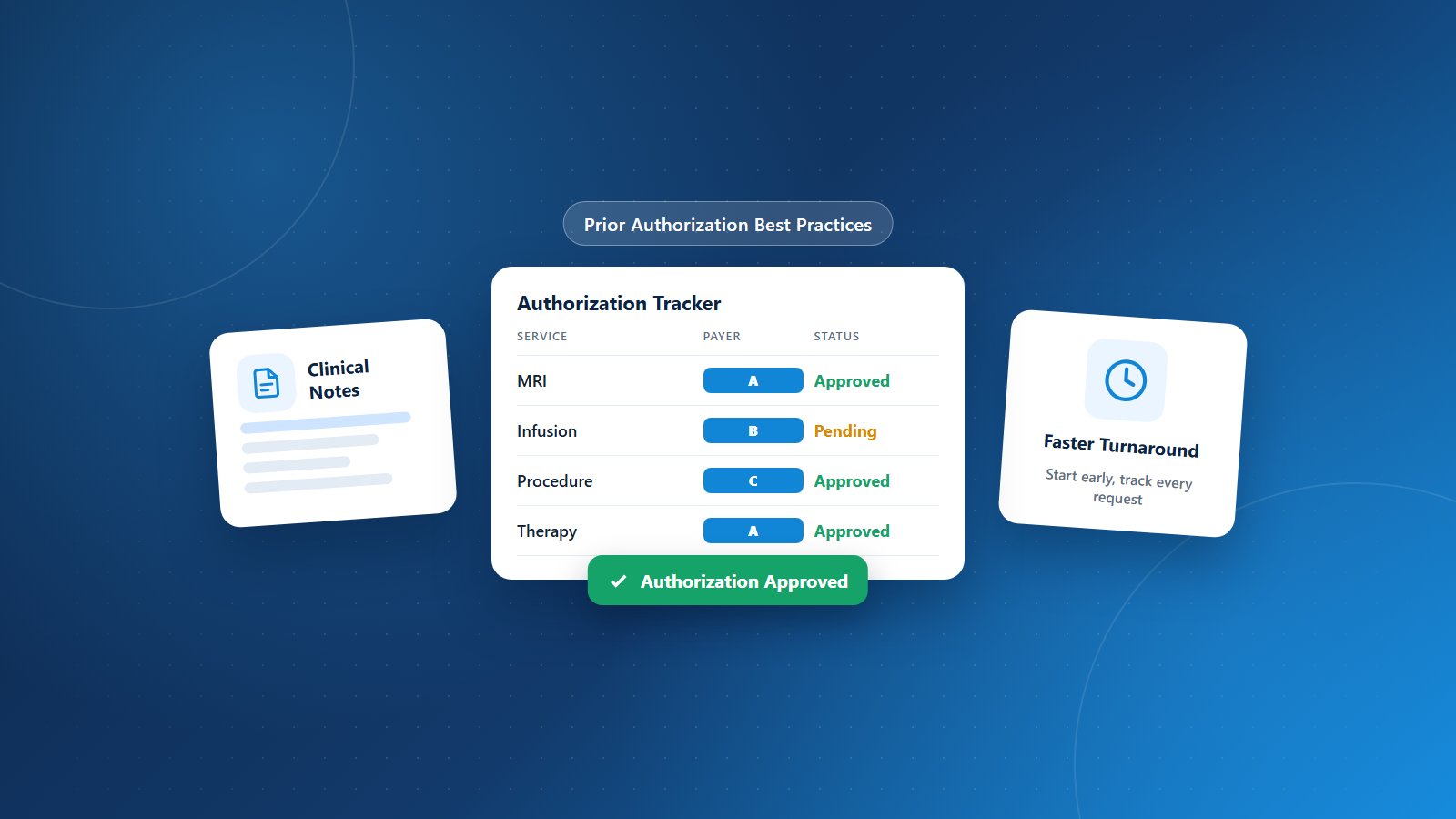
Most delays come from requests for additional information. Include relevant notes, test results, prior treatments tried and the clinical rationale with the initial request. Use payer-specific criteria to guide what you submit.
5. Use Electronic Tools
Payer portals and electronic prior authorization tools integrated with your EHR can speed submissions and provide real-time status updates. Where available, they’re generally faster than fax and phone.
6. Track Every Request
Use a tracking log or software that records the service, payer, submission date, reference number, status, approval details and expiration date. Follow up on pending requests before they delay care.
7. Match Authorization to Service
Before the service is performed, confirm the authorized codes, units, dates, provider and location match what’s scheduled. If the plan changes, such as a different procedure or additional units, update the authorization before or immediately after the service according to payer rules.
8. Appeal Denials Strategically
When an authorization is denied, review the reason, request a peer-to-peer discussion when appropriate and submit a well-documented appeal. Track appeal outcomes to learn what works with each payer.
9. Communicate With Patients
Let patients know when authorization is required, how long it may take and what happens if it’s denied. Informed patients are less frustrated and more likely to stay with your practice.
10. Measure and Improve
Track authorization turnaround times, approval rates and authorization-related denials. These metrics reveal bottlenecks and training needs.
Let PRCM Handle Prior Authorizations
Physicians Revenue Cycle Management provides pre-encounter services including preauthorization and prior certification with federal, state and commercial payers, along with eligibility and benefits verification. Our team handles the paperwork and follow-up so your staff can focus on patients. Learn more about our pre-encounter and credentialing services and medical billing services.
Ready to reduce authorization delays? Let’s connect.