Every fall, millions of patients review and change their health coverage during open enrollment. They switch plans, change employers, move between Medicare Advantage and traditional Medicare, or pick up new deductibles and copays. For patients, it’s a routine decision. For medical practices, it’s the start of one of the most denial-prone periods of the year.
When January arrives, practices that rely on the insurance information already on file often discover the hard way that coverage has changed. Claims are denied, patients receive unexpected bills and staff spend weeks on rework. The solution is simple but powerful: consistent, proactive insurance eligibility verification. Here’s why it matters so much during open enrollment season, and how to build a process that protects your January revenue.
What Happens During Open Enrollment
Open enrollment is the period when patients can enroll in, change or drop health coverage for the coming year. Depending on the type of coverage, this can include employer-sponsored plans, individual marketplace plans and Medicare options. The changes take effect at the start of the new plan year, which for most patients is January 1.
Common coverage changes include:
- Switching to a different insurance carrier or plan.
- Moving from a PPO to an HMO or other network-restricted plan.
- Joining or leaving a Medicare Advantage plan.
- Changes to deductibles, copays and coinsurance.
- New member ID numbers, group numbers or plan names.
- Changes to which providers or facilities are in network.
Patients often don’t think to tell their doctor’s office about these changes, and many don’t receive their new insurance cards until well into January.
The Cost of Skipping Eligibility Verification
Eligibility and coverage issues are consistently among the leading causes of claim denials. During the first weeks of the year, the problem intensifies. Without verification, practices face:
- Front-end denials for inactive coverage, incorrect member IDs or wrong payer information.
- Out-of-network surprises when patients have moved to plans your practice doesn’t participate in.
- Missing authorizations because a new plan has different prior authorization requirements.
- Delayed cash flow as claims are reworked, resubmitted and re-adjudicated.
- Patient frustration when unexpected balances arrive weeks after the visit.
- Increased administrative cost as staff chase down corrected information after the fact.
Every denied claim costs time and money to fix, and some are never recovered. Preventing the denial in the first place is always more efficient.
Building an Open Enrollment Eligibility Workflow
A strong insurance eligibility verification process combines patient communication, technology and consistent front-desk habits.
1. Communicate with patients before January
Let patients know that coverage may change and that you’ll need their updated information. Use appointment reminders, patient portal messages, signage in your office and your website to ask patients to bring new insurance cards to their first visit of the year.
2. Verify eligibility before every visit
Ideally, eligibility should be verified for every patient before each appointment, not just new patients. During January, this is essential. Verify two to three business days before scheduled visits so there’s time to contact the patient if something has changed.
3. Confirm benefits, not just active coverage
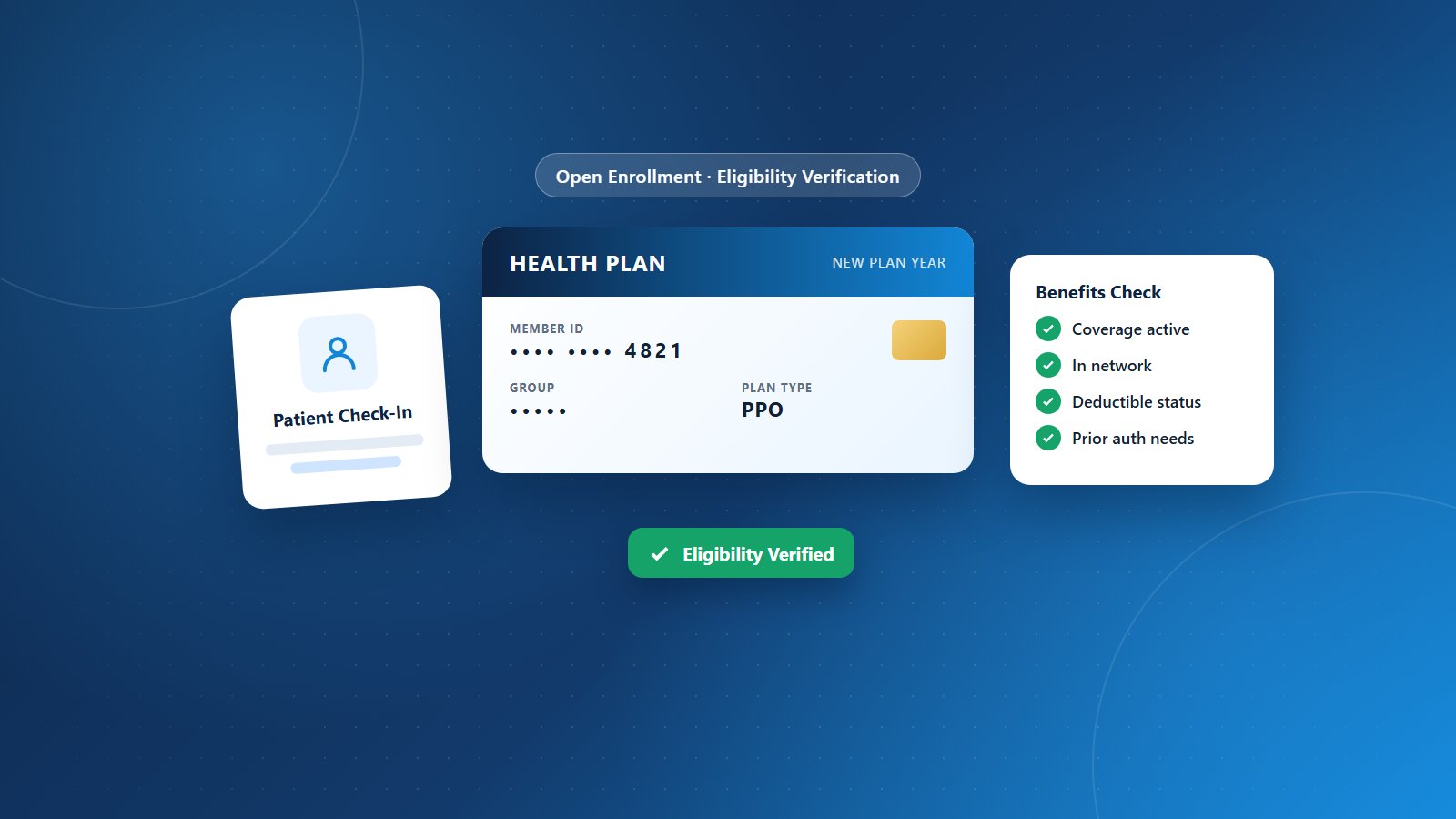
Active coverage is only the first question. A complete verification also confirms:
- Whether your practice and the rendering provider are in network.
- Deductible amounts and how much has been met.
- Copay and coinsurance responsibilities.
- Prior authorization or referral requirements for planned services.
- Coverage limits or exclusions for specific services.
4. Re-scan insurance cards and IDs
Ask every patient for their current insurance card at their first visit of the year, even if they say nothing has changed. Scan both sides and update the record.
5. Update the patient record immediately
When coverage changes, update demographics, payer information and subscriber details right away so the claim is submitted correctly the first time.
Using Technology to Verify Faster
Manual eligibility checks through payer portals and phone calls are time-consuming, especially during peak season. Many practice management systems offer real-time or batch electronic eligibility verification that checks coverage automatically for upcoming appointments. These tools can flag inactive coverage, plan changes and benefit details before the patient arrives.
Technology works best when paired with trained staff who know how to interpret the results and follow up when something doesn’t look right. Some complex benefit questions still require a call to the payer.
Turning Verification Into Better Collections
Eligibility verification isn’t just about avoiding denials. It also helps you collect patient balances more effectively. When you know a patient’s deductible status and cost-sharing in advance, your front desk can:
- Give patients an accurate estimate of what they’ll owe.
- Collect copays and known balances at check-in.
- Discuss payment options before the visit rather than after.
Because many deductibles reset at the start of the year, patients are responsible for a larger share of their costs in the first months of the year. Clear communication up front leads to fewer unpaid balances and a better patient experience.
Don’t Forget Your Own Network Status
Open enrollment is also a good time to confirm your practice’s own participation status. Make sure your providers are properly credentialed with the plans your patients are choosing, your directory listings are accurate and any new providers have completed enrollment. A patient may verify that your practice is in network, only to find a provider hasn’t finished credentialing with their new plan.
How PRCM Helps Protect Your January Revenue
Physicians Revenue Cycle Management provides complete pre-encounter support, including basic and advanced insurance eligibility and benefits verification through web portals and payer calls, prior authorization and provider credentialing with Medicare, Medicaid and commercial payers. Our team helps practices catch coverage changes before they become denials, so January starts with steady cash flow instead of a backlog of rework.
Combined with our medical billing services and revenue cycle management, our eligibility workflows keep claims clean from the very first touchpoint.
Start the New Year With Clean Claims
Open enrollment changes are inevitable, but the denials they cause are not. By communicating with patients early, verifying eligibility and benefits before every visit and keeping your own network status current, your practice can avoid the January slowdown that catches so many others.
Want help building an eligibility process that protects your revenue? Let’s connect and see how PRCM can support your front-end workflow.