Eligibility verification is the foundation of a clean claim. If coverage isn’t active, the payer is wrong or benefits aren’t understood, nothing that happens afterward, no matter how well coded, will result in a timely payment. With new plan years starting in January, front-desk eligibility processes matter more than ever.
Here are front-desk best practices for insurance eligibility verification.
1. Verify Before Every Visit
Coverage can change at any time, not just at open enrollment. Verify eligibility before every appointment, including for established patients.
2. Verify in Advance
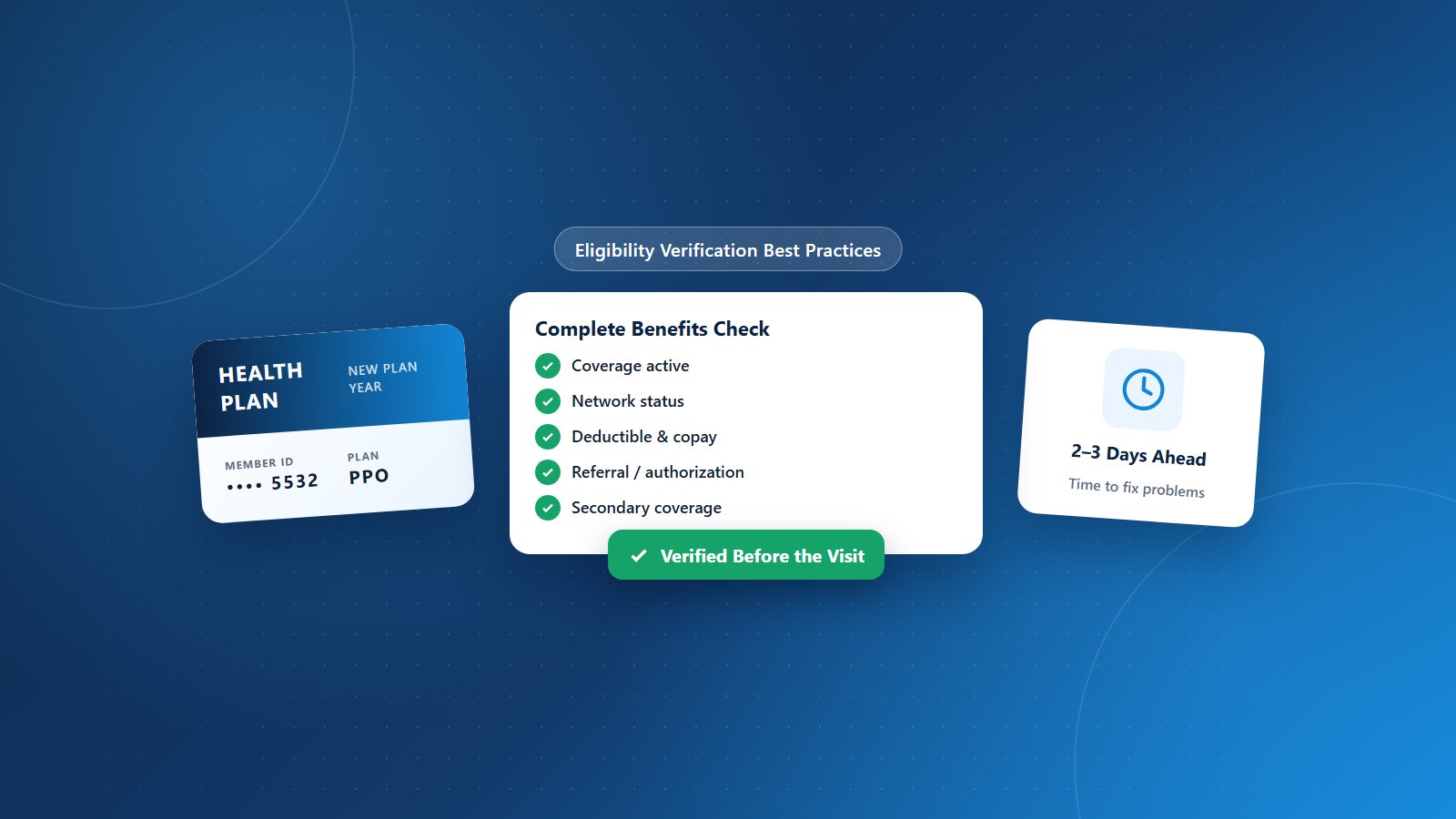
Check eligibility two to three business days before the visit. This leaves time to contact patients about coverage problems, obtain authorizations and update records.
3. Use Batch and Real-Time Tools
Batch verification checks all upcoming appointments at once, while real-time checks confirm coverage at check-in. Use both for efficiency and accuracy.
4. Verify More Than Active Coverage
A complete check includes:
- Active coverage on the date of service.
- Correct payer, plan and member ID.
- Network status for your practice and provider.
- Copays, deductibles, coinsurance and amounts met.
- Referral and authorization requirements.
- Benefit limits for services such as therapy.
- Coordination of benefits and secondary coverage.
5. Scan Cards and IDs at Every Visit
Ask for current insurance cards and photo ID each visit. Compare details with the system and update immediately.
6. Confirm Demographics
Names, dates of birth and subscriber information must match payer records exactly.
7. Document the Verification
Record when eligibility was verified, by whom and what was found. Save reference numbers from payer calls or portals.
8. Handle Problems Before the Visit
When coverage is inactive or unclear, contact the patient, explain options and follow your financial policy. Don’t wait until after the visit.
9. Communicate Costs
Use benefit information to provide cost estimates and collect patient responsibility at check-in.
10. Track Eligibility Denials
Monitor denials related to eligibility and registration by staff member and location, and use the data for coaching.
Special Situations
- Medicare Advantage: Confirm whether patients have traditional Medicare or an Advantage plan. See our Medicare Advantage guide.
- Medicaid: Verify managed care plan assignment every visit. See our Medicaid eligibility guide.
- Workers’ compensation and auto claims: Collect claim information and adjuster contacts.
Eligibility Support From PRCM
Physicians Revenue Cycle Management provides basic and advanced eligibility and benefits verification through web portals and payer calls, along with prior authorization and credentialing. Our revenue cycle management starts at the front desk.
Want cleaner claims from the very first step? Let’s connect.