Medicare Advantage plans cover a large and growing share of Medicare beneficiaries. For practices, that means more patients whose benefits are administered by private insurance companies rather than traditional Medicare. While these plans must cover Medicare benefits, they often have their own networks, authorization requirements, billing rules and payment timelines, which can create challenges for billing teams.
Here’s how to manage Medicare Advantage billing effectively.
Challenge 1: Identifying the Right Payer
Patients don’t always realize they’re enrolled in a Medicare Advantage plan, and some still carry their original Medicare card. Billing traditional Medicare for an Advantage patient results in denials.
Solution: Verify eligibility at every visit and ask patients specifically whether they have a Medicare Advantage or other private plan. Scan all cards.
Challenge 2: Network Restrictions
Many Advantage plans have provider networks. Out-of-network services may not be covered or may be covered at a different level.
Solution: Confirm your participation status with each plan and verify network requirements before scheduling.
Challenge 3: Prior Authorization
Medicare Advantage plans frequently require prior authorization for services that traditional Medicare does not, including imaging, procedures, therapies and certain drugs.
Solution: Maintain plan-specific authorization lists and verify requirements for every service. See our prior authorization best practices.
Challenge 4: Referrals
Some HMO-style Advantage plans require referrals from primary care physicians for specialist visits.
Solution: Confirm referral requirements and make sure referrals are on file before the visit.
Challenge 5: Varying Billing and Coding Policies
Advantage plans may apply their own claim edits, documentation requirements and payment policies.
Solution: Track plan policy updates and analyze denials by plan to identify patterns.
Challenge 6: Payment Delays and Denials
Advantage plans may process claims differently and on different timelines than traditional Medicare, and denial rates can vary between plans.
Solution: Monitor A/R by plan, follow up promptly and appeal denials using each plan’s process.
Challenge 7: Risk Adjustment Documentation
Medicare Advantage payments to plans are adjusted based on patient health status, which depends on accurate documentation and diagnosis coding. Plans may request records or conduct reviews.
Solution: Document all chronic conditions evaluated and managed at each visit and code diagnoses to the highest specificity supported.
Challenge 8: Patient Cost Sharing
Copays and coinsurance vary widely between Advantage plans.
Solution: Verify benefits before visits and collect patient responsibility at the time of service.
Building a Medicare Advantage Workflow
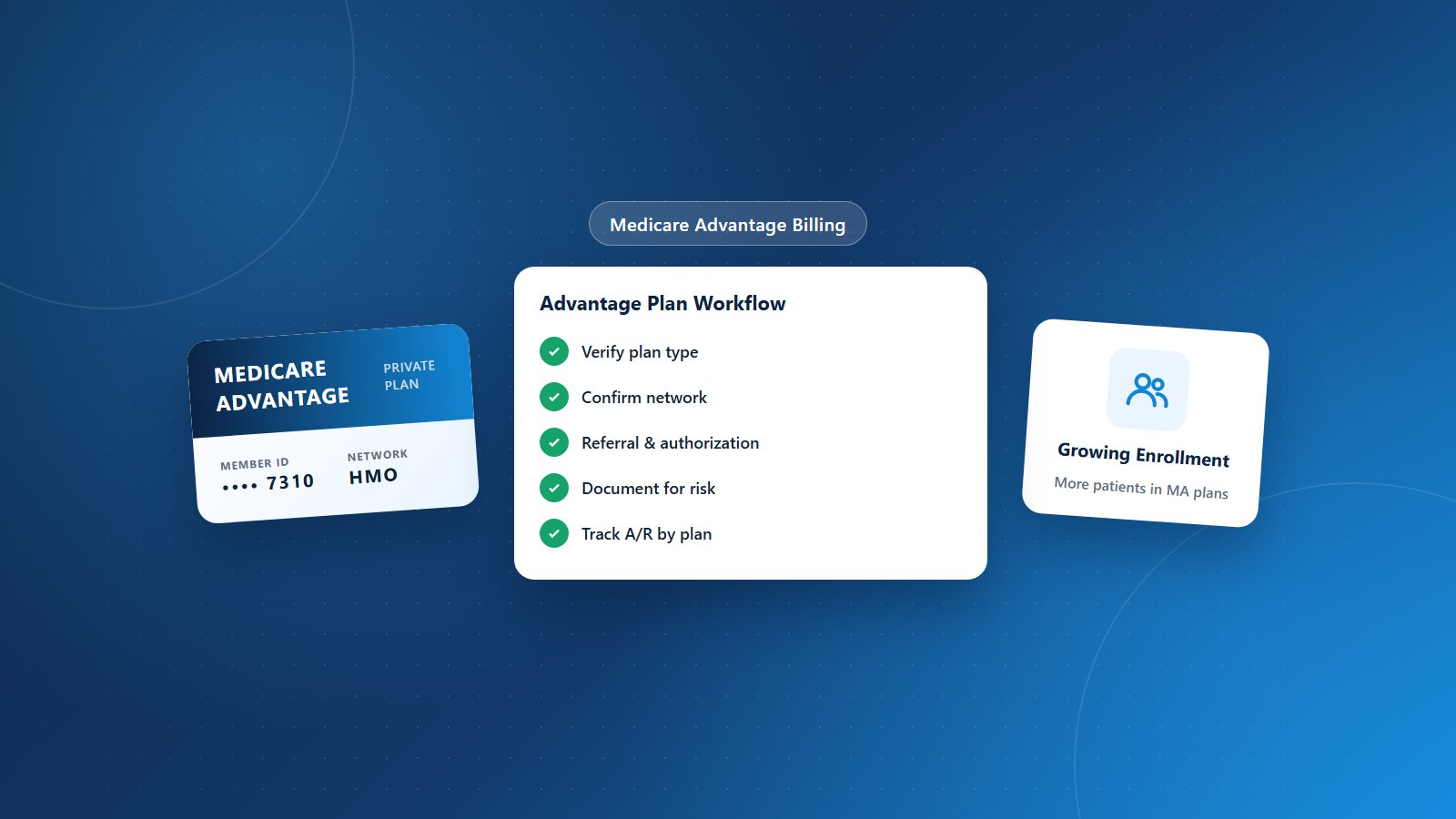
- Verify eligibility and plan type at every visit.
- Confirm network status, referrals and authorizations.
- Document thoroughly for medical necessity and risk adjustment.
- Submit clean claims with plan-specific requirements.
- Track denials and A/R by plan.
Medicare Advantage Billing Support From PRCM
Physicians Revenue Cycle Management helps practices manage Medicare Advantage complexity with eligibility verification, authorization management, plan-specific billing and denial follow-up. Our revenue cycle management and credentialing teams keep you in network and paid.
Struggling with Medicare Advantage claims? Let’s connect.