Social media gives physicians a way to educate patients, build trust and show the human side of their practice. Patients increasingly look at a practice’s social media before booking an appointment. But healthcare social media comes with real risks: patient privacy, professional boundaries and misinformation. The key is a thoughtful strategy that’s helpful, authentic and compliant.
Here’s what physicians should post on social media, and what to avoid.
What to Post
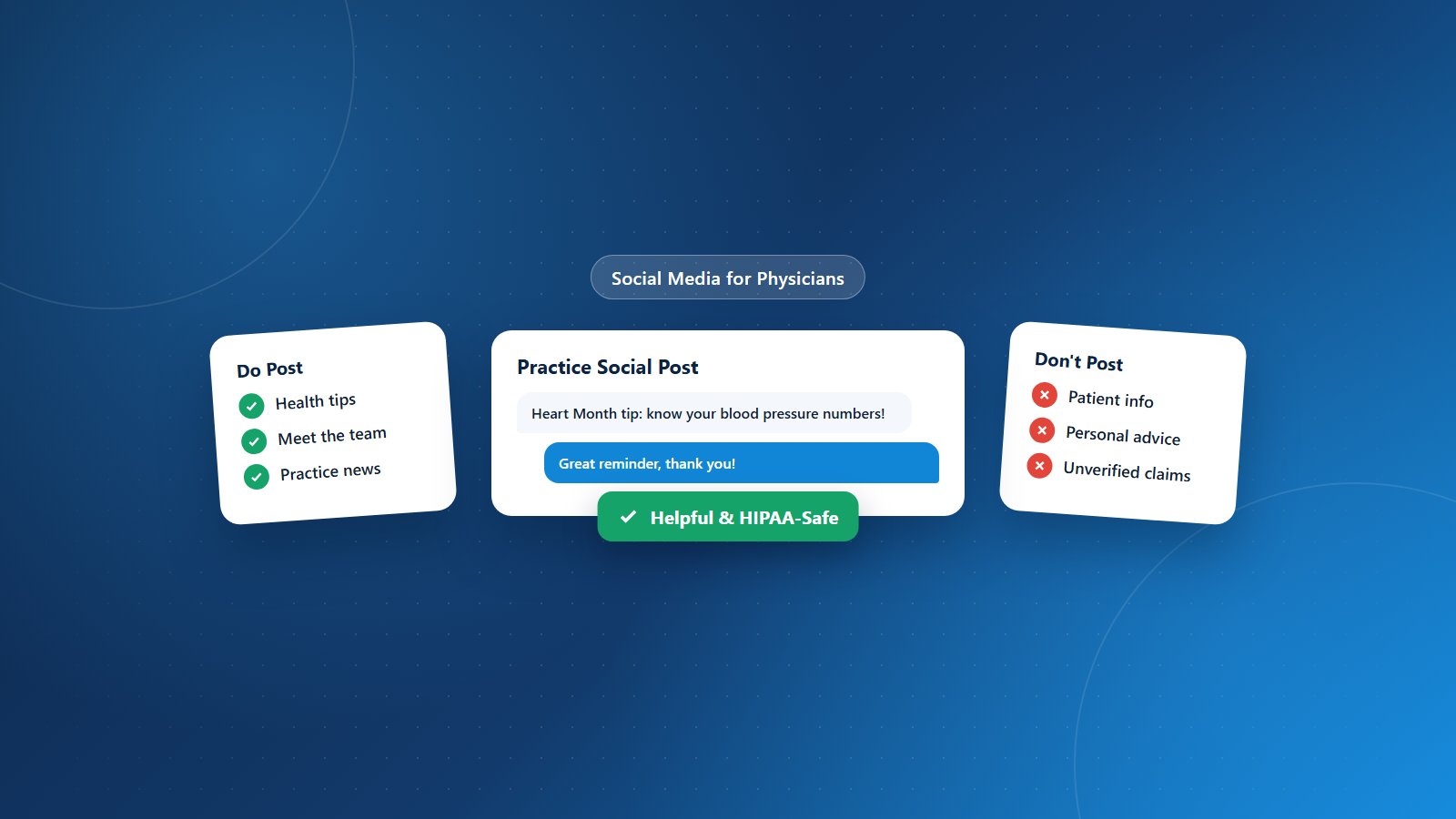
Health education
Share simple, accurate information about prevention, common conditions, seasonal health topics and when to seek care. Educational content builds credibility and is genuinely useful to your community.
Awareness months and campaigns
Health observances like Heart Month, Mental Health Awareness Month and Breast Cancer Awareness Month are natural opportunities for timely, relevant posts.
Practice updates
Post new providers, new services, expanded hours, holiday closures, flu shot availability and telehealth options.
Meet the team
Introduce physicians and staff with photos and short bios. Patients feel more comfortable when they know who they’ll see.
Behind the scenes
Show your office, community events and team celebrations, without any patients or patient information in view.
Answers to common questions
Address questions you hear frequently: what to bring to an appointment, insurance accepted or how to use the patient portal.
What Not to Post
- Anything that could identify a patient without proper written authorization, including photos, stories, appointment details or even backgrounds showing charts or screens.
- Specific medical advice to individuals in comments or messages. Direct them to schedule a visit instead.
- Unverified health claims or exaggerated promises of results.
- Responses to reviews or comments that confirm someone is a patient.
- Political or divisive content on practice accounts, which can alienate patients.
Responding to Comments and Messages
Keep responses general and professional. Never discuss a person’s care publicly. Move conversations to secure channels or invite them to call the office. Read our guide to HIPAA-safe reputation management.
Build a Simple Social Media Policy
- Who can post on behalf of the practice.
- Approval process for content.
- Privacy rules for photos and patient stories.
- How to respond to comments and reviews.
- Guidelines for staff personal accounts that mention the practice.
Choose the Right Platforms
Focus on platforms your patients use. Many practices find community-oriented platforms useful for local patients and professional networks valuable for referral relationships.
Plan and Measure
Create a monthly content calendar and track engagement, website visits from social media and new patient inquiries. Consistency matters more than volume.
Social Media Support From PRCM
Physicians Revenue Cycle Management’s healthcare digital marketing services help practices build brand visibility with compliant, engaging content. Learn more about building an annual healthcare marketing plan.
Want a social media presence patients trust? Let’s connect.