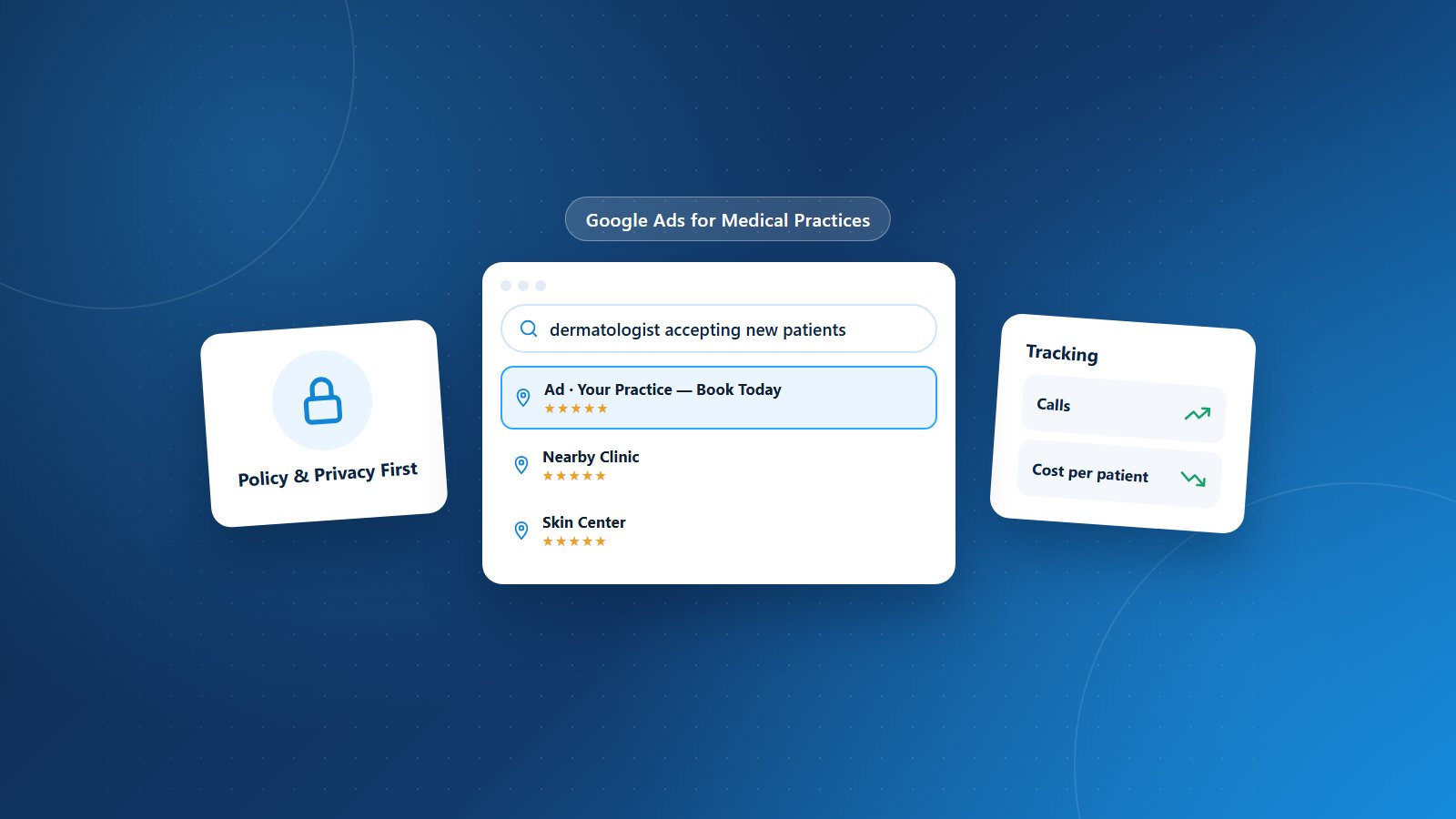
When someone searches for “urgent care near me” or “dermatologist accepting new patients,” paid search ads often appear at the very top of the results. Google Ads can put your practice in front of patients at the exact moment they’re looking for care. But healthcare advertising comes with special rules, from platform policies to privacy considerations, and poorly managed campaigns can waste budget quickly.
Here’s a compliance-first guide to running effective Google Ads for your medical practice.
Why Paid Search Works for Practices
- High intent: People searching for care are ready to act.
- Immediate visibility: Ads can appear right away while SEO builds over time.
- Precise targeting: Target specific services, locations and times.
- Measurable results: Track calls, form submissions and appointments.
Step 1: Understand Healthcare Ad Policies
Advertising platforms have policies for healthcare and medicine, covering topics such as prescription drugs, certain treatments and personalized advertising based on health conditions. Review current policies before launching campaigns to avoid disapprovals.
Step 2: Protect Patient Privacy
Be careful with tracking technologies on your website, especially on pages where patients share health information. Avoid sending protected health information to advertising platforms, and work with partners who understand healthcare privacy requirements.
Step 3: Focus on High-Value Services
Start with services that matter most to your practice, such as new patient visits, specialty procedures or services with available capacity.
Step 4: Target Locally
Limit ads to the areas you serve. Use location-specific ad text and connect ads to your Google Business Profile.
Step 5: Choose Keywords Carefully
Focus on searches showing intent to book care, such as “pediatrician near me” or “knee pain specialist,” and exclude irrelevant searches, such as job seekers or medical students.
Step 6: Write Clear, Honest Ads
Highlight what matters to patients: availability, insurance accepted, location, specialties and convenience. Avoid exaggerated claims or guarantees of outcomes.
Step 7: Send Traffic to the Right Page
Link ads to specific service pages with clear calls to action, not just your homepage. Make it easy to call or request an appointment on mobile. Read about websites that convert.
Step 8: Track Conversions
Track calls, form submissions and online bookings. Measure cost per new patient, not just clicks.
Step 9: Optimize Regularly
Review search terms, adjust bids, pause underperforming keywords and test new ad text. Campaigns need ongoing attention.
Step 10: Combine With Organic Strategies
Paid search works best alongside SEO, your Google Business Profile and reviews. See our medical SEO guide.
Marketing Support From PRCM
Physicians Revenue Cycle Management’s healthcare digital marketing services help practices attract patients through compliant, measurable campaigns. Learn about building an annual healthcare marketing plan.
Want paid search that brings in real patients? Let’s connect.