Online reviews have become one of the most influential factors in how patients choose a doctor. Before booking an appointment, most patients read reviews on Google, healthcare directories and social media. A strong reputation builds trust and brings in new patients; a handful of unanswered negative reviews can quietly send them elsewhere.
But physicians face a unique challenge: responding to reviews without violating patient privacy. Here’s how to manage your online reputation effectively and stay HIPAA compliant.
Why Reputation Management Matters
- Patient choice: Ratings and reviews strongly influence which practice patients contact.
- Search visibility: Review volume, frequency and quality influence local search rankings.
- Feedback: Reviews reveal what patients value and where operations need improvement.
The HIPAA Challenge
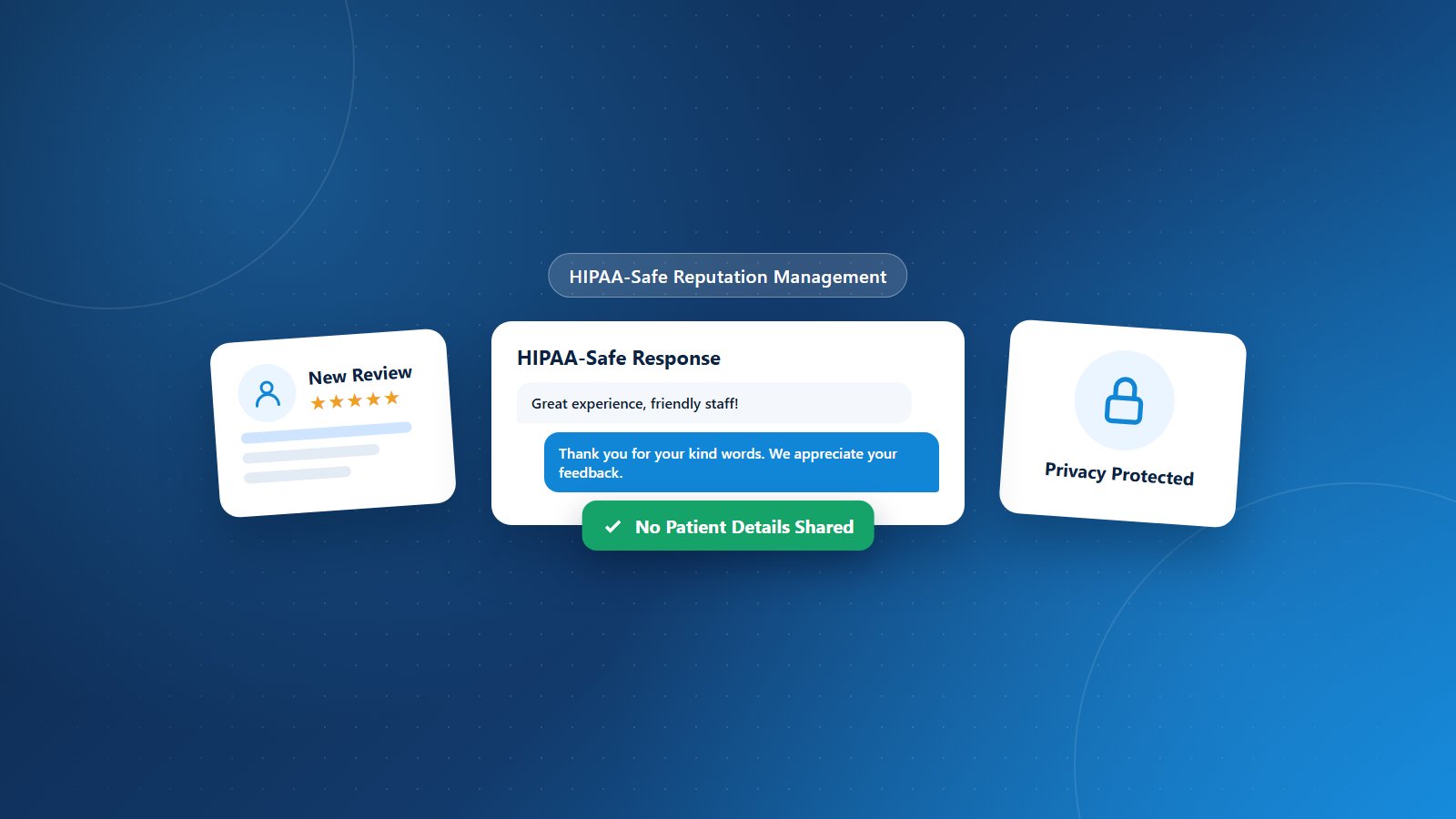
HIPAA protects patient health information, including the fact that someone is a patient. When responding to a review, even confirming that the reviewer was seen at your practice can be a privacy violation. Practices have faced penalties for responses that disclosed patient information, even when the patient posted details first.
HIPAA-safe response principles
- Never confirm or deny that the reviewer is a patient.
- Never mention diagnoses, treatments, appointment details or billing information.
- Keep responses general, professional and courteous.
- Invite the reviewer to contact the office directly to discuss concerns.
Example of a HIPAA-safe response to a negative review
“Thank you for sharing your feedback. We take all comments seriously and are committed to providing a positive experience for everyone who contacts our practice. Because of privacy laws, we can’t discuss specific situations online, but we’d welcome the opportunity to talk with you directly. Please call our office manager at your convenience.”
Example of a response to a positive review
“Thank you for taking the time to leave such kind words. Our team works hard to provide a welcoming experience, and we appreciate your feedback.”
Building More Positive Reviews
Most satisfied patients never leave reviews unless asked. Make it easy:
- Send a review request by text or email after the visit with a direct link.
- Train staff to mention that reviews help others find the practice.
- Display signage or QR codes in the office.
- Ask consistently, not just after particularly good visits.
Avoid offering incentives for reviews, and never write or post fake reviews; both can violate platform policies and consumer protection rules.
Handling Negative Reviews
- Don’t respond emotionally. Take time to review the situation internally.
- Investigate offline. Identify any operational issues behind the complaint.
- Respond publicly with a HIPAA-safe message and invite private contact.
- Fix the underlying issue if the feedback reveals a real problem.
- Flag reviews that violate platform policies, such as spam or offensive content.
Monitor Your Reputation Everywhere
Track reviews on Google, healthcare directories, social media and other relevant sites. Monitoring tools can alert you when new reviews appear so you can respond promptly.
Operations Drive Reputation
Many negative reviews aren’t about clinical care. They’re about wait times, phone access, front-desk interactions and billing surprises. Clear cost estimates, accurate statements and responsive billing support go a long way. Our medical billing services help reduce billing-related frustration.
Reputation and Marketing Support From PRCM
Physicians Revenue Cycle Management’s healthcare digital marketing services help practices build their brand, manage online reputation and communicate effectively with patients, all with healthcare compliance in mind.
Want to strengthen your online reputation? Let’s connect.