Remote patient monitoring (RPM) has become well known among physician practices. Its newer cousin, remote therapeutic monitoring (RTM), is less familiar but increasingly important, especially for physical therapy, pain management, respiratory and musculoskeletal care. The names are similar, and both involve monitoring patients outside the office, but they serve different purposes and have different requirements.
Here’s a clear comparison of RTM vs. RPM.
What Is Remote Patient Monitoring?
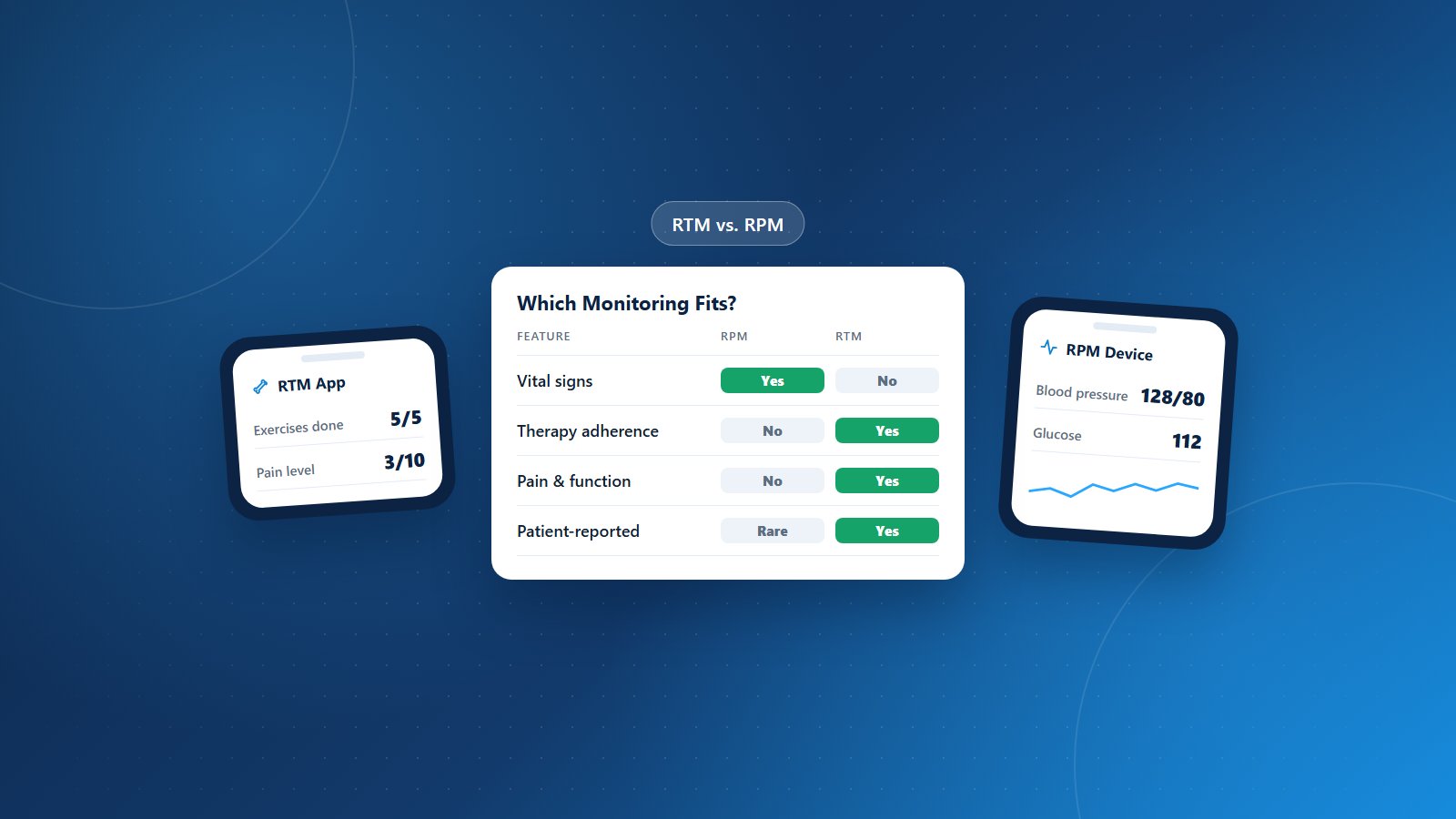
RPM focuses on physiologic data such as blood pressure, blood glucose, weight, oxygen saturation and heart rate, collected by connected medical devices and transmitted to the care team. It’s commonly used for hypertension, diabetes, heart failure and COPD.
What Is Remote Therapeutic Monitoring?
RTM focuses on non-physiologic data related to a patient’s therapy, such as therapy adherence, therapy response, musculoskeletal function, respiratory status or pain levels. Data may be reported by the patient through a connected app or device. It’s often used to monitor home exercise programs, inhaler adherence or medication response.
Key Differences
| Factor | RPM | RTM |
|---|---|---|
| Data type | Physiologic (vital signs) | Therapeutic (adherence, response, function, pain) |
| Data entry | Usually automatic from devices | Can include patient-reported data through a device or app |
| Common conditions | Hypertension, diabetes, heart failure | Musculoskeletal, respiratory, therapy adherence |
| Common users | Primary care, cardiology, endocrinology | Physical therapy, pain management, pulmonology, orthopedics |
| Who may bill | Physicians and certain qualified practitioners | Often includes therapists and other qualified professionals, depending on payer rules |
When RTM Makes Sense
- Physical therapists want to track home exercise adherence and progress between visits.
- Pain management practices want to monitor pain levels and medication response.
- Pulmonology practices want to track inhaler use and respiratory symptoms.
- Orthopedic practices want to support post-surgical rehabilitation.
When RPM Makes Sense
- Patients need regular vital sign readings to guide treatment.
- Chronic conditions require frequent medication adjustments.
- Practices want early warning of deterioration in conditions such as heart failure.
Shared Requirements
Both programs typically require:
- Patient consent.
- Qualifying devices or software.
- Minimum data collection over a monitoring period.
- Treatment management time and interactive communication with patients.
- Thorough documentation.
Payers generally don’t allow RTM and RPM to be billed for the same patient during the same period, so choose the program that best fits each patient’s needs. Requirements change, so review current payer policies regularly.
Monitoring Programs With PRCM
Physicians Revenue Cycle Management helps practices choose, launch and bill remote monitoring programs. Learn more about our remote patient monitoring services, or read our RPM vs. CCM comparison.
Not sure whether RTM or RPM fits your practice? Let’s connect.