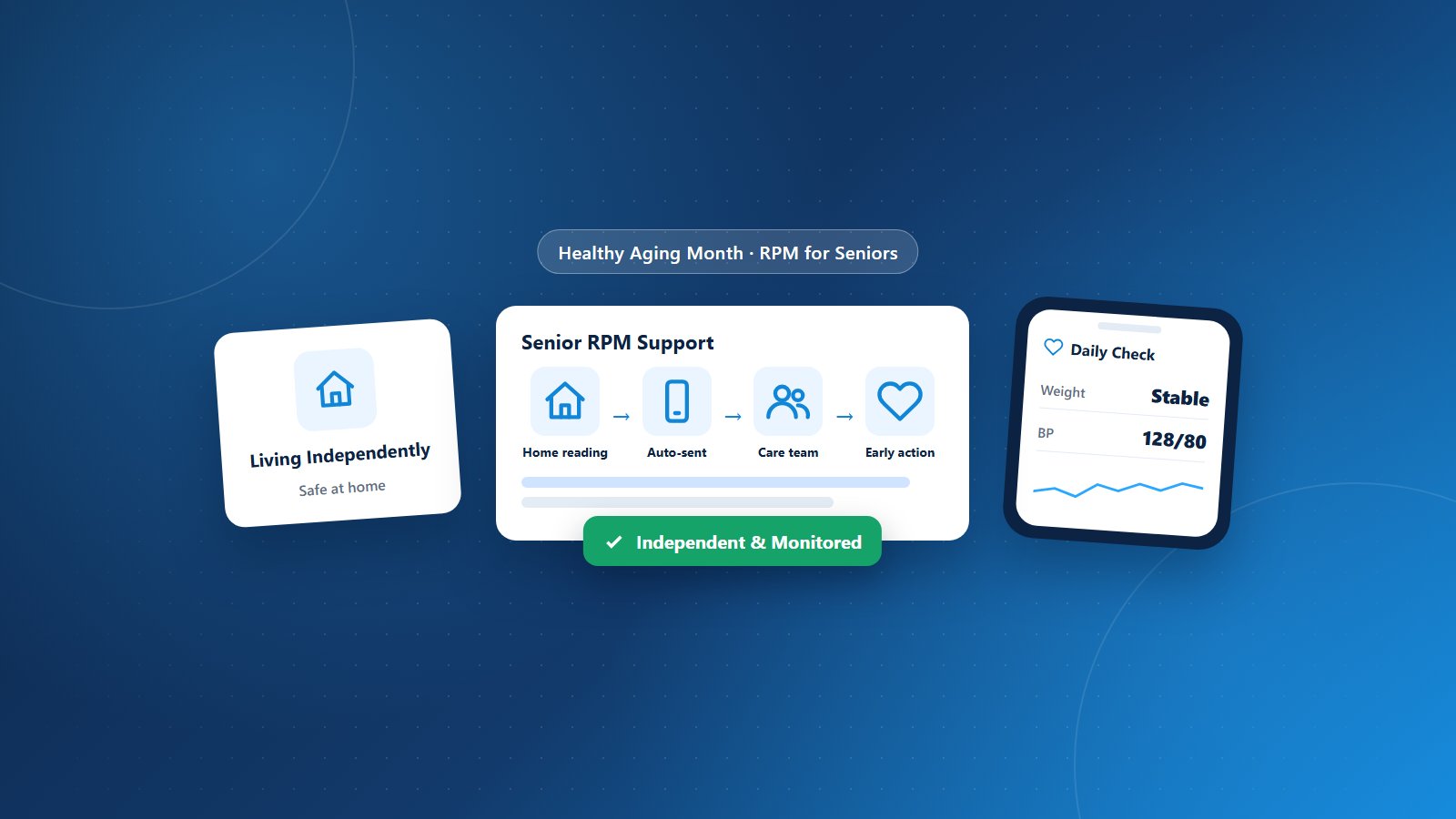
September is Healthy Aging Month. Most older adults want to remain in their own homes as long as possible. Chronic conditions like hypertension, heart failure, diabetes and COPD can make that harder, especially when problems aren’t caught early. Remote patient monitoring (RPM) helps seniors stay safe and independent by giving their care team regular insight into their health.
Here’s how RPM supports independent living and better outcomes for older patients.
How RPM Helps Seniors
Early warning signs
Daily readings of blood pressure, weight, oxygen levels or blood sugar can reveal changes before symptoms become serious. For example, rapid weight gain may signal fluid buildup in heart failure.
Fewer emergency visits
Timely outreach and medication adjustments can prevent problems from escalating into emergency visits or hospital stays.
Confidence and peace of mind
Seniors and their families feel reassured knowing a care team is watching.
Less travel
Remote monitoring can reduce the need for frequent office visits, which matters for patients with mobility or transportation challenges.
Designing RPM for Older Adults
Choose simple devices
Use devices with large displays, simple buttons and automatic cellular transmission so patients don’t need Wi-Fi or smartphones.
Provide hands-on setup
Walk patients and caregivers through device use in person or by phone, and check in after the first week.
Involve caregivers
With patient permission, caregivers can help with reminders and communication.
Keep communication personal
Regular, friendly contact from a familiar care team member builds trust and keeps patients engaged.
Coordinate with care management
Many older patients benefit from chronic care management as well. Combining services provides both data and coordination. Read about combining CCM and RPM compliantly.
Program Requirements
RPM programs require patient consent, qualifying devices, regular data collection, treatment management time and documentation. Requirements can change, so review payer policies regularly.
Measuring Success
- Patient engagement and reading adherence.
- Clinical measures such as blood pressure control.
- Emergency visits and hospitalizations.
- Patient and caregiver satisfaction.
RPM Support From PRCM
Physicians Revenue Cycle Management helps practices launch and manage remote patient monitoring programs designed for older patients, with technology, monitoring support and accurate billing. For more on supporting older adults, see our article on care management for seniors.
This Healthy Aging Month, help your patients stay independent. Let’s connect.