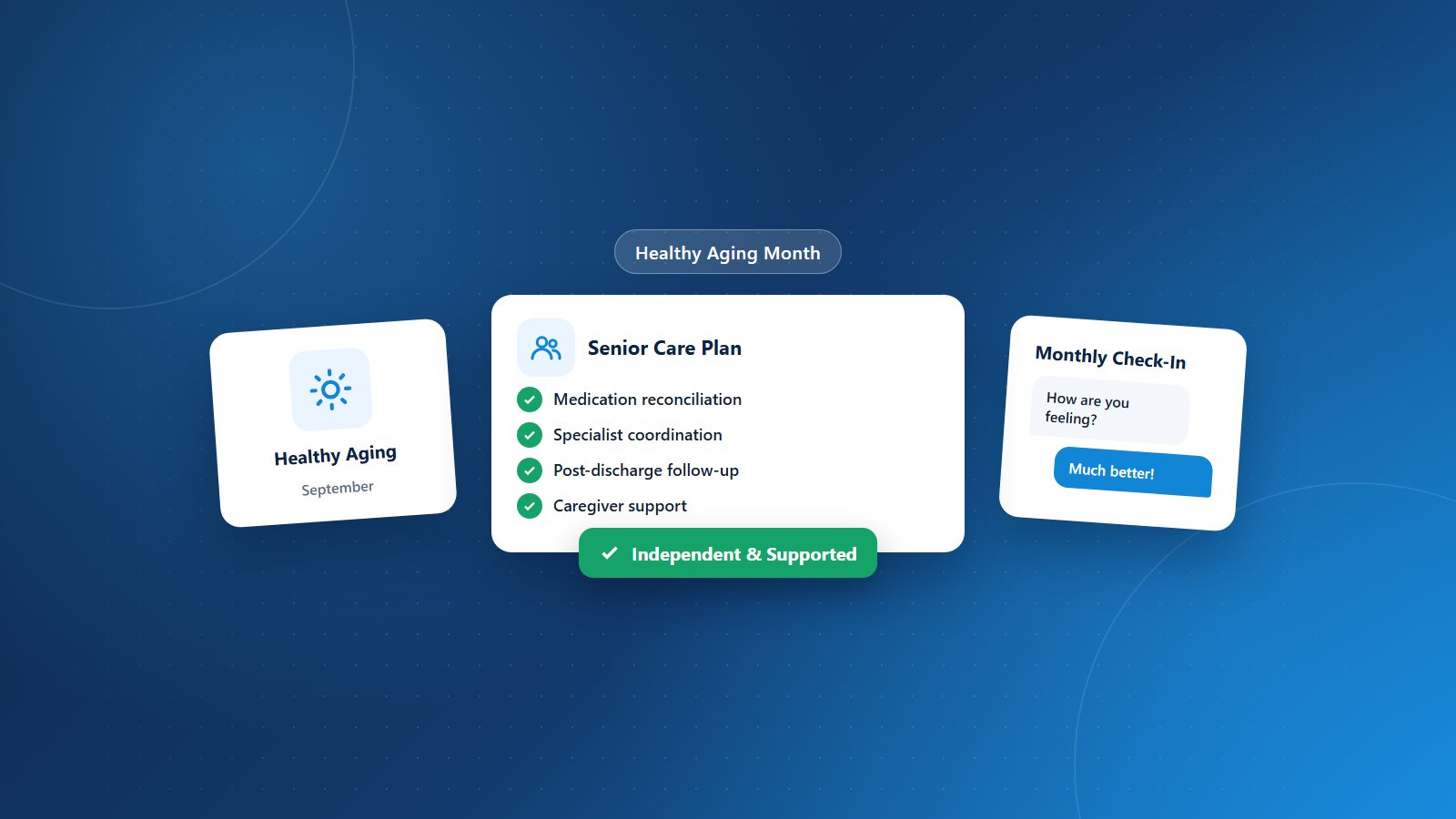
September is Healthy Aging Month, a reminder that it’s never too late to focus on health and quality of life. Older adults are more likely to live with multiple chronic conditions, take several medications and see multiple specialists. Without coordination, care can become fragmented, leading to medication problems, missed follow-ups and avoidable hospital stays. Care management helps older patients stay healthier, more independent and more connected to their care team.
Here’s how care management supports healthy aging.
The Challenges of Caring for Older Patients
- Multiple chronic conditions that interact with each other.
- Polypharmacy: Many medications from different prescribers increase the risk of interactions and errors.
- Multiple specialists whose care must be coordinated.
- Transitions of care after hospital stays or rehabilitation.
- Cognitive changes, mobility limitations and social isolation.
- Caregiver involvement that requires communication and support.
How Care Management Helps
A comprehensive care plan
A personalized plan brings together goals, conditions, medications, specialists and community resources in one place.
Medication management
Regular medication reconciliation reduces errors, identifies duplications and supports adherence.
Care coordination
Care managers communicate with specialists, hospitals, home health agencies and pharmacies so nothing falls through the cracks.
Transitional support
After a hospital discharge, timely follow-up and medication review help prevent readmissions.
Regular check-ins
Monthly contact gives older patients and caregivers a reliable point of connection and early identification of problems.
Remote monitoring
For patients with conditions like hypertension, heart failure or diabetes, remote patient monitoring adds daily data that supports timely intervention.
Supporting Independence
Care management can connect patients with resources such as transportation, meal programs, home safety evaluations and caregiver support, helping older adults remain safely at home longer.
Benefits for Practices
- Better outcomes and fewer avoidable emergency visits and hospitalizations.
- Stronger relationships with patients and families.
- Support for quality measures and value-based programs.
- Recurring, reimbursable services when requirements are met.
Getting Started
- Identify older patients with multiple chronic conditions or recent hospitalizations.
- Explain the program to patients and caregivers and document consent.
- Develop comprehensive care plans.
- Schedule regular outreach and track time.
- Coordinate with other providers and community services.
Learn more about building a sustainable care management program.
Care Management Support From PRCM
Physicians Revenue Cycle Management helps practices deliver chronic care management and remote monitoring programs that support older patients and their care teams, with compliant documentation and billing.
This Healthy Aging Month, help your older patients thrive. Let’s connect.