Primary care physicians manage more chronic disease than any other specialty. Patients with diabetes, hypertension, heart disease, COPD, depression and other conditions rely on their primary care team to coordinate everything. But a standard office visit leaves little time for the ongoing support these patients need. Care management services help fill that gap.
Here’s how primary care practices can build a care management program that is sustainable for patients, staff and the practice.
What Care Management Includes
Care management services provide structured support between visits, typically delivered by clinical staff under physician direction. Depending on the program, services may include:
- Comprehensive care planning.
- Medication reconciliation and adherence support.
- Regular check-ins by phone, portal or video.
- Coordination with specialists, hospitals and community services.
- Transitional care after hospital or facility discharges.
- Remote monitoring of vital signs.
- Behavioral health integration.
Why Primary Care Is the Ideal Home for Care Management
- Primary care already has the longitudinal patient relationship.
- Many patients have multiple chronic conditions.
- Primary care coordinates across specialists.
- Care management supports quality measures that primary care is evaluated on.
Building Blocks of a Sustainable Program
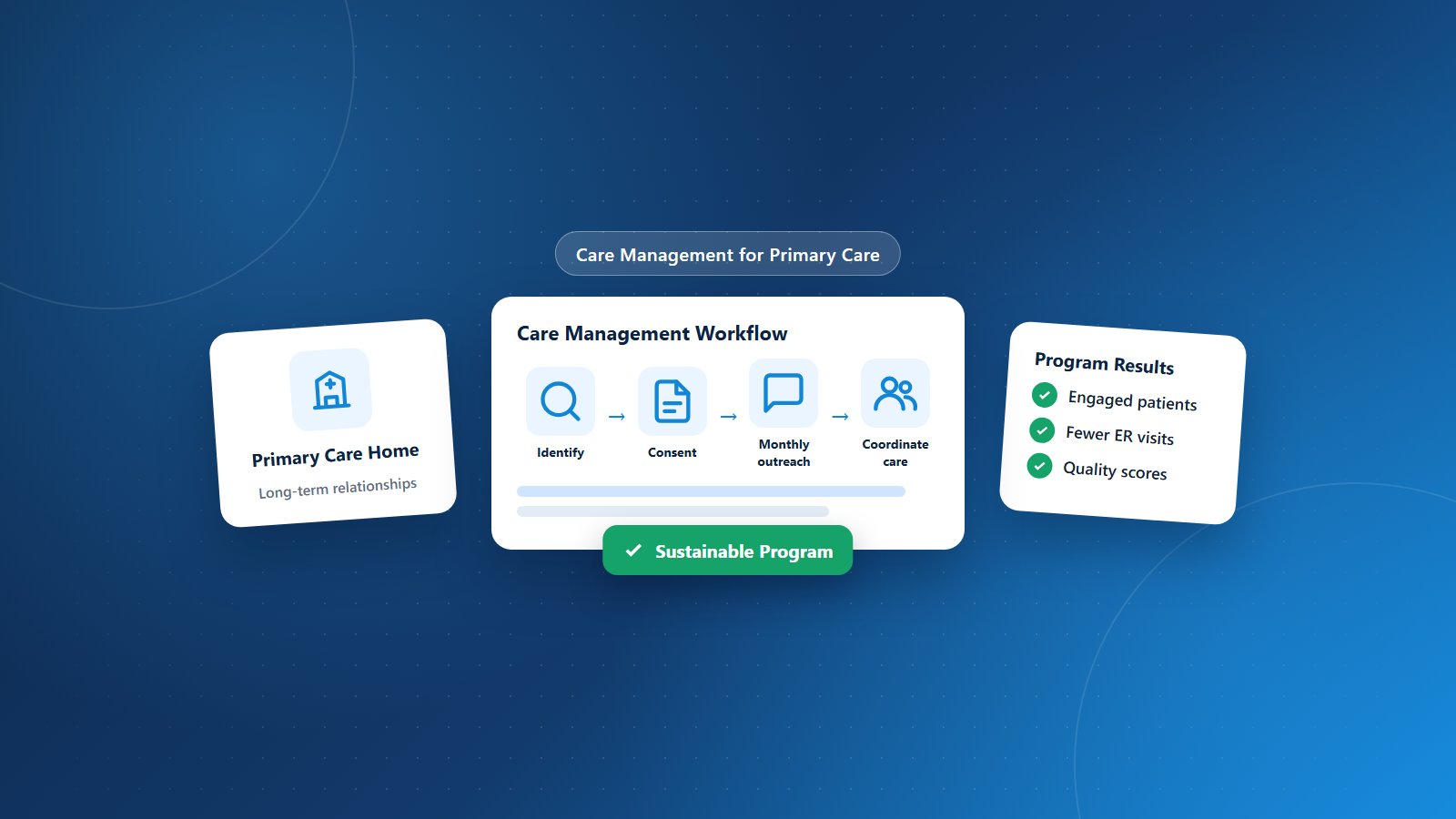
1. Start with the right patients
Use your EHR to identify patients with multiple chronic conditions, recent hospitalizations, frequent emergency visits or poorly controlled conditions. Start with a manageable group and expand.
2. Define roles clearly
Decide who identifies patients, who obtains consent, who performs outreach and who escalates issues to the physician. Clear roles prevent duplicated effort and missed patients.
3. Standardize workflows
Create scripts, schedules and templates for enrollment calls, monthly check-ins, medication reviews and care plan updates. Consistent workflows make the program scalable.
4. Use the right technology
Care management software helps track time, document interactions, manage care plans and identify patients due for outreach. Integration with your EHR reduces double documentation.
5. Document for compliance
Each care management service has specific requirements for consent, care plans and time tracking. Build them into workflows from day one.
6. Combine services thoughtfully
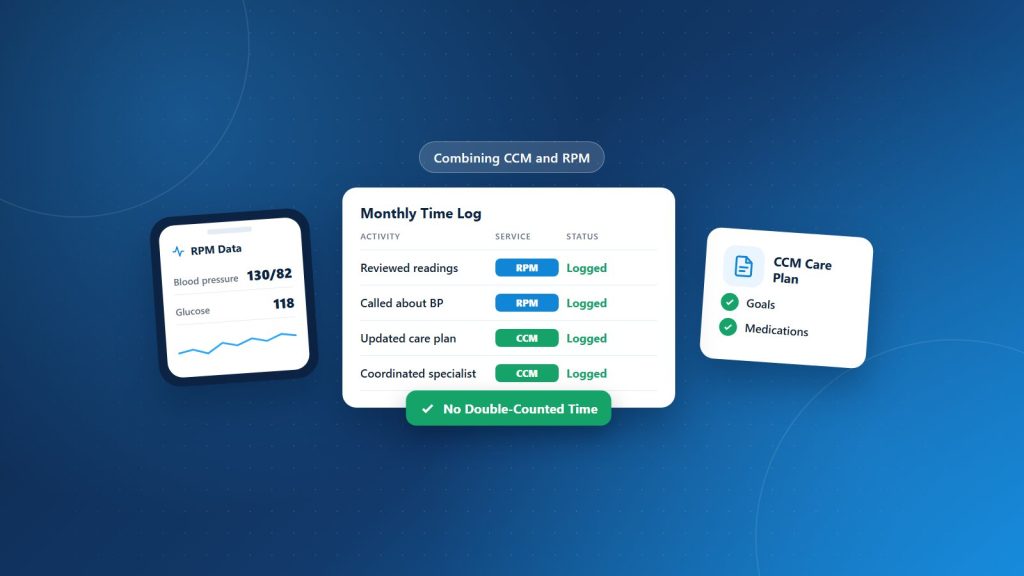
Many patients benefit from more than one service, such as chronic care management combined with remote patient monitoring. Make sure each service’s requirements are met independently.
7. Measure results
Track enrollment, patient engagement, clinical outcomes, emergency visits, hospitalizations and program revenue. Share results with physicians and staff to keep the program energized.
Common Pitfalls
- Enrolling patients without enough staff to support them.
- Inconsistent outreach that leaves patients disengaged.
- Poor time tracking that limits billable services.
- Care plans that are created once and never updated.
In-House or Partner?
Some practices hire and train their own care managers. Others partner with an experienced care management provider who supplies trained staff, technology and billing expertise. A partnership can help practices launch faster and scale without adding management burden.
Care Management Support From PRCM
Physicians Revenue Cycle Management helps primary care practices build and run care management programs, from patient identification and consent to outreach, documentation and billing. Learn more about our chronic care management services.
Ready to support your chronic care patients between visits? Let’s connect.