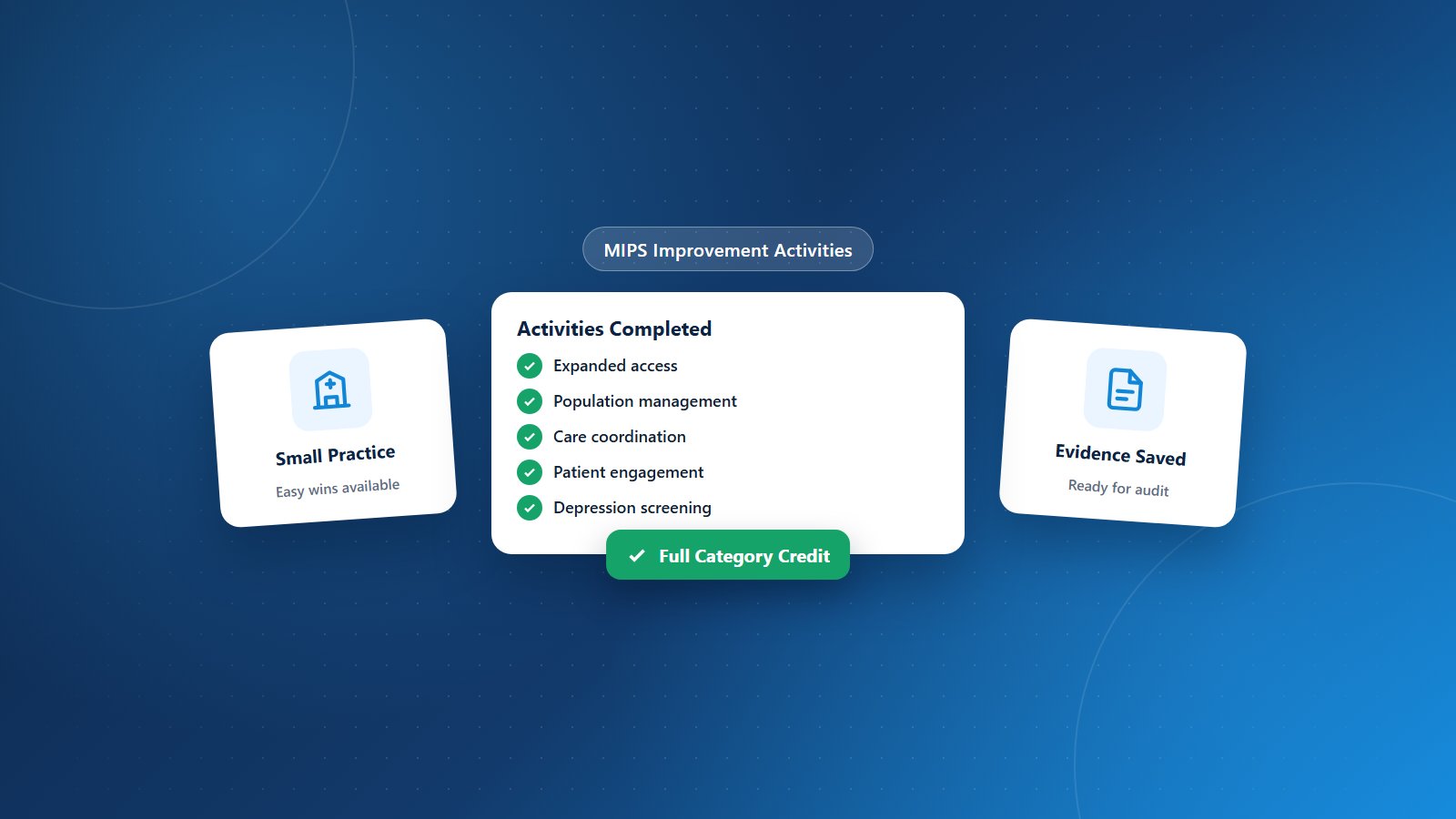
Of all the MIPS performance categories, Improvement Activities is often the most approachable for small practices. Instead of reporting performance data on clinical measures, practices attest to completing activities that improve care processes, patient engagement and access. Many practices already perform qualifying activities without realizing it.
Here’s how small practices can find easy wins in the Improvement Activities category.
How Improvement Activities Work
Practices select activities from an approved inventory and attest that they performed them for the required period during the performance year. Activities are weighted, and practices must complete enough activities to earn full credit. Small practices and certain other clinicians may have special scoring considerations, so check current program rules each year.
Why Improvement Activities Matter
- They contribute to your final MIPS score.
- They’re often achievable with workflows you already have.
- They can genuinely improve patient care and practice operations.
Activity Areas to Explore
Expanded practice access
Activities related to same-day appointments, extended hours or telehealth access may apply if your practice already offers them.
Population management
Activities related to managing chronic conditions, such as using registries or proactive outreach to patients with diabetes or hypertension, can align with care management programs.
Care coordination
Activities related to coordinating care with specialists, following up after hospital discharges or using care plans may fit practices with chronic care management programs.
Beneficiary engagement
Activities related to patient engagement, shared decision-making or self-management support can align with patient education efforts.
Patient safety and practice assessment
Activities related to medication safety, quality improvement initiatives or practice assessments may already be part of your operations.
Behavioral and mental health
Activities related to depression screening and behavioral health integration can fit primary care and specialty practices.
The specific activities available change over time, so review the current inventory for activities that match what your practice does.
Step-by-Step Approach
- Review the inventory early in the performance year.
- Match activities to existing workflows before adding new ones.
- Choose activities that also benefit patients and your practice.
- Assign an owner for each activity.
- Document as you go: policies, reports, screenshots, meeting notes and patient materials.
- Confirm the required duration is met.
- Attest accurately during submission.
Documentation Matters
Attestations can be audited. Keep evidence showing each activity was performed during the performance period, such as reports, schedules, written protocols or patient communication samples.
Combine With Other Categories
Improvement Activities work best as part of a full MIPS strategy. Learn more about all four MIPS categories and choosing quality measures.
MIPS Support From PRCM
Physicians Revenue Cycle Management’s Doctors MACRA Services help small practices identify qualifying activities, document them properly and attest with confidence.
Want easy MIPS wins this year? Let’s connect.