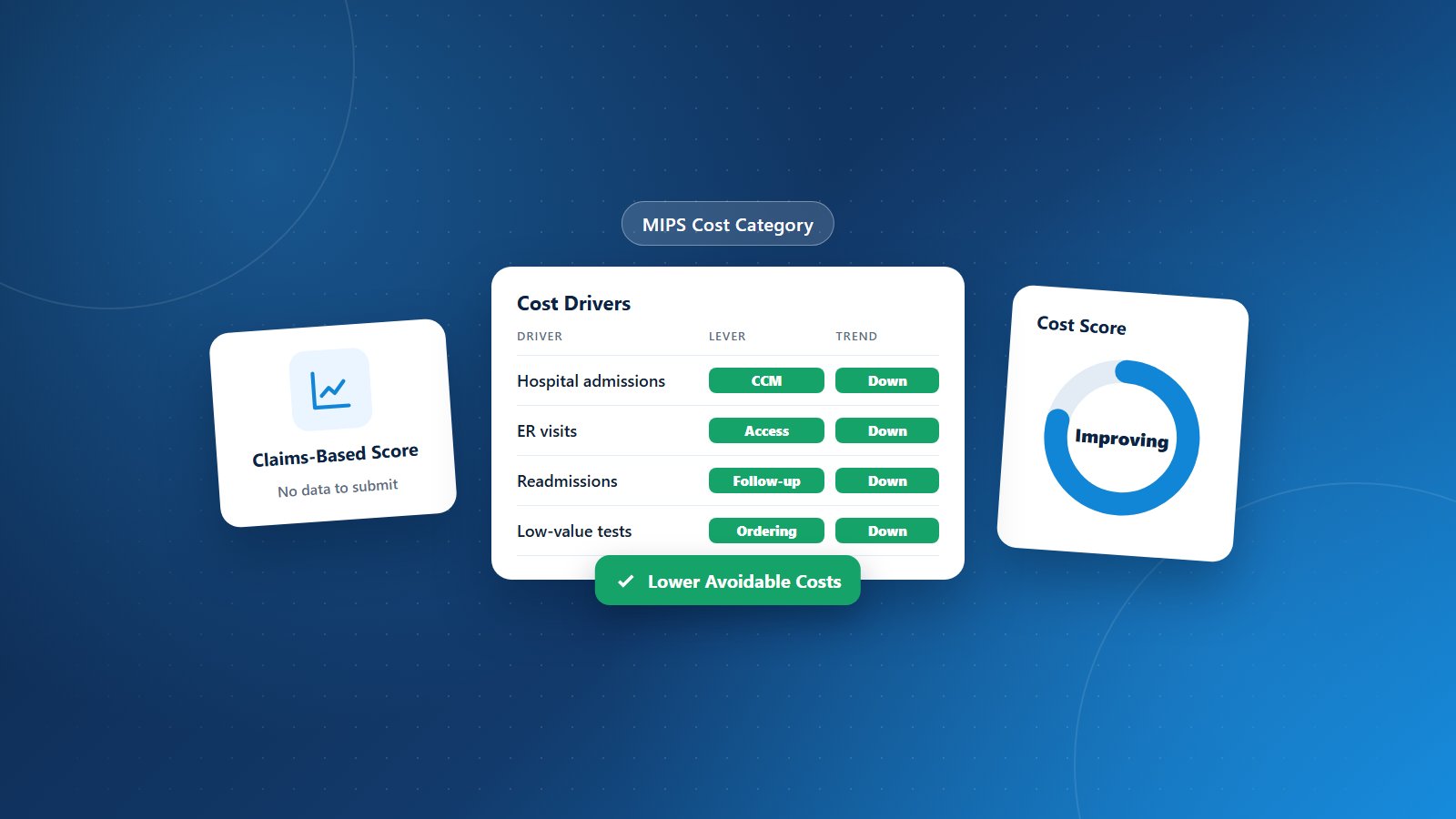
The MIPS Cost category is different from the other performance categories. Practices don’t submit any data for it. Instead, it’s calculated from Medicare claims, measuring the total cost of care associated with your patients. Because it’s calculated automatically, many practices assume there’s nothing they can do about it. In reality, practices can influence their Cost score through care patterns over time.
Here’s what drives your MIPS Cost score and how to improve it.
How the Cost Category Works
The Cost category uses measures that look at Medicare spending associated with patients attributed to you. Some measures evaluate total costs for patients over a period, while others focus on costs related to specific episodes of care, such as certain procedures or conditions. Your costs are compared with those of other clinicians, with adjustments for patient risk.
Measures, attribution rules and weighting can change, so review current program details each year.
What Drives Cost Scores
- Hospital admissions and readmissions.
- Emergency department visits.
- Post-acute care use, such as skilled nursing and home health.
- Imaging and testing patterns.
- Specialist referral patterns.
- Medication costs covered under Medicare Part B.
Strategies to Improve Your Cost Score
1. Understand your attribution
Review feedback reports to see which patients and episodes are attributed to you and which measures apply.
2. Reduce avoidable hospitalizations
Proactive chronic disease management, timely follow-up and patient education help prevent admissions. Chronic care management and remote patient monitoring support this goal.
3. Improve care transitions
Follow up promptly after hospital discharges and reconcile medications to reduce readmissions.
4. Improve access
Same-day appointments, extended hours and telehealth can redirect patients from emergency departments to more appropriate settings.
5. Use evidence-based ordering
Avoid low-value testing and imaging when it isn’t clinically indicated.
6. Choose high-value referral partners
Where clinically appropriate, refer to specialists and facilities that deliver high-quality, efficient care.
7. Document patient complexity accurately
Cost measures are risk-adjusted. Complete, accurate documentation of patient conditions ensures comparisons reflect your patients’ true complexity. See our guide to risk adjustment documentation.
Cost and Quality Go Together
Many strategies that improve Cost also improve Quality, such as better chronic disease control and preventive care. Learn about improving quality measures.
MIPS Support From PRCM
Physicians Revenue Cycle Management’s Doctors MACRA Services help practices understand feedback reports, identify cost drivers and build strategies that improve their overall MIPS performance.
Want to understand what’s driving your Cost score? Let’s connect.