MIPS quality measures are not one-size-fits-all. A measure that’s easy for a primary care physician to report may be irrelevant for a cardiologist, dermatologist or anesthesiologist. Specialists who choose measures without considering their patient population and workflows often end up with low scores, even when they deliver excellent care.
Here’s how specialists can choose MIPS measures that fit their practice and maximize their score.
Why Measure Selection Matters
The Quality category typically carries significant weight in the MIPS final score. Each measure is scored against benchmarks based on how other clinicians perform. Choosing measures where you can report complete data and perform well against benchmarks is one of the most effective ways to raise your score.
Step 1: Start With Specialty Measure Sets
MIPS offers specialty measure sets that group measures relevant to specific specialties. These sets are a helpful starting point for identifying measures that align with your clinical work.
Step 2: Consider MIPS Value Pathways
MIPS Value Pathways (MVPs) group measures and activities around specific specialties or conditions. For some specialists, an MVP may offer a more relevant reporting approach. Review whether an MVP aligns with your practice.
Step 3: Evaluate Your Patient Population
For each candidate measure, ask:
- Do we see enough eligible patients to report meaningfully?
- Does the measure reflect care we provide routinely?
- Can our EHR or registry capture the required data?
Step 4: Review Benchmarks
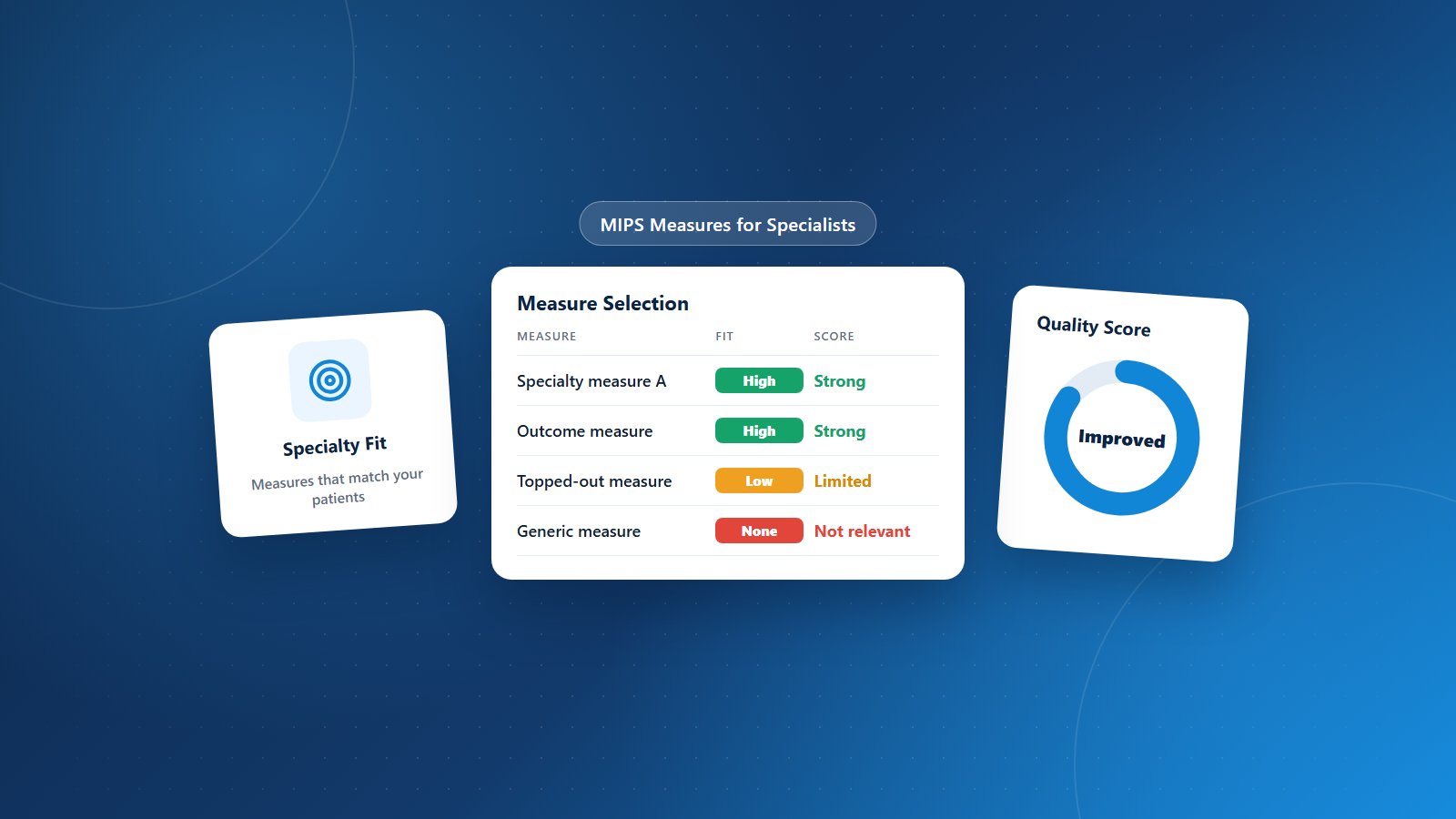
Measures differ in how scores are calculated. Some measures are “topped out,” meaning most clinicians perform very well, which can limit the points available. Others have more room to earn points. Review benchmark information to understand scoring potential.
Step 5: Prioritize Outcome and High-Priority Measures
Program requirements may include reporting outcome or high-priority measures. Identify relevant ones early so you can build workflows to capture them.
Step 6: Test Your Data Capture
Before committing, run reports to confirm your system captures the data accurately. A measure you perform well on clinically can still score poorly if documentation doesn’t map correctly.
Step 7: Monitor Performance All Year
Review measure performance quarterly. If a measure is underperforming, look for documentation gaps, workflow issues or patient outreach opportunities while there’s still time to improve.
Specialty Examples
- Cardiology: Measures related to heart failure therapy, blood pressure control and cardiac rehabilitation referral.
- Dermatology: Measures related to melanoma care, biopsy reporting and psoriasis management.
- Gastroenterology: Measures related to colonoscopy quality and follow-up intervals.
- Behavioral health: Measures related to depression screening and follow-up.
Specific measure availability changes over time, so review the current measure inventory each year.
Don’t Forget the Other Categories
Strong Quality performance should be paired with documented Improvement Activities and, where applicable, Promoting Interoperability. Learn more in our guide to MIPS performance categories.
Specialty MIPS Support From PRCM
Physicians Revenue Cycle Management’s Doctors MACRA Services support specialists across disciplines, from solo practices to multi-specialty groups, with measure selection, performance monitoring and accurate submission.
Want to choose measures that work for your specialty? Let’s connect.