Many medical practices face the same squeeze: reimbursement grows slowly or not at all, while staffing, supplies, rent and technology costs keep rising. When margins tighten, it’s tempting to focus only on seeing more patients. But working harder isn’t always the answer. The most resilient practices protect profitability by running more efficiently and collecting everything they’ve earned.
Here are practical ways to improve medical practice profitability when reimbursements tighten.
1. Know Your Numbers
Start with clear financial visibility. Review monthly:
- Revenue and collections by payer, provider and service.
- Overhead as a percentage of collections.
- Cost per visit.
- Key revenue cycle metrics such as days in A/R, denial rate and net collection rate.
You can’t manage margin without understanding where money comes from and where it goes.
2. Stop Revenue Leakage
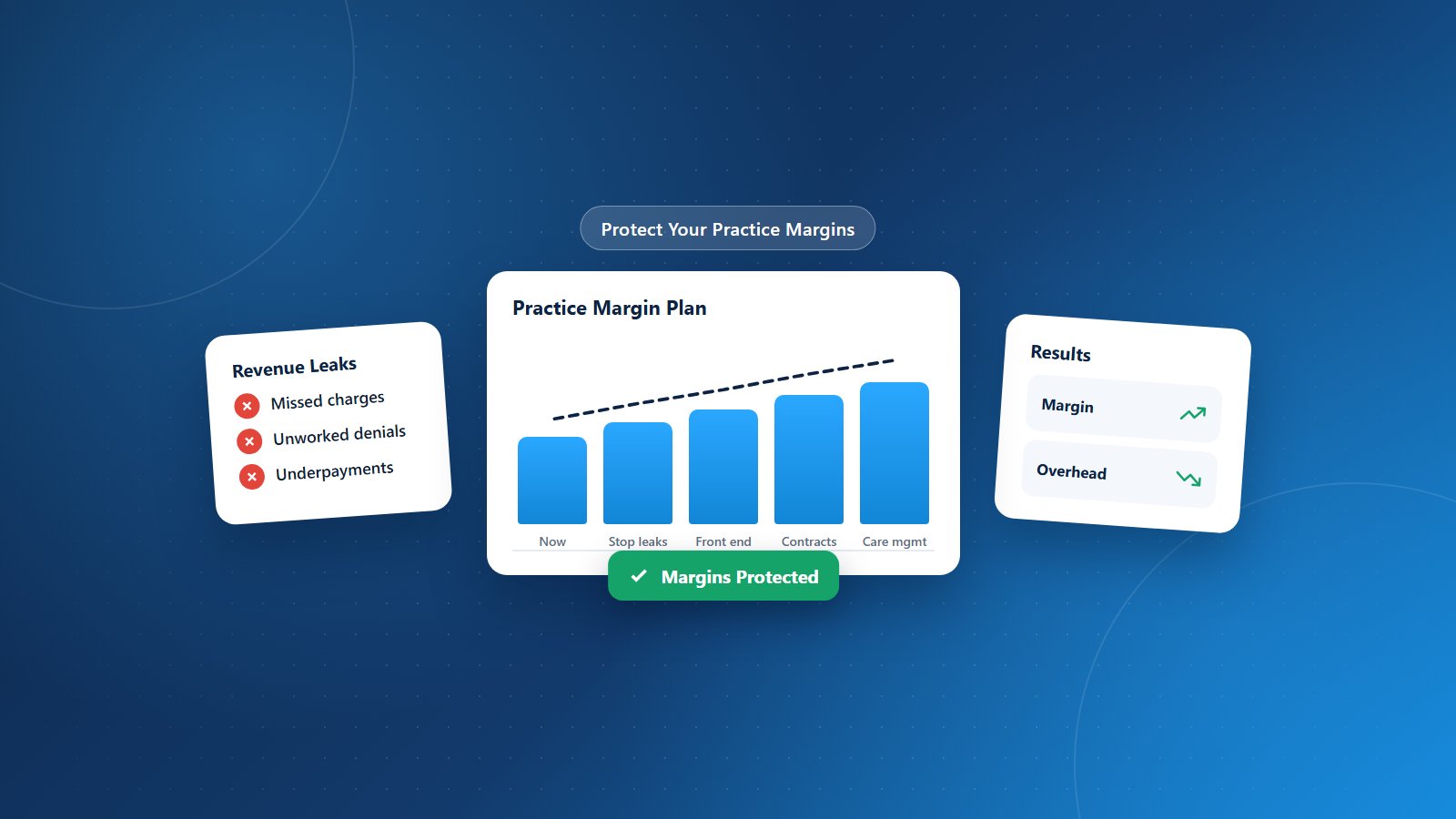
Before cutting costs, make sure you’re collecting what you’ve earned. Common leaks include:
- Missed charges and unbilled services.
- Undercoding due to documentation gaps.
- Denials that are never reworked.
- Payer underpayments that go unnoticed.
- Uncollected patient balances.
A medical billing audit is often the fastest way to find and quantify leakage.
3. Strengthen Front-End Processes
Eligibility verification, accurate registration, prior authorization and time-of-service collections prevent problems before they start. Front-end improvements reduce denials and rework, lowering the cost to collect every dollar.
4. Optimize Your Schedule
Empty appointment slots are lost revenue that can’t be recovered. Reduce no-shows with reminders, maintain a waitlist, use templates that match visit types to time needed and review provider productivity patterns.
5. Review Payer Contracts
Outdated contracts may pay well below market rates. Review your contracts and renegotiate where your data supports it. Learn more in our guide to payer contract negotiation.
6. Add Value-Based and Care Management Services
Services such as chronic care management and remote patient monitoring improve outcomes for patients with chronic conditions and create recurring revenue that doesn’t depend solely on office visits.
7. Protect Quality Program Performance
Quality reporting programs can affect future reimbursement. Strong performance helps protect payments, while missed reporting can reduce them. Make sure reporting is planned and tracked throughout the year.
8. Control Overhead Thoughtfully
Review major expense categories:
- Staffing: Align staffing with patient volume and workflows, and cross-train to improve flexibility.
- Supplies: Compare vendors and reduce waste.
- Technology: Eliminate overlapping software and unused subscriptions.
- Space: Evaluate whether your space matches your needs.
Cut carefully, since reductions that hurt patient experience or staff morale can cost more than they save.
9. Consider Outsourcing Non-Clinical Functions
Billing, credentialing, bookkeeping and marketing require specialized expertise. Outsourcing can reduce costs, improve performance and free staff to focus on patients.
10. Plan Ahead
Build a budget with conservative revenue assumptions, maintain a cash reserve and plan major investments around cash flow.
Protect Your Margins With PRCM
Physicians Revenue Cycle Management helps practices decrease costs, increase revenue and get paid faster through revenue cycle management, audits, credentialing, care management and accounting services.
Want the complete picture? Read our guide: Revenue Cycle KPIs Every Practice Should Track.
Want a clear plan to protect your margins? Let’s connect.