Many practices sign payer contracts once and never look at them again. Years later, they’re still being paid at rates negotiated long ago, while their costs have steadily increased. Outdated payer contracts are one of the most overlooked sources of lost revenue in medical practices.
Payer contract negotiation isn’t only for large health systems. Independent practices can, and should, review and renegotiate their contracts. Here’s when and how to do it.
When to Renegotiate
- Your contract hasn’t been reviewed in several years. Rates that haven’t changed lose value over time.
- Your costs have increased. Staffing, supplies, rent and technology costs have risen.
- You’ve added services, providers or locations. Expanded capabilities can strengthen your position.
- A payer pays significantly less than others for the same services.
- Your contract is approaching renewal or has a renegotiation window.
- The payer’s members make up a large share of your patients.
Step 1: Gather Your Contracts
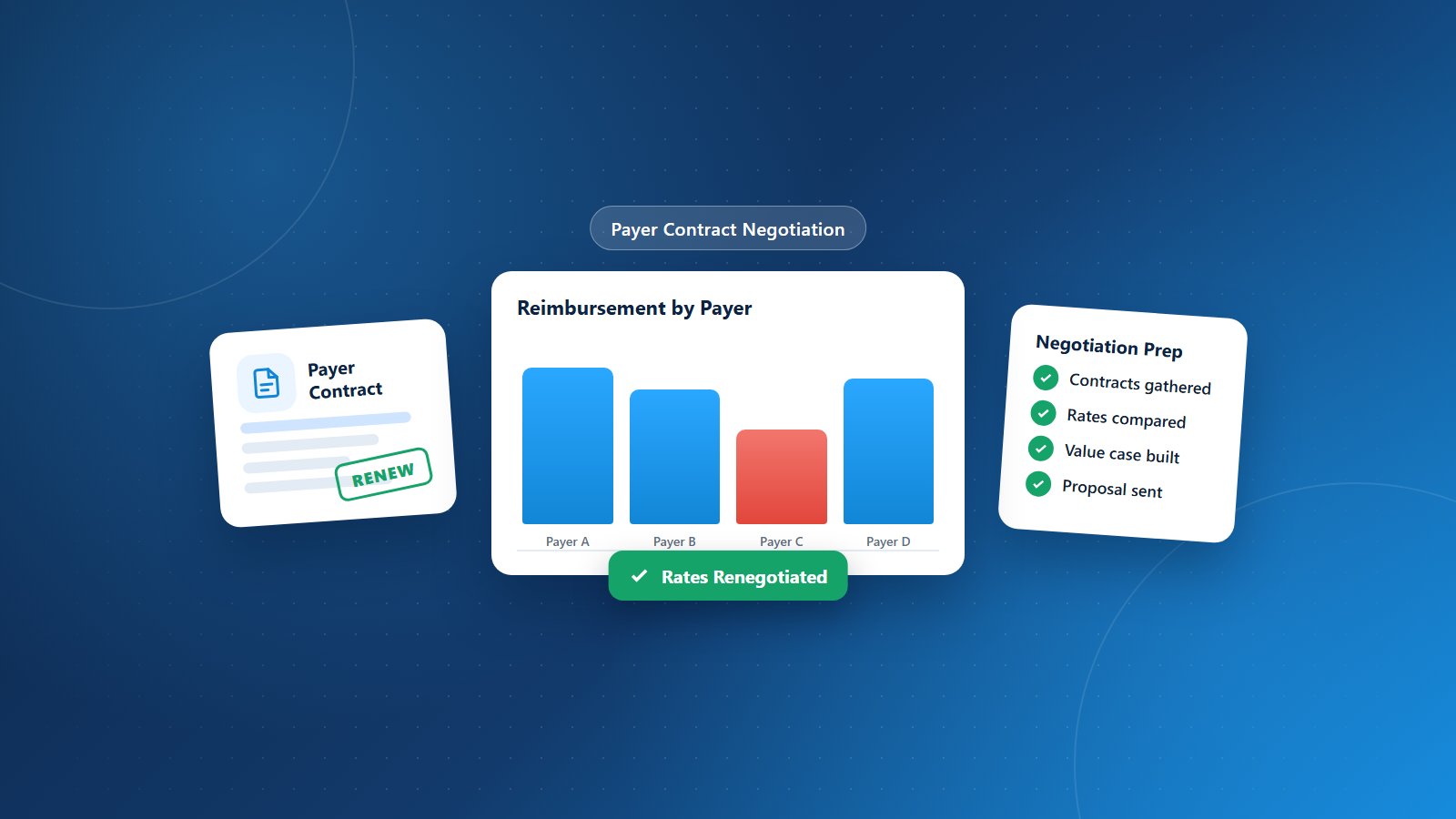
Locate every payer contract, amendment and fee schedule. Many practices discover that they don’t have current copies, which is a first step to fix. Note terms, renewal dates, termination provisions and how rates are calculated.
Step 2: Analyze Your Data
Compare reimbursement for your top services across all payers. Identify which payers pay the least and represent the most volume. Calculate how much revenue a rate change would produce.
Step 3: Check Actual Payments Against Contracts
Before negotiating new rates, make sure payers are paying current rates correctly. Underpayments are surprisingly common and represent revenue you’re already owed.
Step 4: Build Your Value Case
Payers respond to value. Prepare information about:
- Quality outcomes and performance measures.
- Patient satisfaction and access, such as extended hours or same-day appointments.
- Specialty expertise or services that are scarce in your area.
- Care management programs that reduce costly utilization.
- Your practice’s share of the payer’s members in your market.
Step 5: Make a Clear Request
Contact the payer’s provider relations or contracting department with a written proposal. Be specific about the rates or terms you’re requesting and support them with data.
Step 6: Negotiate Beyond Rates
Rates aren’t the only negotiable terms. Consider timely filing limits, prior authorization requirements, claim payment timeframes, annual escalators and how the fee schedule is tied to benchmarks.
Step 7: Know Your Walk-Away Point
Understand what happens if negotiations fail. Evaluate the impact of leaving a network on patients and revenue before making that decision.
Step 8: Load New Rates and Monitor
Once new terms are agreed, update your practice management system and monitor payments to confirm the payer applies the new rates correctly.
Credentialing and Contracting Go Together
Accurate credentialing and up-to-date contracts work hand in hand. Providers must be properly enrolled under the right contracts to be paid at negotiated rates.
Contracting Support From PRCM
Physicians Revenue Cycle Management helps practices with comparative analysis of insurance payers, contract reviews and credentialing and enrollment. Our revenue cycle management team also monitors payments to catch underpayments.
When did you last review your payer contracts? Let’s connect.