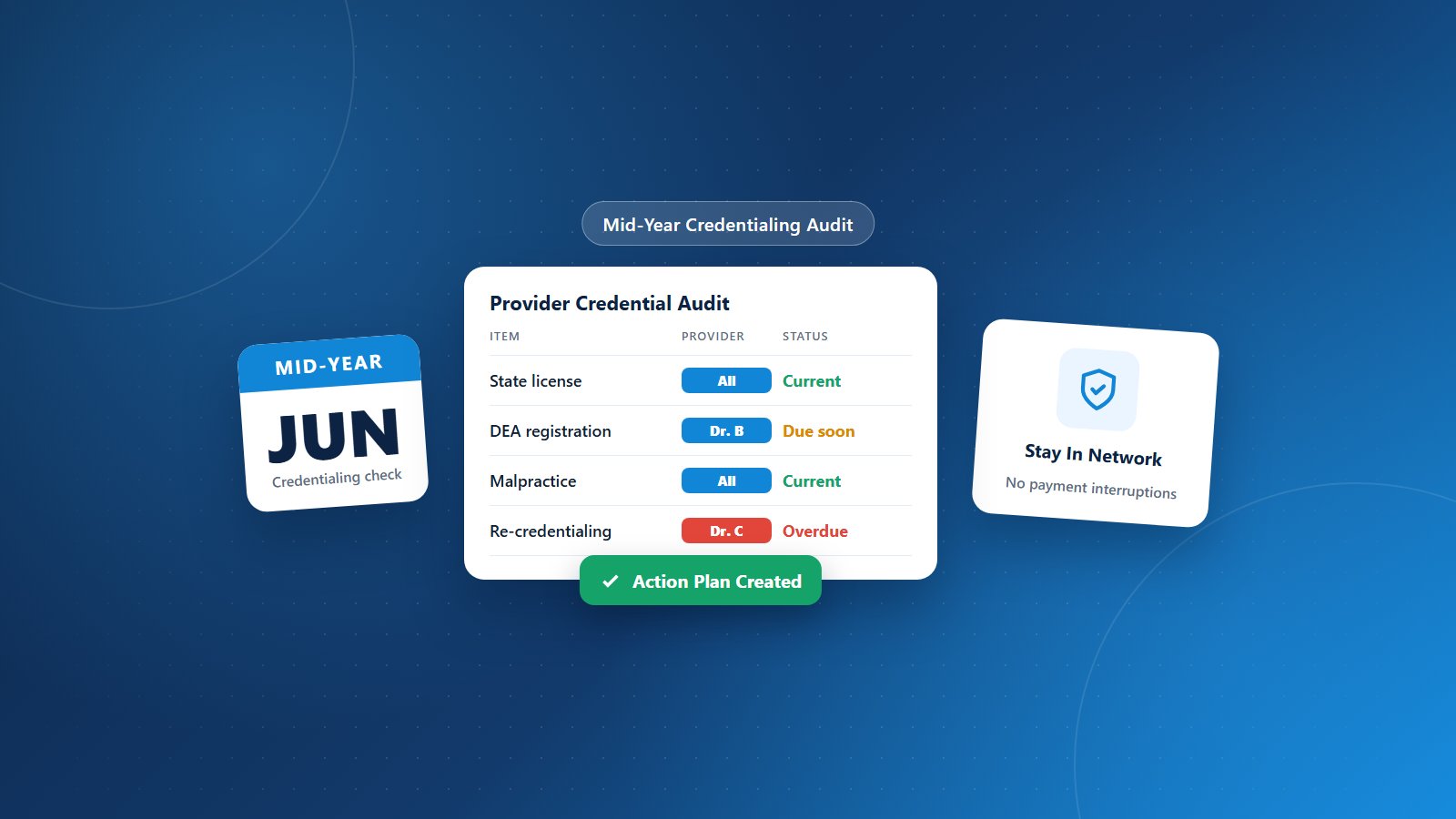
Credentialing isn’t finished once a provider is enrolled. Licenses expire, DEA registrations renew, malpractice policies change and payers require periodic re-credentialing. When any of these lapse, payers may suspend payments or terminate participation, often with little warning. A mid-year credentialing audit catches problems before they affect revenue.
Here’s how to run a credentialing audit for your practice.
Why a Mid-Year Audit?
Mid-year is a natural checkpoint, far enough from year-end rush and open enrollment to give staff time to resolve issues. It also gives you months of runway before renewal deadlines in the second half of the year.
Step 1: Build a Provider Roster
List every provider in your practice, including physicians, advanced practice providers, therapists and any other billing clinicians. Include start dates, locations and specialties.
Step 2: Check Licenses
- Verify every state license is active and note expiration dates.
- Confirm licenses for every state where telehealth patients are seen.
- Check for any board actions or restrictions.
Step 3: Check DEA and Controlled Substance Registrations
Confirm federal and state controlled substance registrations are current and associated with the correct practice addresses.
Step 4: Check Board Certification
Verify board certification status and maintenance of certification requirements.
Step 5: Check Malpractice Coverage
Confirm each provider’s malpractice policy is active, meets payer and hospital requirements and that current certificates are on file.
Step 6: Review CAQH Profiles
Make sure each profile is complete, documents are current and attestations are up to date. See our CAQH maintenance guide.
Step 7: Review Payer Enrollment Status
For each provider and payer, confirm:
- Active participation status and effective dates.
- Correct practice locations and tax identification.
- Upcoming re-credentialing or revalidation dates.
- Directory listings are accurate.
Step 8: Review Hospital Privileges
Confirm hospital privileges and reappointment dates for providers who admit or perform procedures in facilities.
Step 9: Check for Exclusions
Screen providers and staff against federal and state exclusion lists as part of compliance best practices.
Step 10: Create an Action Plan
For every issue found, assign responsibility and a deadline. Update your credentialing calendar with all upcoming expirations so nothing slips again.
Signs Your Credentialing Needs Attention
- Claims denied for provider not enrolled or not credentialed.
- Payer letters about expired documents.
- Patients reporting your providers aren’t listed in plan directories.
Credentialing Maintenance With PRCM
Physicians Revenue Cycle Management’s provider credentialing services include ongoing tracking of licenses, certifications, CAQH, revalidations and re-credentialing. We keep your providers in network so claims keep getting paid.
Want the complete picture? Read our guide: Credentialing a New Physician: A Step-by-Step Timeline.
When did you last audit your credentialing? Let’s connect.