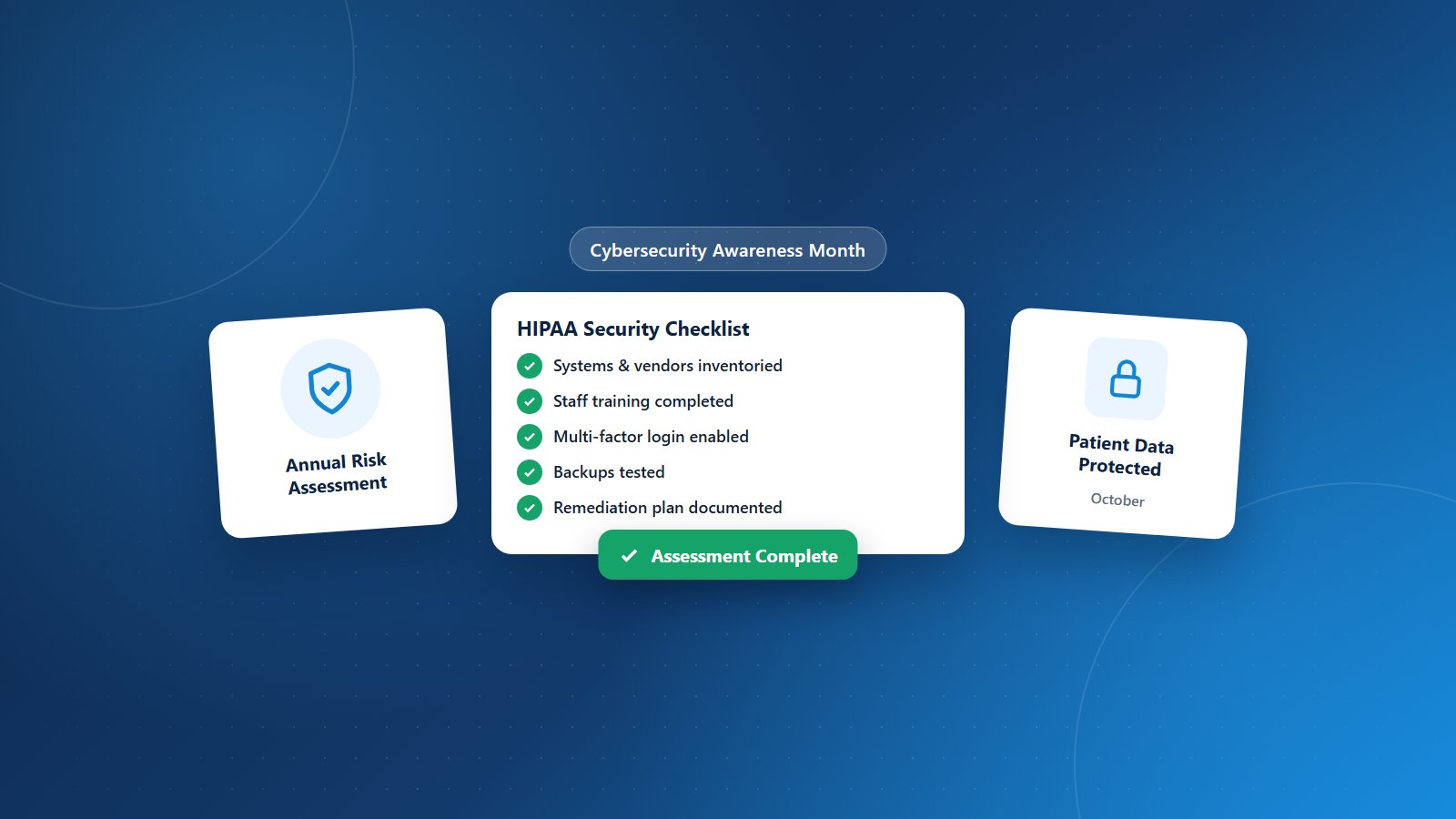
October is Cybersecurity Awareness Month, a timely reminder to review how your practice protects patient information. Under HIPAA, practices must regularly assess risks to electronic protected health information (ePHI) and address what they find. An annual security risk assessment keeps your safeguards current as technology, staff and threats change.
Use this checklist to guide your annual HIPAA security risk assessment.
1. Inventory Systems and Data
- ☐ List all systems that store or transmit ePHI: EHR, practice management, billing, email, patient portal, imaging, phones and messaging tools.
- ☐ List all devices: workstations, laptops, tablets, phones and medical devices connected to the network.
- ☐ List all vendors with access to ePHI.
- ☐ Identify where backups are stored.
2. Administrative Safeguards
- ☐ Designate a security official.
- ☐ Review and update security policies and procedures.
- ☐ Provide security awareness training for all staff, including phishing awareness.
- ☐ Review user access and remove access for former employees.
- ☐ Confirm business associate agreements are in place for all vendors handling ePHI. See our guide to business associate agreements.
- ☐ Review the incident response plan.
- ☐ Review the contingency and disaster recovery plan.
3. Physical Safeguards
- ☐ Secure server rooms and network equipment.
- ☐ Position screens to prevent unauthorized viewing.
- ☐ Control facility access, including after hours.
- ☐ Secure disposal of devices and paper records.
4. Technical Safeguards
- ☐ Multi-factor authentication for email, EHR and remote access.
- ☐ Unique user IDs and strong password policies.
- ☐ Encryption for laptops, mobile devices and backups.
- ☐ Up-to-date operating systems, software and security patches.
- ☐ Endpoint protection and email filtering.
- ☐ Audit logs and activity monitoring.
- ☐ Secure, tested, offline or immutable backups.
- ☐ Secure configuration of Wi-Fi and network devices.
5. Assess Risks
- ☐ Identify threats and vulnerabilities for each system.
- ☐ Rate the likelihood and impact of each risk.
- ☐ Prioritize risks for remediation.
6. Remediation Plan
- ☐ Document actions to address each priority risk.
- ☐ Assign owners and target dates.
- ☐ Track progress throughout the year.
7. Documentation
- ☐ Save the completed assessment, findings and decisions.
- ☐ Record remediation progress.
- ☐ Schedule the next review, and update the assessment after major changes.
For a deeper look at the process, read our article on HIPAA security risk assessments and our ransomware readiness plan.
Security-Minded Support From PRCM
Physicians Revenue Cycle Management protects patient data across our billing and practice management services and helps practices maintain secure, compliant operations.
This Cybersecurity Awareness Month, check off your security essentials. Let’s connect.
Review Cadence and Primary Reference
HIPAA requires risk analysis and ongoing review, but HHS does not prescribe one universal annual interval for risk analysis. An annual review can be a useful operating practice; reassess after material changes and check any separate program requirements that apply.
HHS guidance on risk analysis. Reviewed for this correction on 13 October 2026.