October is Cybersecurity Awareness Month, and ransomware remains one of the most serious threats facing healthcare. A ransomware attack encrypts a practice’s systems and data, often shutting down scheduling, EHR access, billing and phones. Recovery can take weeks, patient care is disrupted and revenue stops. Attackers increasingly target smaller organizations because they often have fewer defenses.
Here’s how to build a cybersecurity plan to prevent, detect and recover from ransomware.
How Ransomware Gets In
- Phishing emails that trick staff into clicking links or opening attachments.
- Stolen or weak passwords, especially for remote access and email.
- Unpatched software with known vulnerabilities.
- Compromised vendors with access to your systems.
- Exposed remote access tools without strong authentication.
Part 1: Prevention
Train your team
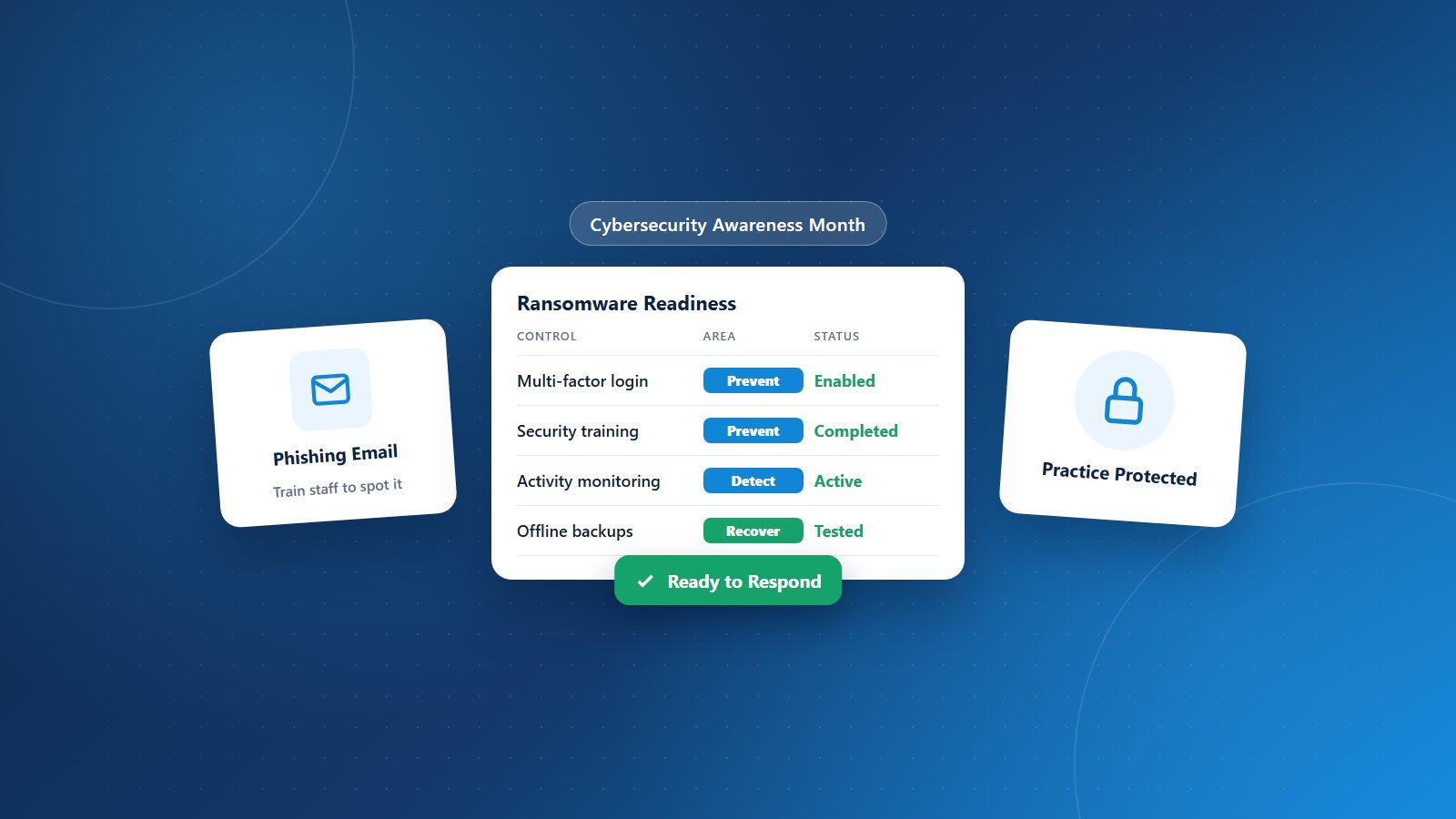
Regular security awareness training and simulated phishing tests help staff recognize and report suspicious emails.
Use multi-factor authentication
Require MFA for email, EHR, practice management systems, remote access and administrative accounts.
Patch and update
Keep operating systems, browsers, software and devices up to date. Replace unsupported systems.
Limit access
Give staff access only to the systems they need. Remove access immediately when employees leave.
Protect endpoints and email
Use modern endpoint protection and email filtering to block malicious attachments and links.
Secure remote access
Avoid exposing remote access tools directly to the internet without strong protection.
Part 2: Detection
- Monitor for unusual logins, file activity and system behavior.
- Encourage staff to report anything suspicious immediately, without fear of blame.
- Work with IT partners who provide monitoring and alerting.
Part 3: Recovery
Maintain secure backups
Back up critical systems regularly, keep at least one copy offline or immutable and test restores. Backups are your best defense against paying a ransom.
Have an incident response plan
Document who to call (IT, cyber insurance, legal counsel), how to isolate affected systems, how to communicate with staff and patients, and how to continue operating.
Plan downtime procedures
Prepare paper forms, offline schedules and manual processes so patient care can continue during an outage. Our guide to billing continuity planning covers keeping revenue flowing.
Know your notification obligations
A ransomware incident may be a reportable breach under HIPAA and state laws. Legal counsel can guide notification requirements.
Part 4: Vendor Risk
Billing companies, IT providers and software vendors can be entry points or points of failure. Confirm vendors use strong security practices and have signed business associate agreements. Read more about business associate agreements.
Consider Cyber Insurance
Cyber liability insurance can help cover response costs, recovery and liability. Insurers often require specific security controls, which also improve protection.
Security-First Partnership With PRCM
Physicians Revenue Cycle Management protects patient data across our billing and practice management services and helps practices maintain revenue continuity when disruptions occur.
This Cybersecurity Awareness Month, make ransomware readiness a priority. Let’s connect.