Every missed appointment is lost revenue that can’t be recovered. The provider’s time is still paid for, staff are still on the clock and the slot often goes unused. No-shows also hurt patients, who miss care, and other patients, who could have used the appointment. For many practices, no-shows quietly cost far more than they realize.
Here’s how to understand the real cost of no-shows and build reminder systems that fix them.
Calculating the Real Cost of No-Shows
Estimate the impact for your practice:
- Count no-shows per week for each provider.
- Estimate average revenue per visit.
- Multiply to find weekly lost revenue, then project annually.
Many practices are surprised by the result. Even a modest no-show rate can add up to significant annual losses, plus effects on continuity of care, quality measures and staff morale.
Why Patients Miss Appointments
- They forget.
- Transportation, work or childcare conflicts.
- Long gaps between scheduling and the appointment.
- Feeling better or anxiety about the visit.
- Concerns about cost.
- Difficulty reaching the office to cancel.
1. Automated Multi-Channel Reminders
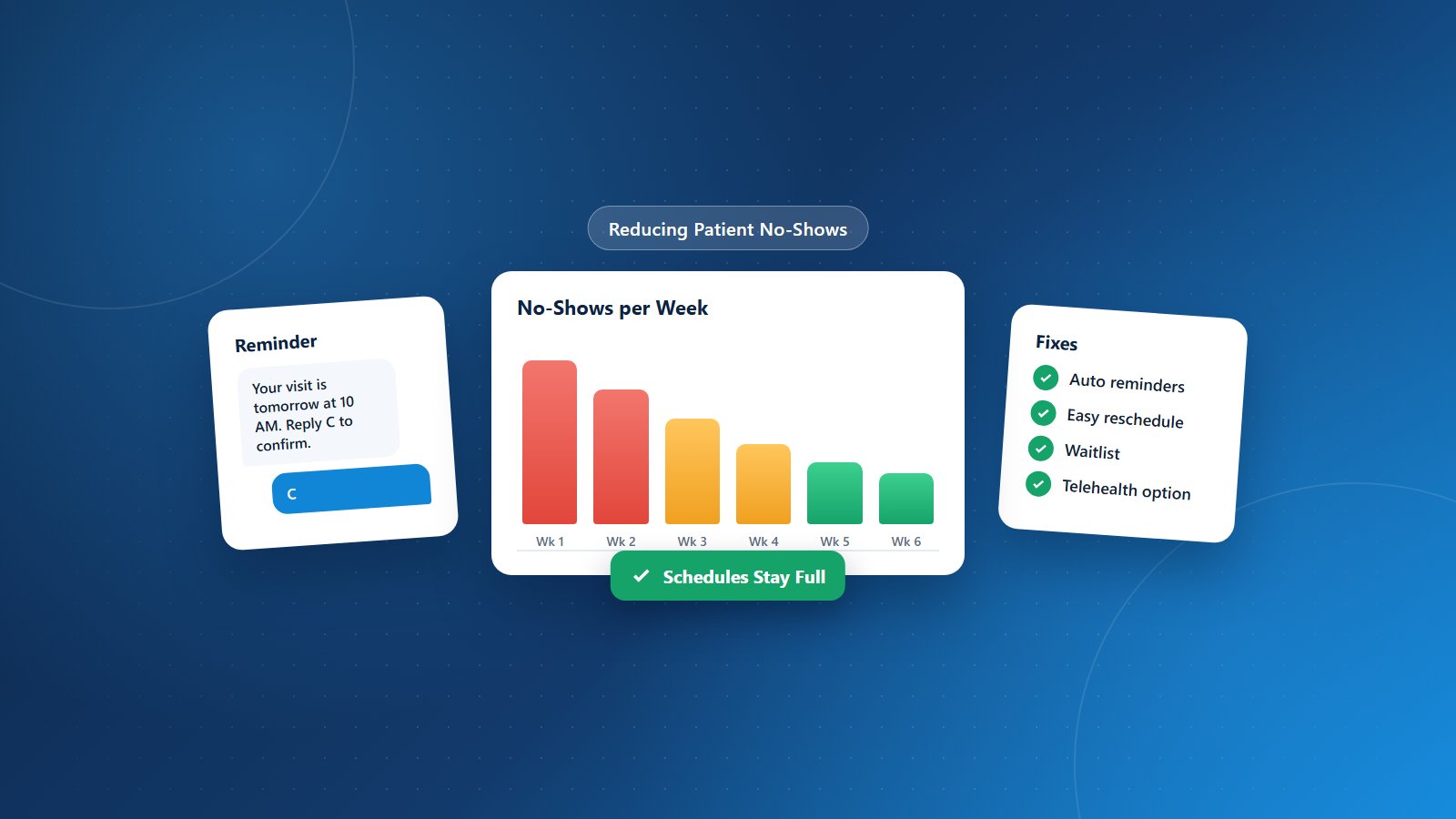
Send reminders by text, email and phone based on patient preference. Many practices use a sequence, such as several days before and the day before the appointment.
2. Two-Way Confirmation
Let patients confirm, cancel or reschedule by replying to a text or clicking a link. Easy cancellation frees slots for others.
3. Fill Openings From a Waitlist
Maintain a waitlist and automatically offer newly opened slots to waiting patients.
4. Shorten Lead Times
Appointments scheduled far in advance are more likely to be missed. Use reminder calls for long lead-time appointments and consider open-access scheduling for some visits.
5. Offer Telehealth Options
For appropriate visits, offering telehealth can eliminate transportation and scheduling barriers.
6. Address Cost Concerns
Patients who worry about costs may skip visits. Provide estimates and explain payment options in advance.
7. Create a Clear No-Show Policy
A fair, clearly communicated policy sets expectations. Apply it consistently and compassionately.
8. Track Patterns
Analyze no-shows by provider, day, time, appointment type and patient group. Patterns reveal targeted fixes, such as adjusting early morning slots or certain visit types.
9. Strategic Overbooking
Where no-show patterns are predictable, carefully planned overbooking can reduce idle time, but use it thoughtfully to avoid long waits.
10. Follow Up
Contact patients who miss appointments to reschedule, especially for important follow-up care.
Practice Efficiency With PRCM
Physicians Revenue Cycle Management’s practice management services help practices streamline scheduling and reduce lost revenue. Read about patient reminder and retention campaigns.
How much are no-shows costing your practice? Let’s connect.