Many patients with chronic conditions benefit from both chronic care management (CCM) and remote patient monitoring (RPM). CCM provides care coordination and a comprehensive care plan; RPM provides real-time physiologic data. Together, they create a powerful model for managing chronic disease between visits. But delivering and billing both services for the same patient requires careful attention to requirements.
Here’s how to combine CCM and RPM compliantly.
Why Combine CCM and RPM?
- Data plus coordination: RPM readings inform care plan decisions managed through CCM.
- Better engagement: Regular care manager contact encourages patients to keep taking readings.
- Improved outcomes: Earlier intervention and better coordination support chronic disease control.
- Sustainable programs: Both services are reimbursable when requirements are met.
Key Compliance Principles
1. Each service must meet its own requirements
CCM generally requires multiple qualifying chronic conditions, consent, a comprehensive care plan and documented care management time. RPM generally requires a qualifying condition, consent, qualifying devices, a minimum amount of data collection and treatment management time with interactive communication.
2. Don’t double-count time
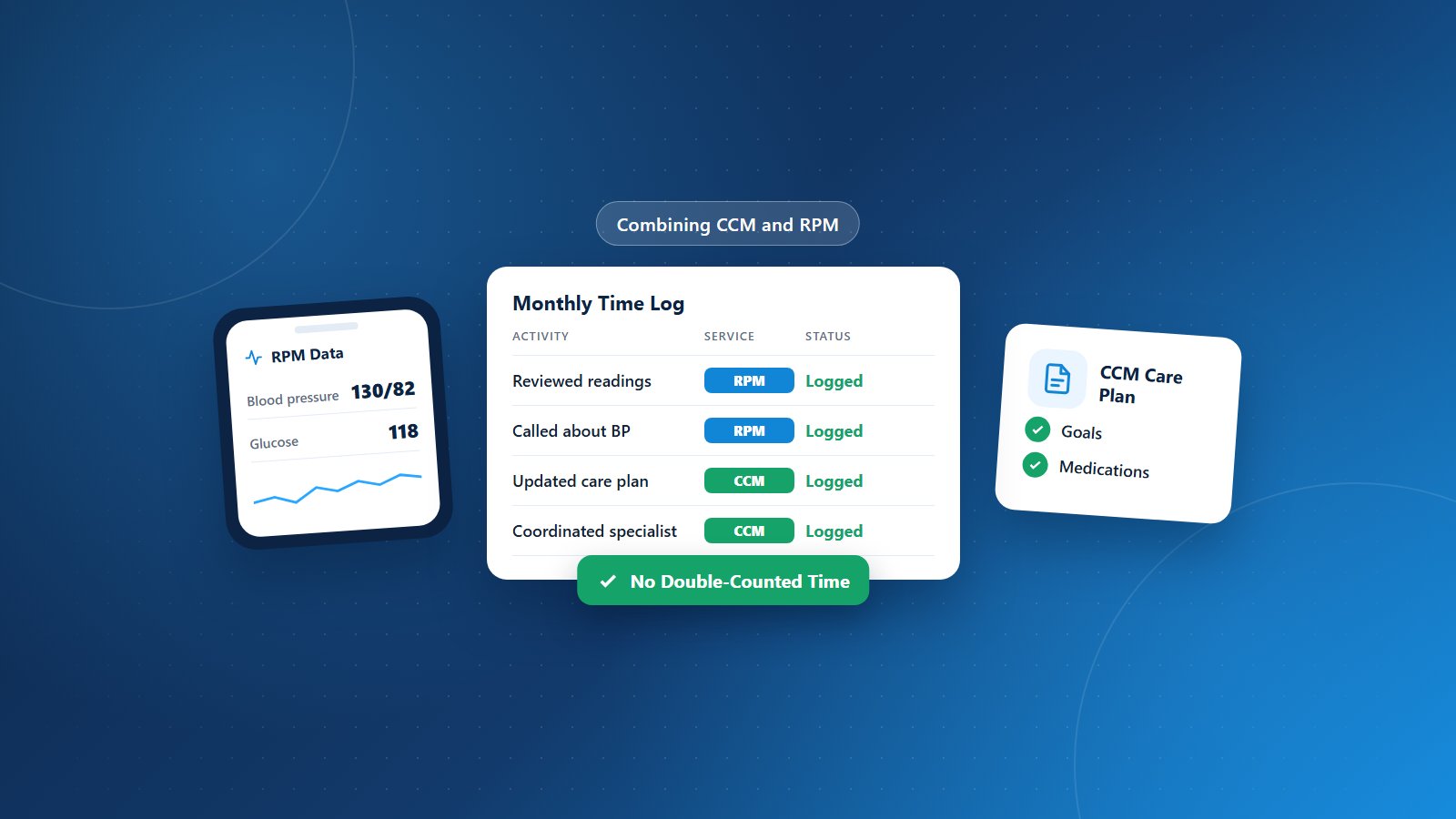
Time spent on RPM management can’t also be counted toward CCM, and vice versa. Track time separately for each service with clear descriptions of activities.
3. Document separately
Keep distinct documentation for CCM activities, such as care plan updates, coordination and medication management, and RPM activities, such as data review and patient communication about readings.
4. Obtain appropriate consent
Make sure patients understand both services, cost sharing for each and their right to stop. Document consent for each program.
5. Verify payer policies
Most payers allow CCM and RPM in the same period when requirements are met, but policies vary and change. Confirm current rules for each payer.
6. Coordinate across practices
Only one practitioner may typically bill certain care management services for a patient in a given period. Coordinate with other providers to avoid duplicate billing.
Building a Combined Workflow
- Identify patients eligible for both programs.
- Enroll patients with clear education and consent.
- Assign care managers who handle both services with separate time tracking.
- Integrate RPM data into care plan reviews.
- Audit documentation periodically.
Related Reading
Learn the differences in our RPM vs. CCM comparison and how to grow RPM enrollment.
Integrated Care Programs With PRCM
Physicians Revenue Cycle Management helps practices run combined chronic care management and remote patient monitoring programs with compliant workflows, time tracking and billing.
Ready to combine CCM and RPM the right way? Let’s connect.