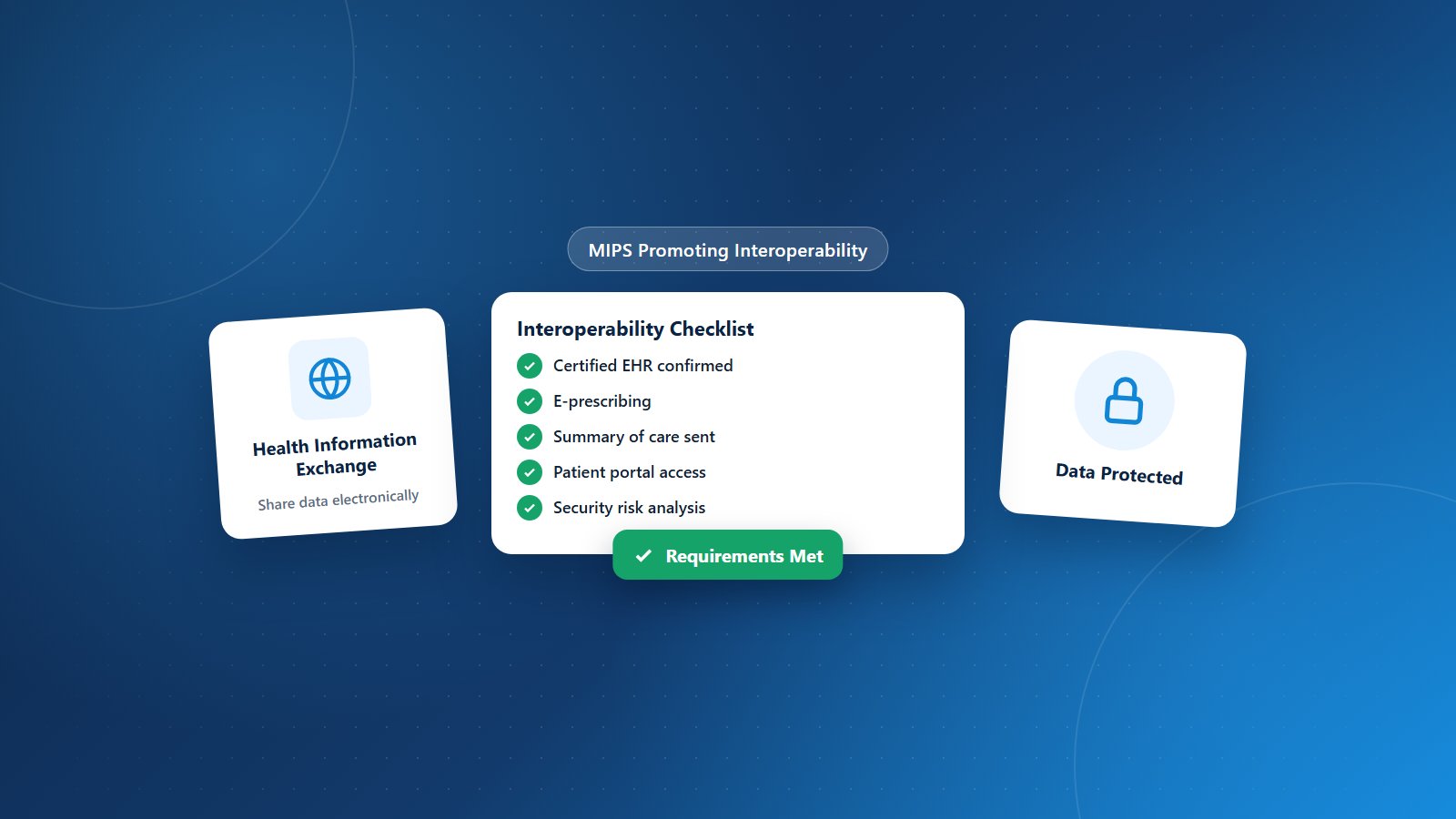
Promoting Interoperability is the MIPS performance category focused on how practices use certified electronic health record technology to share information, support patient access and protect data. For practices that don’t qualify for an exception or reweighting, this category can meaningfully affect the final MIPS score. Yet many practices treat it as an afterthought.
Here’s what the Promoting Interoperability category measures and how to meet its requirements.
What Promoting Interoperability Measures
The category generally includes measures and attestations in areas such as:
- Electronic prescribing: Sending prescriptions electronically and related activities.
- Health information exchange: Sending and receiving summary of care records during transitions and referrals.
- Provider to patient exchange: Giving patients timely electronic access to their health information.
- Public health and clinical data exchange: Active engagement with registries and public health agencies.
- Protecting patient health information: Completing a security risk analysis and related attestations.
Specific measures, requirements and scoring change over time, so review current program rules each year.
Step 1: Confirm Your Requirements
Determine whether your practice must report the category or qualifies for an exception, such as for small practices or certain hardships. Apply for exceptions when eligible.
Step 2: Verify Certified EHR Technology
Confirm that your EHR is certified for the performance period and that you have the necessary identifiers for reporting.
Step 3: Complete Your Security Risk Analysis
A security risk analysis is required and must be conducted or reviewed during the calendar year. It’s also a HIPAA requirement. Read our guide to HIPAA security risk assessments.
Step 4: Build Workflows for Each Measure
- Make sure prescribers send prescriptions electronically whenever possible.
- Send summary of care documents electronically with referrals and transitions.
- Provide patients with portal access to their information promptly.
- Register with required public health registries and maintain active engagement.
Step 5: Monitor Measure Performance
Run Promoting Interoperability reports from your EHR regularly. Low rates often indicate workflow gaps, such as referrals sent by fax instead of electronically.
Step 6: Select a Reporting Period
Confirm the required reporting period length and choose one that reflects your best performance within program rules.
Step 7: Keep Documentation
Save EHR reports, screenshots, registry correspondence and security risk analysis documentation in case of audit.
Integrate With Your Full MIPS Strategy
Promoting Interoperability works alongside Quality, Improvement Activities and Cost. Review all four categories and our data submission guide.
MIPS Support From PRCM
Physicians Revenue Cycle Management’s Doctors MACRA Services help practices meet Promoting Interoperability requirements, monitor performance and submit accurately.
Is your Promoting Interoperability score where it should be? Let’s connect.