Medicaid covers a large share of patients for many practices, especially in pediatrics, obstetrics, behavioral health, primary care and community health. But Medicaid eligibility changes more often than most commercial coverage. Patients may lose coverage during renewals, move between managed care plans or change programs based on income, age or life events. When practices rely on outdated eligibility information, coverage-related denials follow.
Here’s how consistent Medicaid eligibility verification reduces denials and protects revenue.
Why Medicaid Eligibility Changes Frequently
- Periodic renewals: Members must periodically renew eligibility, and some lose coverage for administrative reasons.
- Income and household changes: Changes can affect eligibility or program type.
- Managed care plan changes: Many members are enrolled in managed care organizations and may switch plans.
- Age transitions: Children and young adults may move between programs.
- Retroactive coverage: Coverage may be granted retroactively in some cases.
Common Coverage-Related Denials
- Coverage terminated or inactive on the date of service.
- Claim sent to fee-for-service Medicaid instead of the managed care plan, or vice versa.
- Wrong managed care plan billed.
- Provider not enrolled with the patient’s managed care plan.
- Service not covered under the patient’s specific program.
1. Verify at Every Visit
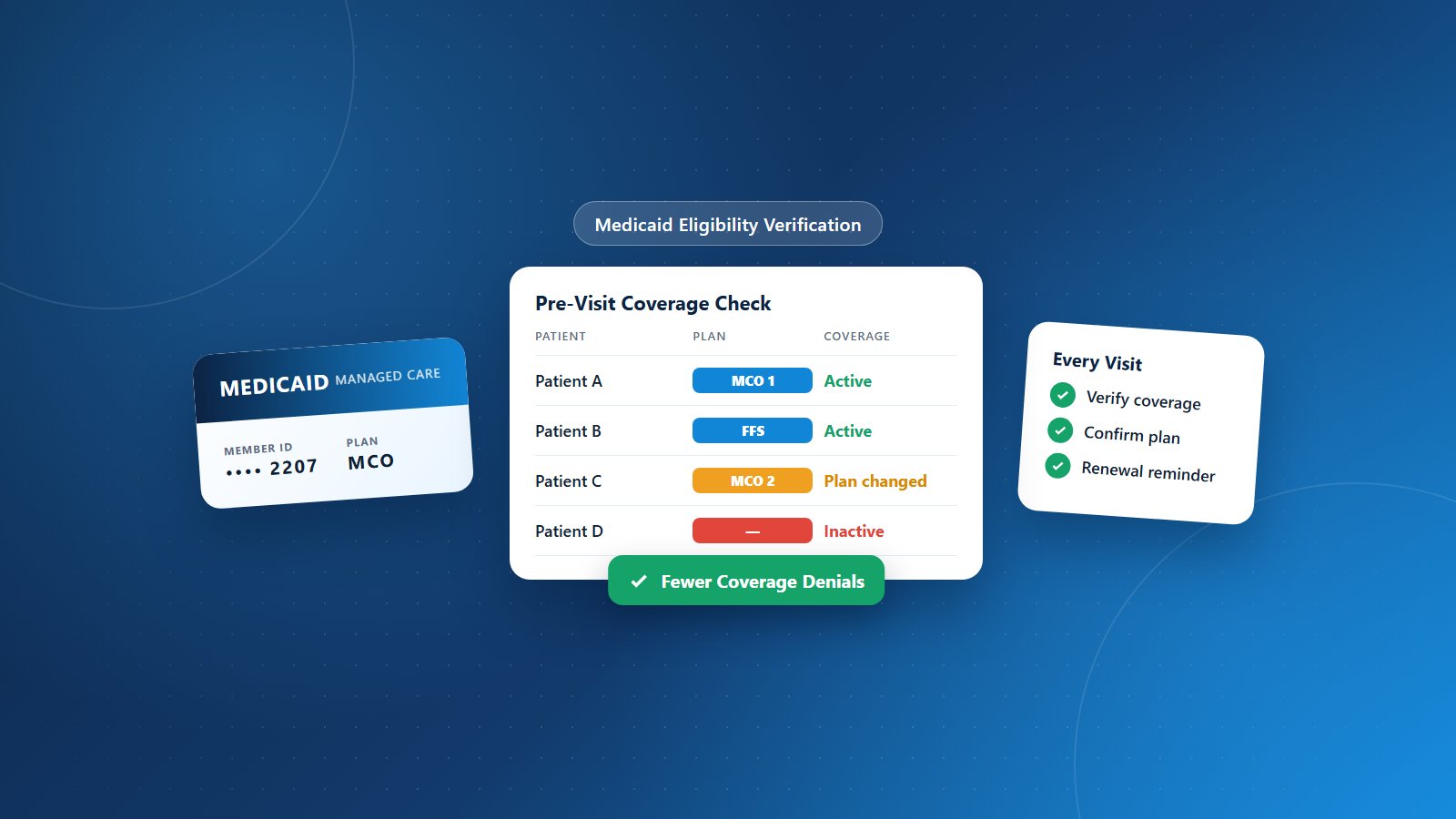
Because Medicaid eligibility can change month to month, verify coverage before every visit, not just at the first appointment of the year.
2. Identify the Managed Care Plan
Eligibility checks should confirm whether the patient is in fee-for-service Medicaid or a managed care plan and which plan is responsible. Update the patient’s payer information accordingly.
3. Check Program and Benefit Details
Different Medicaid programs and plans may cover different services, require referrals or prior authorizations, or apply copays. Verify benefits for the services you plan to provide.
4. Help Patients Maintain Coverage
Remind patients about renewal deadlines and direct them to resources for renewing coverage. Keeping patients covered protects both their access to care and your revenue.
5. Confirm Your Enrollment With Each Plan
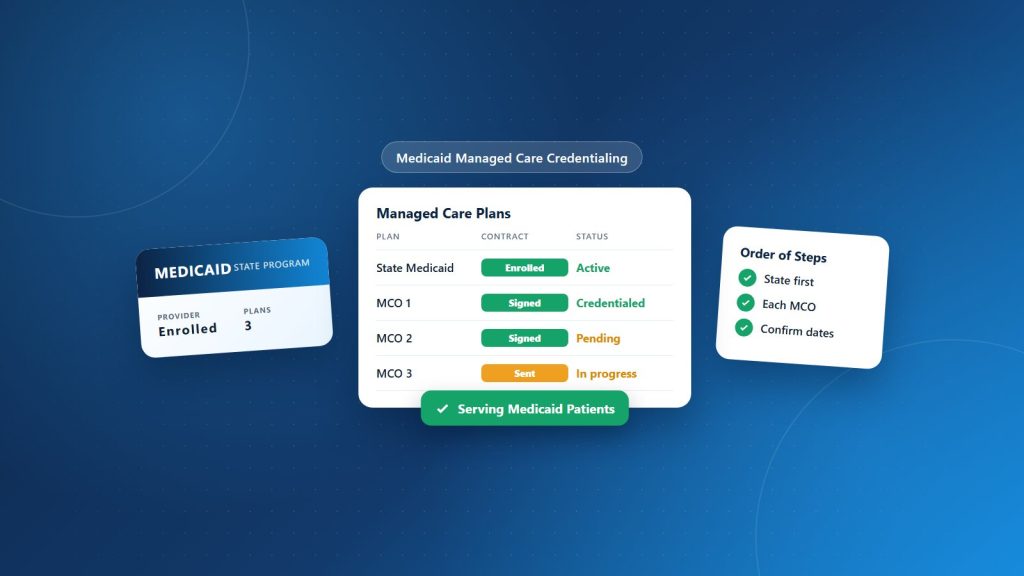
Your providers must be enrolled with the state Medicaid program and credentialed with each managed care plan your patients use. See our provider credentialing services.
6. Handle Coverage Gaps Thoughtfully
When a patient has lost coverage, explain options, help them understand renewal or reapplication, and follow your financial policies for self-pay or deferred billing. Track cases where retroactive coverage may be granted.
7. Use Batch Eligibility Tools
Batch eligibility verification for upcoming appointments helps staff identify coverage problems days in advance.
8. Track Eligibility-Related Denials
Monitor denials for eligibility and coverage reasons by payer and location. Rising rates may indicate workflow gaps or broader coverage changes.
Eligibility Support From PRCM
Physicians Revenue Cycle Management provides eligibility and benefits verification through payer portals and calls, along with Medicaid and managed care credentialing. Our revenue cycle management team helps practices prevent coverage-related denials. For general tips, read our article on eligibility verification during open enrollment.
Seeing more Medicaid coverage denials? Let’s connect.