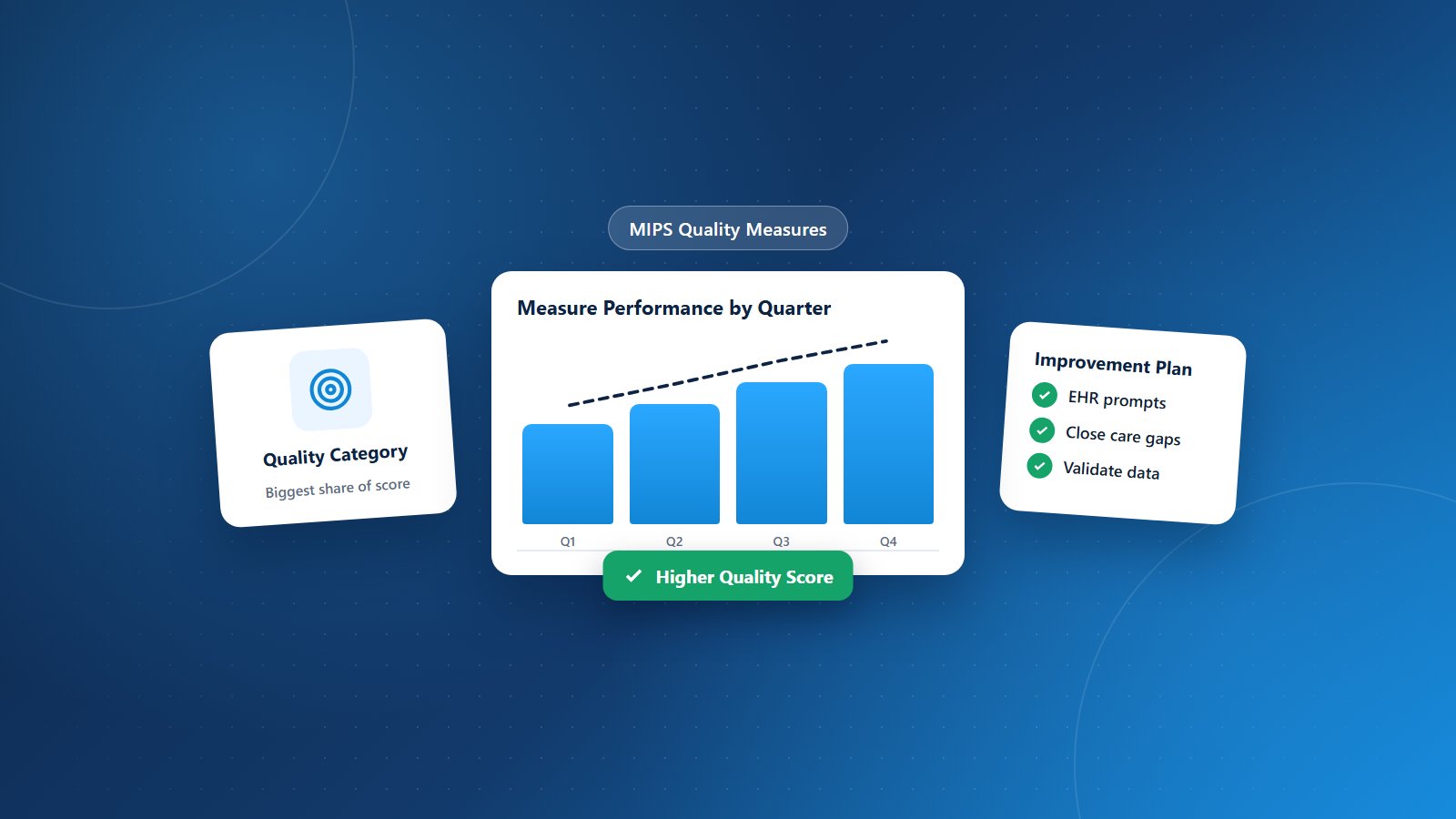
The Quality category is typically the largest part of a practice’s MIPS score, and it’s where many practices have the most room to improve. Strong clinical care doesn’t automatically translate into strong quality scores. Data must be captured completely, measures must fit your patients and gaps in care must be closed throughout the year.
Here’s how to track, improve and report MIPS quality measures for a stronger score year over year.
Understand How Quality Is Scored
Each measure is scored by comparing your performance with national benchmarks. Points depend on how your performance rate compares, and measures must meet data completeness and case minimum requirements to earn full credit. Bonus points or special scoring may apply in certain situations, depending on current program rules.
Step 1: Review Last Year’s Feedback
Your performance feedback report shows how each measure scored. Identify measures where you lost points and why: low performance, incomplete data or benchmarks that limit scoring.
Step 2: Re-Evaluate Your Measures
Consider replacing measures that score poorly despite good care, have limited scoring potential or don’t fit your patient population. Read our guide to choosing measures for specialists.
Step 3: Map Measures to Workflows
For each measure, identify exactly where in the visit the required data is captured: who documents it, where in the EHR and how. Gaps in workflow are the most common reason for low performance rates.
Step 4: Use EHR Prompts and Templates
Set up reminders, alerts and structured fields that prompt clinicians to complete measure actions, such as screenings, medication reviews or follow-up plans, during the visit.
Step 5: Close Care Gaps Proactively
Run reports of patients who haven’t met measure criteria and reach out before the performance year ends. Care managers and outreach staff can schedule screenings or follow-up visits.
Step 6: Monitor Performance Quarterly
Quarterly reviews let you spot problems while there’s still time to fix them. Share results with providers to encourage engagement.
Step 7: Validate Data Before Submission
Review measure reports for accuracy. Unexpected results, such as very low rates on a measure you perform routinely, often indicate documentation mapping issues rather than care gaps.
Step 8: Connect Quality to Care Programs
Programs such as chronic care management and remote patient monitoring support measures related to chronic disease control, medication management and follow-up.
Common Quality Pitfalls
- Measures reported for only part of the year.
- Data completeness requirements not met.
- Exclusions and exceptions not documented.
- Structured data missing because information was documented only in free text.
Quality Reporting Support From PRCM
Physicians Revenue Cycle Management’s Doctors MACRA Services help practices select measures, build workflows, monitor performance and submit accurate data, turning everyday care into stronger scores.
Ready to raise your quality score? Let’s connect.