The moment a patient is at the front desk is the best opportunity your practice has to collect payment. Once the patient leaves, collecting becomes slower, more expensive and less certain. Statements, reminders and phone calls all cost time and money, and some balances are never paid. Yet many practices still collect only copays at check-in and bill everything else later.
Here’s how to improve time of service collections while creating a better financial experience for patients.
Why Time of Service Collections Matter
- Higher collection rates: Balances collected at the visit don’t become bad debt.
- Lower cost to collect: Fewer statements, calls and follow-up.
- Faster cash flow: Money arrives the same day rather than weeks later.
- Fewer surprises: Patients understand their costs before leaving.
Step 1: Know What the Patient Owes Before They Arrive
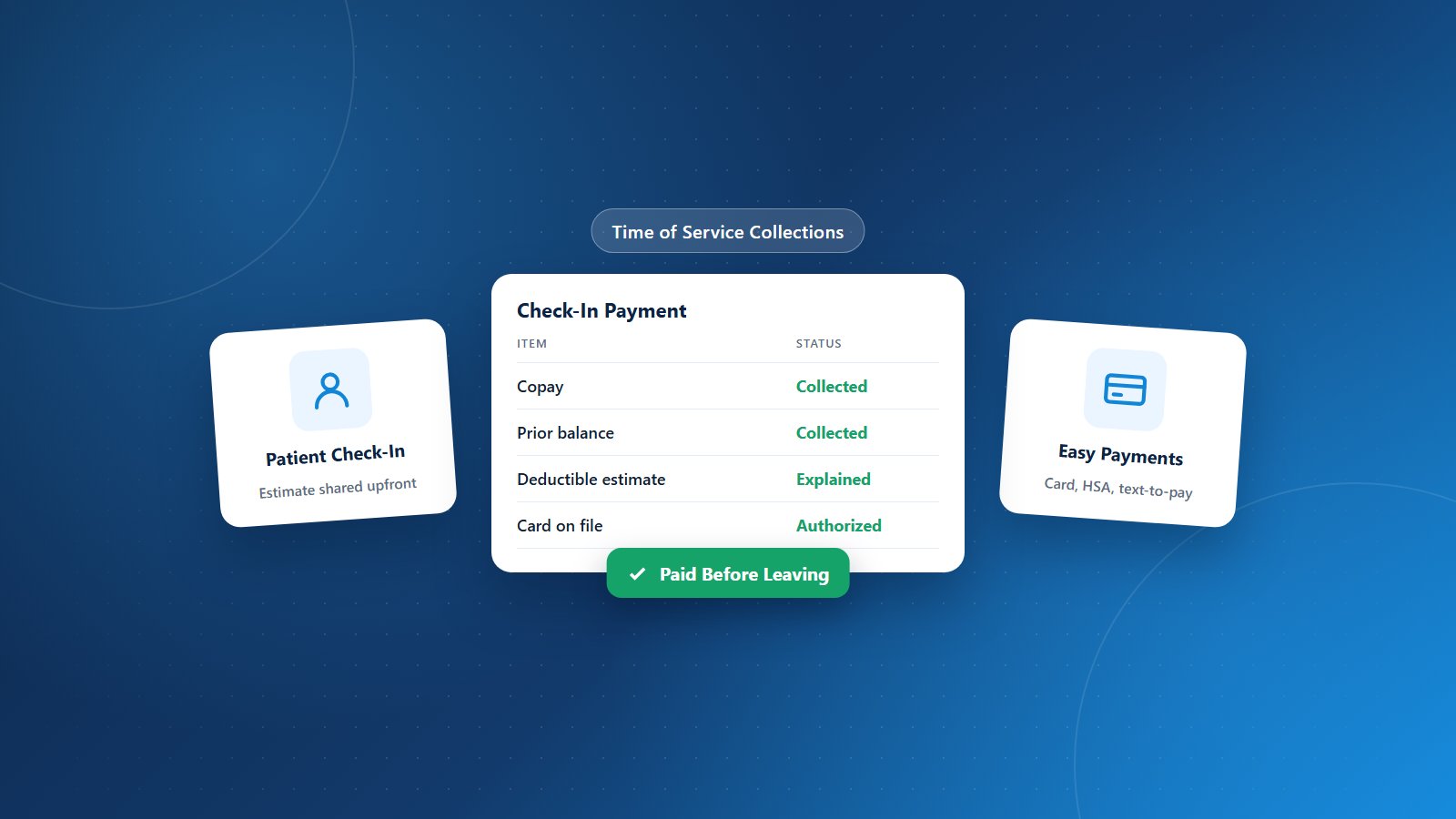
Verify eligibility and benefits before the appointment, including deductible status, copays and coinsurance. Review any prior balances on the account.
Step 2: Communicate Before the Visit
Include expected costs and prior balances in appointment reminders. Patients who know in advance are prepared to pay and less likely to be upset at check-in.
Step 3: Provide a Clear Estimate
For visits and services where costs can be estimated, share the estimate at check-in. Explain it simply: what insurance is expected to cover and what the patient will owe.
Step 4: Ask Confidently and Respectfully
Front-desk staff should use simple, consistent language. For example: “Your copay today is this amount, and there’s a prior balance from your last visit. How would you like to take care of that today?” Asking for payment as a normal part of check-in removes awkwardness.
Step 5: Offer Convenient Payment Options
- Credit and debit cards, including contactless payments.
- Health savings account and flexible spending cards.
- Text-to-pay and online payment links.
- Card-on-file for remaining balances after insurance processes.
- Payment plans for larger balances.
Step 6: Use Card-on-File Programs
When the final patient amount isn’t known until insurance processes the claim, card-on-file programs allow patients to authorize charging the remaining balance up to an agreed limit, with notice. This reduces statements and improves collection rates.
Step 7: Train and Support Front-Desk Staff
Provide training on insurance basics, payment policies, scripts and handling difficult conversations. Recognize staff for strong collection performance.
Step 8: Publish a Clear Financial Policy
A written policy explaining when payment is due, accepted payment methods and payment plan options sets expectations and supports staff when patients have questions.
Step 9: Measure Performance
Track your point-of-service collection rate by location and staff member. Use the data to coach and improve.
Balance Collections With Compassion
Some patients face genuine financial hardship. Have a process for financial assistance or payment arrangements so every patient can access care while your practice collects fairly.
Improve Patient Collections With PRCM
Physicians Revenue Cycle Management supports practices with eligibility verification, patient estimates, statements and payment posting as part of our medical billing services. For deductible season tips, read our guide to Q1 patient collections.
Want the complete picture? Read our guide: Revenue Cycle KPIs Every Practice Should Track.
Want to collect more at the front desk? Let’s connect.