January is a tough month for medical practice cash flow. As deductibles reset, patients are suddenly responsible for a much larger share of their visit costs. Many are surprised by what they owe, balances grow and collections slow down just as practices are absorbing new-year expenses. For practices that depend on steady patient payments, the first quarter can feel like an uphill climb.
The good news is that deductible season is predictable, and with the right patient collections strategies, your practice can collect more without damaging patient relationships.
Why Q1 Is Different
Most health plans reset deductibles at the start of the calendar year. Until patients meet their deductible, insurance pays little or nothing for many services, which shifts more of the cost to the patient. High-deductible health plans make this effect even stronger. The result: more patient balances, larger balances and more patients who need help understanding their bills.
Once a balance leaves the office unpaid, the likelihood of collecting it drops. That’s why the most effective Q1 strategies focus on clear communication and collecting at or before the time of service.
1. Verify Eligibility and Benefits Before Every Visit
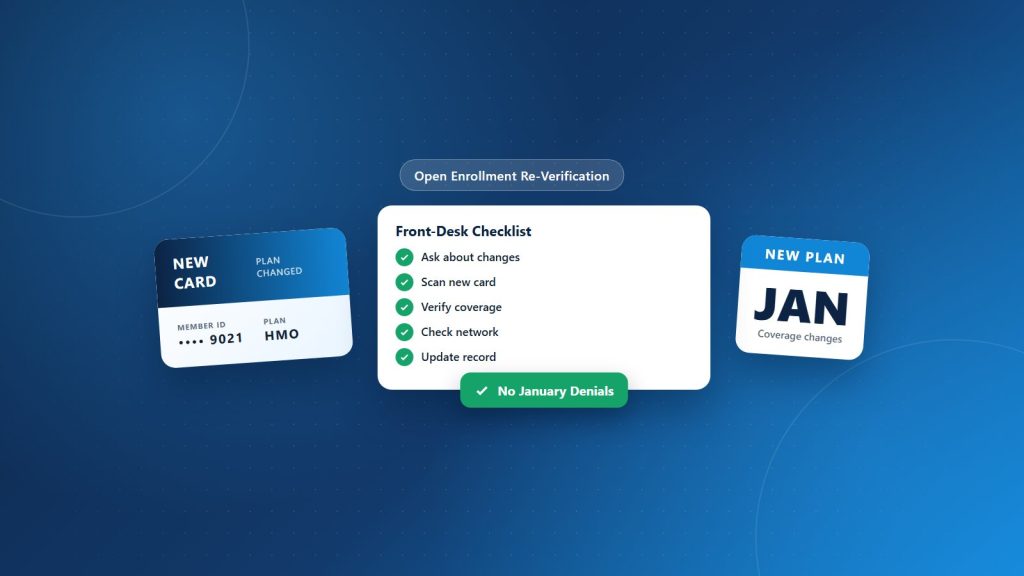
You can’t collect accurately if you don’t know what the patient owes. Verify coverage and benefits two to three days before appointments, including deductible amounts met and remaining, copays and coinsurance. Coverage often changes in January, so re-verify every patient, not just new ones. Learn more about our eligibility verification support.
2. Give Patients a Cost Estimate Up Front
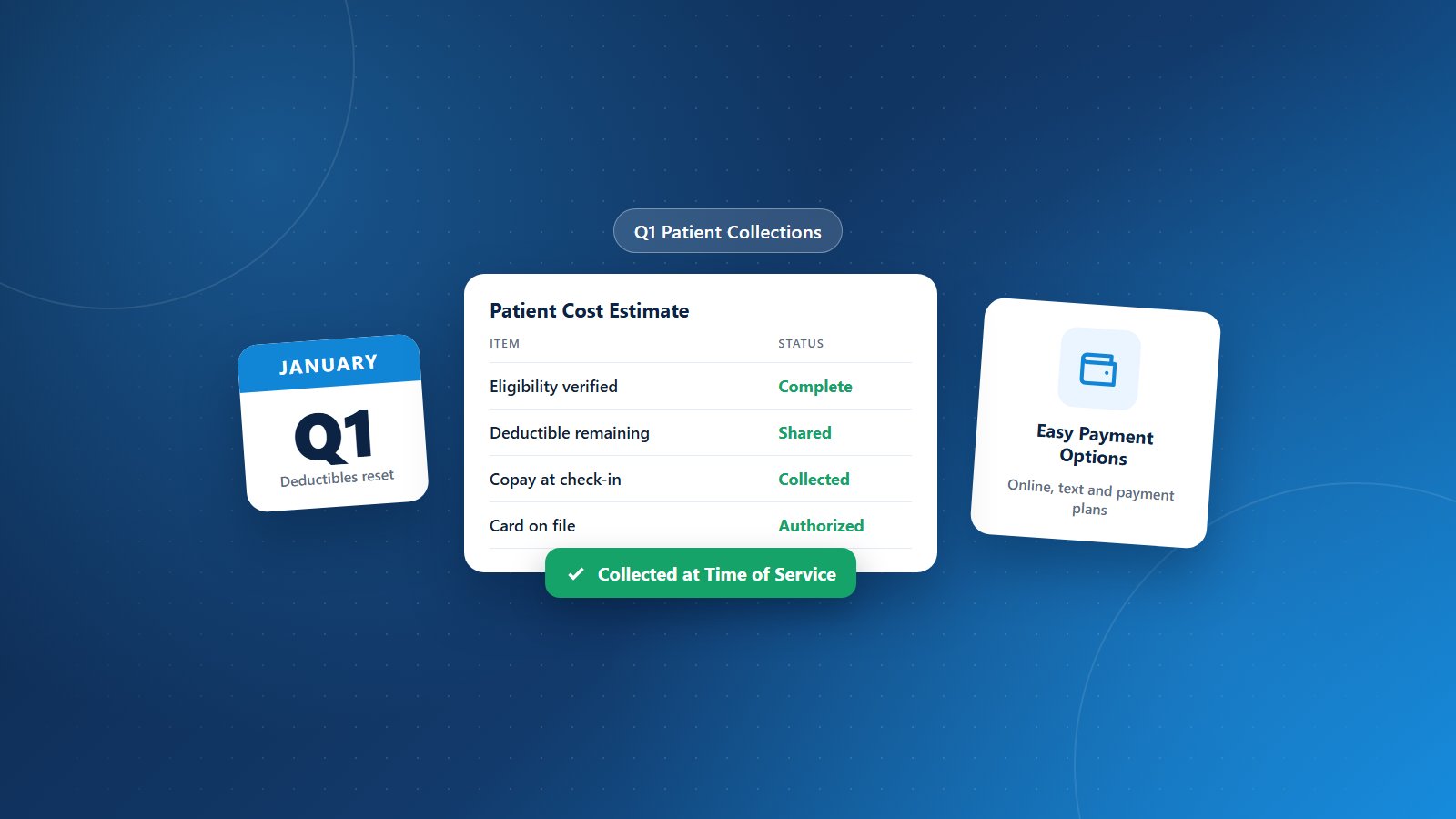
Patients are far more likely to pay when they know what to expect. Use benefit information to provide an estimate of the patient’s responsibility before or at check-in. A short, friendly conversation such as “Your plan’s deductible started over in January, so today’s visit will be about this amount” prevents surprise bills later.
3. Collect at Time of Service
Collect copays, known deductibles and prior balances at check-in or check-out. Train front-desk staff with simple scripts so the conversation feels routine rather than awkward. Make it easy to pay with cards, contactless payments and mobile options.
4. Offer Card-on-File and Payment Plans
For services where the final patient amount isn’t known until the claim is processed, card-on-file programs let patients authorize payment of the remaining balance after insurance pays. For larger balances, offer structured payment plans with clear terms. Patients who can pay over time are more likely to pay in full.
5. Send Clear, Easy-to-Read Statements
Confusing statements lead to calls, delays and unpaid balances. Make sure statements clearly show the date of service, what insurance paid, what the patient owes and how to pay. Include an online payment link or QR code, and send statements promptly after claims are adjudicated.
6. Use Text and Email Reminders
Many patients prefer digital communication. Automated text and email reminders with a secure payment link can dramatically speed up collections compared with paper statements alone, while reducing printing and postage costs.
7. Train Your Front Desk
Your front-desk team is your first line of collections. Make sure they understand deductibles, coinsurance and benefits, can explain them simply and feel confident asking for payment. Regular training and clear financial policies make a measurable difference.
8. Publish a Clear Financial Policy
A written financial policy sets expectations: when payment is due, accepted payment methods, how missed payments are handled and what payment plan options exist. Share it with patients at registration and post it on your website.
9. Track Patient Collection Metrics
Measure your point-of-service collection rate, patient A/R aging and the percentage of patient balances collected within 30, 60 and 90 days. These numbers show whether your strategies are working and where to improve.
10. Keep the Patient Experience Front and Center
Collections and compassion aren’t opposites. Patients who feel respected and informed are more likely to pay and to stay loyal to your practice. Be flexible with patients facing genuine hardship and make financial conversations private and respectful.
How PRCM Helps Improve Patient Collections
Physicians Revenue Cycle Management supports practices with eligibility and benefits verification, patient statements, payment posting and A/R follow-up as part of our medical billing services. We help you build front-end workflows that collect more in Q1 and all year long.
Ready to strengthen patient collections this deductible season? Let’s connect.