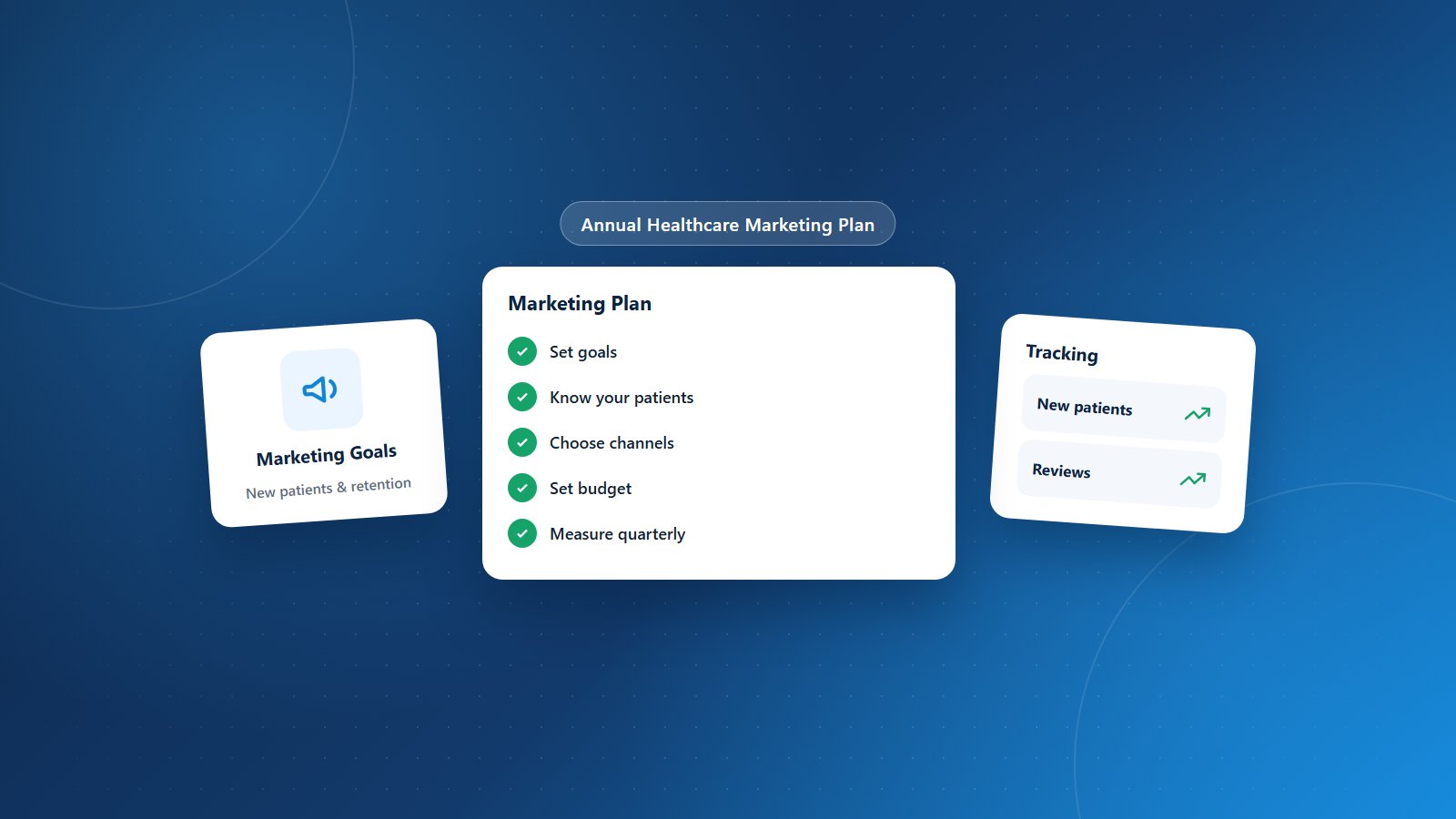
Many medical practices market reactively: running an ad when the schedule looks light, posting on social media occasionally or updating the website once every few years. The result is inconsistent patient flow and unclear return on investment. A simple annual marketing plan changes that by setting clear goals, focusing on the right channels and measuring what works.
Here’s how to build your practice’s annual healthcare marketing plan.
Step 1: Define Your Goals
Start with what your practice needs most. Examples include:
- Attracting new patients for a specific service or provider.
- Filling open appointment slots at a new location.
- Growing a care management or remote monitoring program.
- Improving online reviews and reputation.
- Increasing patient retention and annual visit rates.
Make goals specific and measurable so you can track progress.
Step 2: Know Your Ideal Patients
Identify who you want to reach: their age, conditions, insurance, location and how they search for care. A pediatric practice markets to parents; a cardiology practice may focus on referring physicians and adults with heart conditions.
Step 3: Understand Your Competition
Search for your services in your area and note which practices appear, how many reviews they have and what they emphasize. Identify what makes your practice different, such as specialty expertise, availability, languages spoken or patient experience.
Step 4: Choose Your Channels
Foundation channels
- Website: Fast, mobile-friendly, with clear service pages and easy appointment requests.
- Google Business Profile: Accurate, complete and active. See our Google Business Profile guide.
- Online reviews: A consistent, HIPAA-safe process for earning and responding to reviews.
Growth channels
- Search engine optimization: Content and local SEO that attract patients over time. Read our medical SEO guide.
- Paid search: Targeted ads for high-value services.
- Social media: Educational, community-focused content.
- Email and text: Reminders and education for existing patients.
- Referral relationships: Outreach to referring physicians.
Step 5: Set a Budget
Allocate budget to foundation channels first, then to growth channels based on your goals. Track spending by channel so you can compare results.
Step 6: Build a Content Calendar
Plan monthly themes around health awareness months, seasonal needs such as flu season or back-to-school, and your services. A content calendar keeps your website, social media and email consistent.
Step 7: Stay Compliant
Healthcare marketing must protect patient privacy, avoid misleading claims and follow advertising platform policies for healthcare. Never use patient information or testimonials without proper authorization.
Step 8: Measure and Adjust
Track website visits, calls, appointment requests, new patients by source, reviews and cost per new patient. Review results quarterly and shift budget toward what works.
Don’t Forget the Patient Experience
Marketing brings patients in; operations keep them. Easy scheduling, friendly staff, short waits and clear billing turn new patients into loyal ones who refer others.
Marketing Support From PRCM
Physicians Revenue Cycle Management’s healthcare digital marketing services help practices build brand visibility and communicate with patients and referral partners. Combined with our practice management and billing services, we support growth from first click to final payment.
Ready to plan a stronger year? Let’s connect.