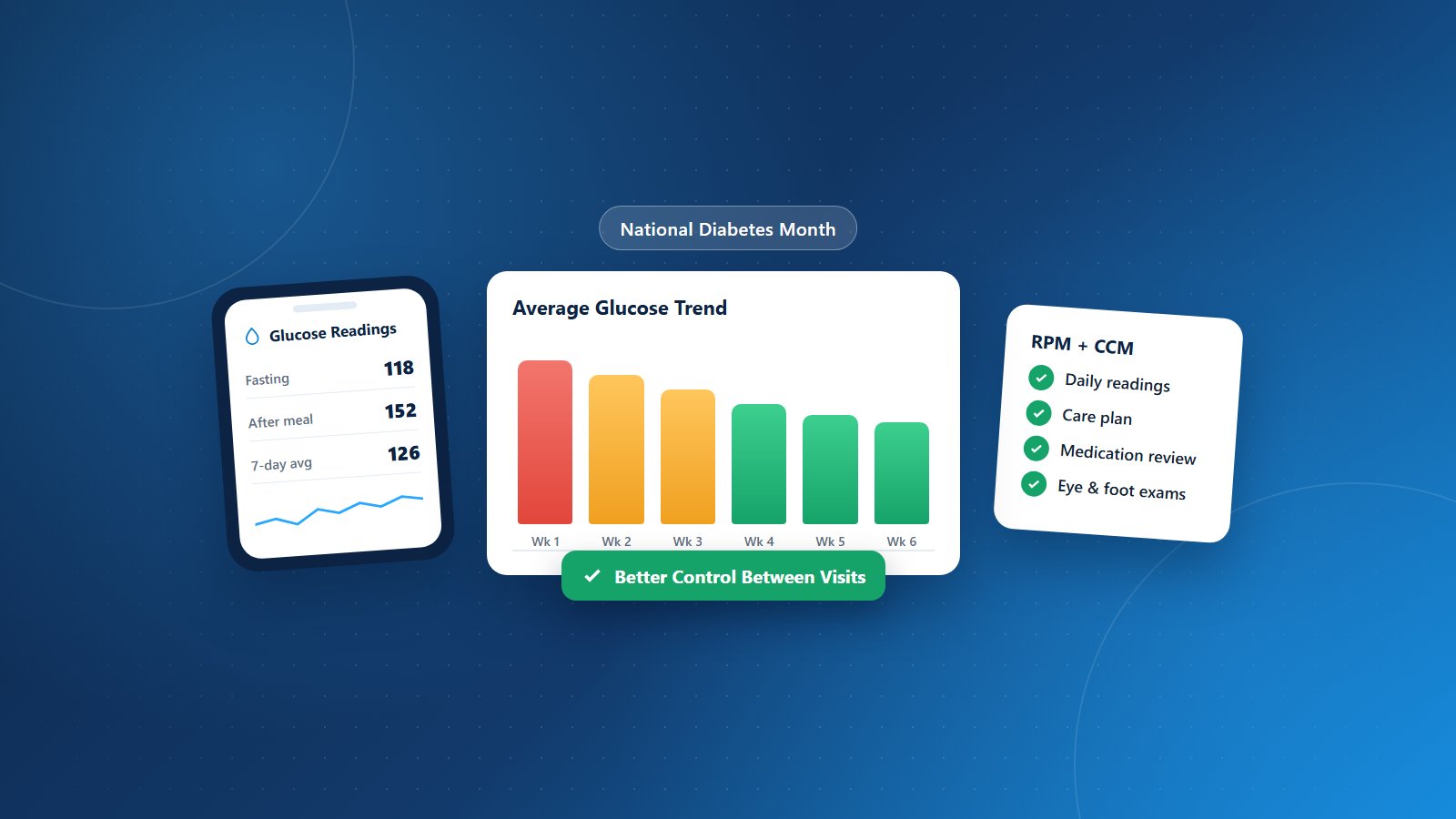
November is National Diabetes Month. Diabetes affects millions of people and is one of the most common, and most demanding, chronic conditions physicians manage. Good control requires daily attention: monitoring blood glucose, taking medications correctly, managing diet and activity, and adjusting treatment over time. Between office visits, many patients struggle without support.
Remote patient monitoring (RPM) and chronic care management (CCM) give practices powerful tools to support diabetes patients every day, not just at appointments.
The Challenge of Managing Diabetes Between Visits
- Office visits capture a snapshot, not daily glucose patterns.
- Patients may not recognize warning signs of high or low blood sugar.
- Medication changes need follow-up to confirm they’re working.
- Many diabetes patients also have hypertension, kidney disease or heart disease.
How RPM Helps Diabetes Patients
With RPM, patients use connected glucometers, blood pressure monitors or scales that transmit readings automatically to the care team. Benefits include:
- Real-world data: Daily readings reveal patterns that guide treatment decisions.
- Early intervention: Care teams can reach out when readings are consistently high or low.
- Faster medication adjustments: Physicians can titrate therapy based on data rather than waiting for the next visit.
- Patient engagement: Patients who track readings and receive feedback are more involved in their care.
How CCM Helps Diabetes Patients
Many diabetes patients have at least one other chronic condition, making them eligible for chronic care management. CCM provides:
- A comprehensive care plan covering diabetes and related conditions.
- Medication reconciliation and adherence support.
- Education on nutrition, activity and self-management.
- Coordination with endocrinologists, eye doctors, podiatrists, dietitians and other specialists.
- Reminders for preventive care such as eye exams, foot exams and lab work.
Better Together: RPM and CCM
RPM supplies the data; CCM supplies the coordination and education. Used together, they create a continuous support system for diabetes patients. Eligible patients may receive both services when each program’s requirements are met independently. Learn more in our RPM vs. CCM comparison.
Practice Benefits
- Improved control measures that support quality reporting.
- Fewer avoidable emergency visits and hospitalizations.
- Stronger patient loyalty.
- Recurring, reimbursable services that support practice revenue.
Building a Diabetes Monitoring Program
- Identify patients with uncontrolled diabetes, recent medication changes or multiple chronic conditions.
- Obtain consent and educate patients on devices and the program.
- Provide easy-to-use connected devices.
- Set monitoring protocols and escalation thresholds.
- Schedule regular communication and care plan reviews.
- Document time, readings and interactions to support billing.
Endocrinology and Primary Care Practices
Both endocrinology and primary care practices can benefit from diabetes monitoring programs. Endocrinologists can use RPM to support complex medication regimens, while primary care practices can use CCM and RPM to manage large populations of diabetes patients.
Launch Diabetes Care Programs With PRCM
Physicians Revenue Cycle Management helps practices build remote patient monitoring and chronic care management programs with technology, care team support and compliant billing.
This National Diabetes Month, help your patients thrive between visits. Let’s connect.