Telehealth has opened new possibilities for medical practices: reaching patients in rural areas, expanding behavioral health access, offering follow-up visits without travel and even serving patients across state lines. But expanding telehealth also expands credentialing complexity. Providers must be properly licensed where patients are located and enrolled with the payers that cover those patients.
Here’s what practices need to know about credentialing telehealth providers across multiple states.
The Core Rule: Licensure Follows the Patient
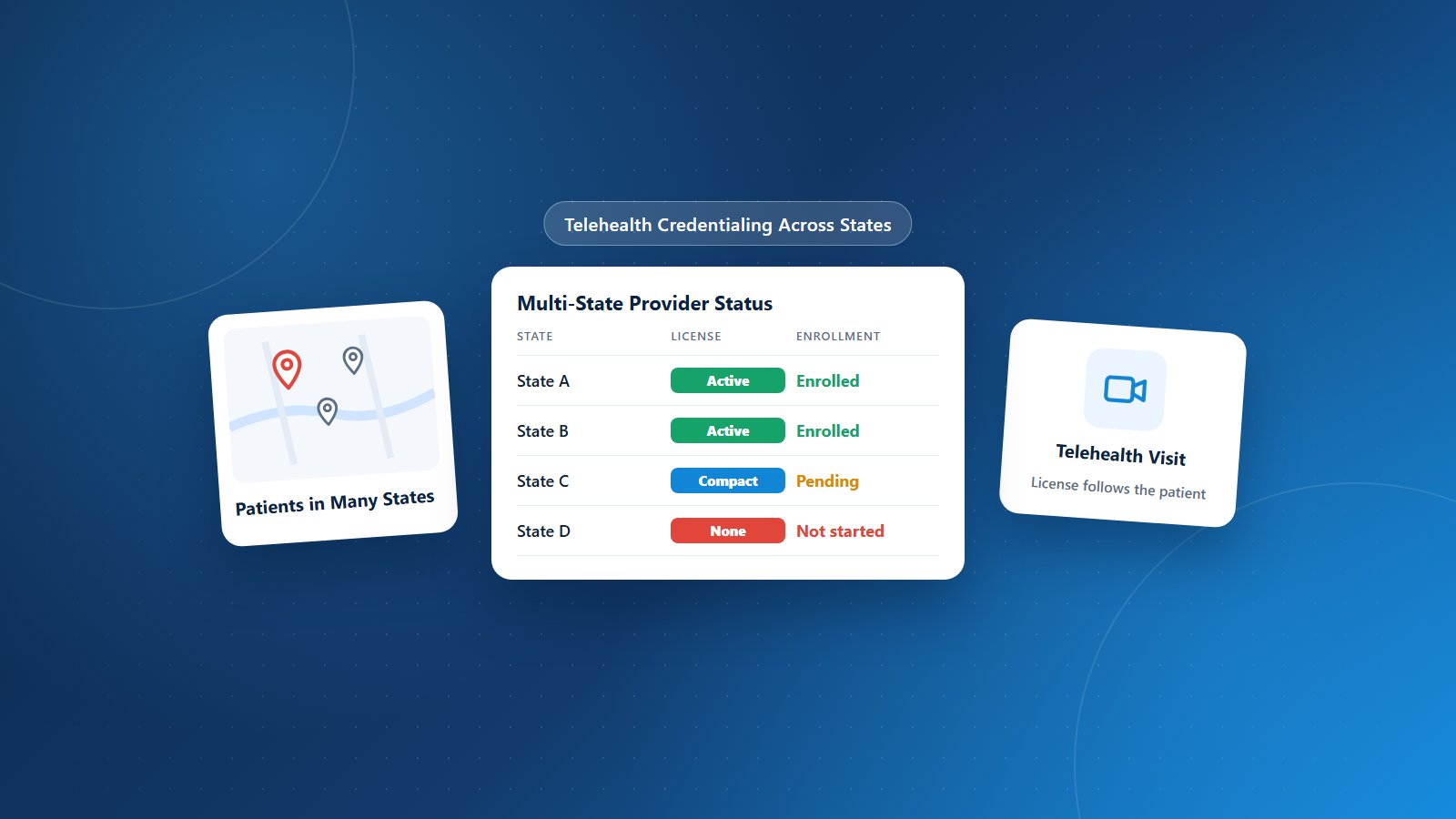
In general, providers must be licensed in the state where the patient is physically located at the time of the visit, not just the state where the provider is located. A physician in Illinois seeing a patient who is in Indiana generally needs an Indiana license, subject to that state’s specific rules and any exceptions.
Step 1: Map Where Your Patients Are
Start by identifying which states your telehealth patients live in or travel to. Consider existing patients who split time between states, college students, seasonal residents and patients near state borders.
Step 2: Obtain State Licenses
Providers need active licenses in each state where they’ll see patients. Options include:
- Full state licenses obtained individually through each state medical board.
- Interstate licensure compacts, which offer an expedited pathway to licensure in participating states for eligible physicians and certain other professions.
- State-specific telehealth registrations or exceptions, which some states offer for limited circumstances.
Rules vary by state and profession, so verify current requirements with each licensing board.
Step 3: Address Prescribing Requirements
Providers who prescribe controlled substances via telehealth must meet federal and state requirements, which may include registrations in the patient’s state. Review prescribing rules carefully before offering these services.
Step 4: Enroll With Payers in Each State
Being licensed isn’t enough to get paid. Providers must also be enrolled with the payers covering patients in each state:
- Medicare enrollment may need to reflect the appropriate practice locations and jurisdictions.
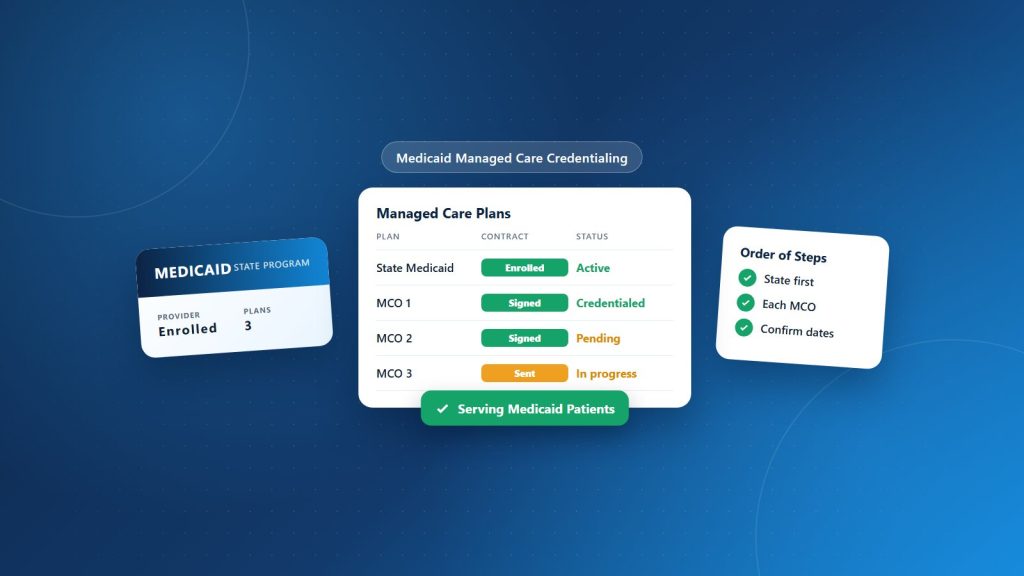
- Medicaid programs are state-specific and often require separate enrollment in each state.
- Commercial payers may have different networks, contracts and telehealth policies by state.
Step 5: Keep CAQH and Directories Accurate
Update CAQH profiles with all licenses and telehealth service details so payers can complete credentialing. Make sure directory listings accurately reflect telehealth availability.
Step 6: Understand Payer Telehealth Policies
Payers differ on which services are covered via telehealth, which place of service codes and modifiers to use, whether audio-only visits are covered and whether originating site requirements apply. Maintain a payer policy reference and review it regularly.
Step 7: Track Renewals in Every State
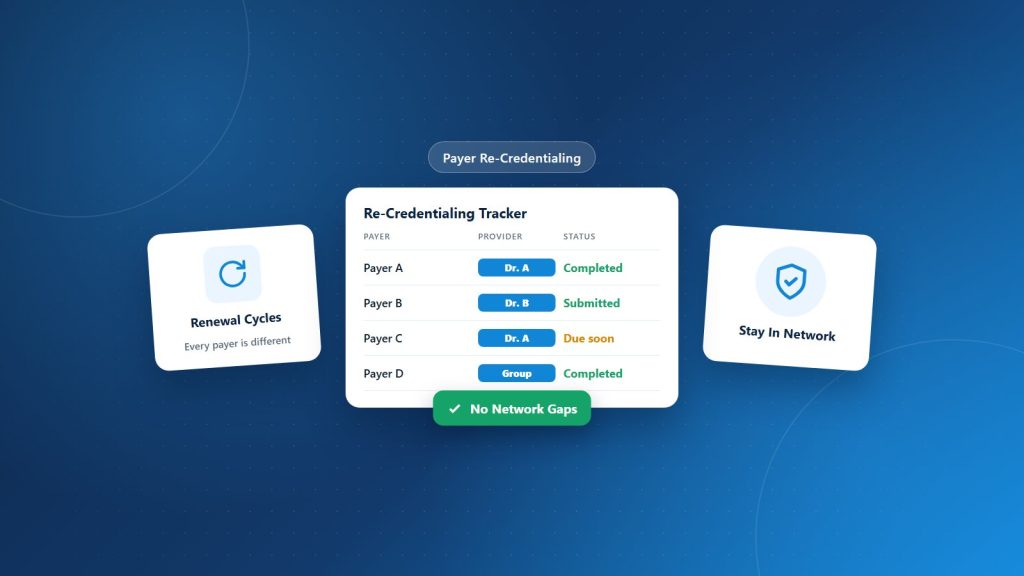
Multi-state providers have multiple license renewal dates, continuing education requirements and re-credentialing cycles. A centralized credentialing calendar is essential.
Common Telehealth Credentialing Mistakes
- Seeing patients in states where the provider isn’t licensed.
- Assuming a license automatically means payer enrollment.
- Overlooking Medicaid enrollment in other states.
- Letting secondary state licenses lapse.
Credentialing Support From PRCM
Physicians Revenue Cycle Management’s provider credentialing team helps practices navigate licensing, payer enrollment and ongoing maintenance for providers in multiple states. Combined with our medical billing services, we help your telehealth program get paid correctly.
Want the complete picture? Read our guide: Credentialing a New Physician: A Step-by-Step Timeline.
Expanding telehealth across state lines? Let’s connect.