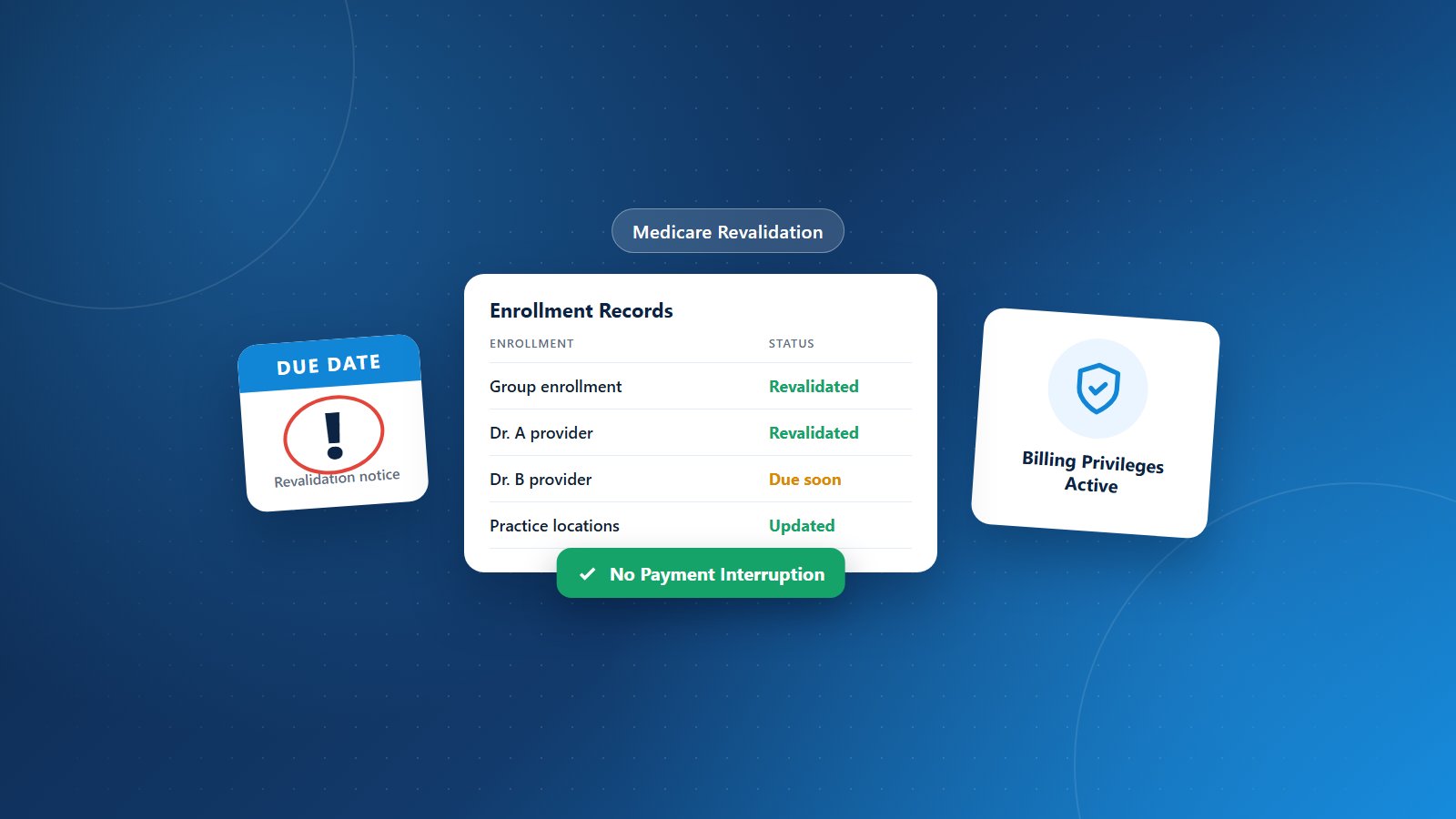
Getting enrolled in Medicare is only the beginning. To keep billing privileges active, providers and suppliers must periodically revalidate their enrollment information. Miss a revalidation deadline, and Medicare can deactivate your billing privileges, stopping payments for services you continue to provide.
Here’s how Medicare revalidation works and how to stay ahead of it.
What Is Medicare Revalidation?
Revalidation is the process of confirming that the information in your Medicare enrollment record is accurate and current. Medicare requires providers and suppliers to revalidate on a recurring cycle, and it may also request off-cycle revalidation. The process helps Medicare maintain accurate records and prevent fraud.
Why Revalidation Matters
If you don’t respond to a revalidation request by the due date, or your submission is incomplete, Medicare may deactivate your billing privileges. During a deactivation period:
- Claims for services may be rejected or unpaid.
- Reactivation requires additional paperwork and time.
- Gaps in coverage may not be recoverable, resulting in permanently lost revenue.
For practices with a large Medicare population, even a short deactivation can cause serious cash flow problems.
How to Know When You’re Due
- Check the Medicare revalidation lookup tool, which lists due dates for providers and groups.
- Watch for notices from your Medicare Administrative Contractor (MAC), sent to the correspondence and email addresses on file.
- Track due dates for every provider and group enrollment in a credentialing calendar.
Keeping your correspondence address and contact information current is critical, because notices sent to an old address or a former employee’s email can easily be missed.
The Revalidation Process
- Confirm the due date for each individual and group enrollment.
- Review your enrollment record for accuracy, including practice locations, ownership, managing employees and reassignments.
- Update information that has changed since your last enrollment or revalidation.
- Submit the revalidation through the online enrollment system or the appropriate application.
- Pay any required fee if applicable to your enrollment type.
- Respond promptly to any requests for additional information from your MAC.
- Keep confirmation of submission and approval.
Common Revalidation Mistakes
- Missing notices because contact information is outdated.
- Revalidating individual providers but forgetting the group enrollment, or vice versa.
- Failing to report changes in practice location, ownership or managing employees.
- Inconsistent information across Medicare, CAQH and commercial payer records.
- Waiting until the last minute and running out of time to respond to development requests.
Revalidation Is Part of Ongoing Credentialing
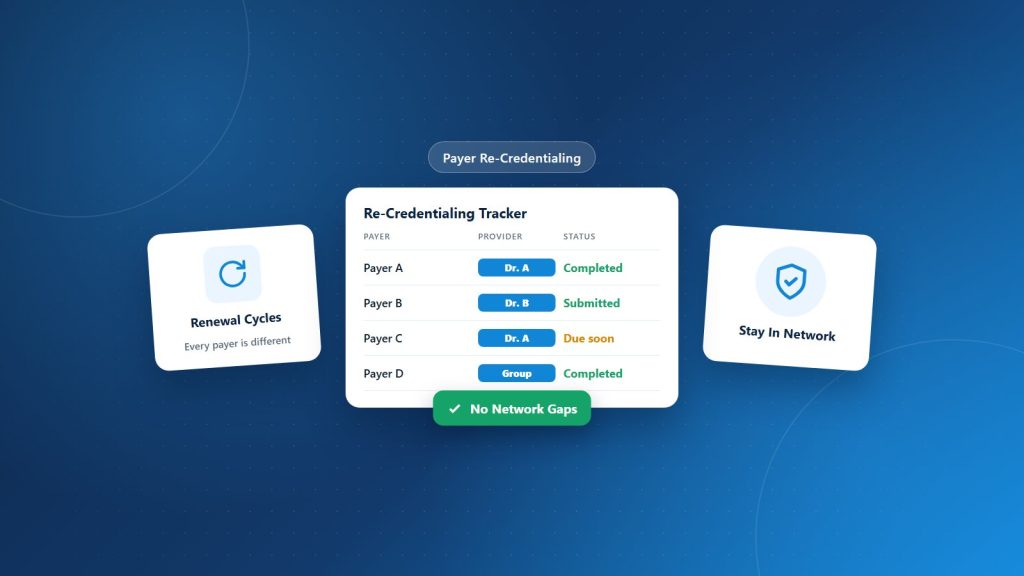
Medicare revalidation is one piece of ongoing credentialing maintenance. Practices should also track commercial payer re-credentialing, CAQH re-attestation, license and DEA renewals and board certification. A single calendar for all of these deadlines prevents surprises.
Stay Enrolled With PRCM
Physicians Revenue Cycle Management provides provider credentialing services for Medicare, Medicaid, commercial payers and workers’ compensation, including revalidation tracking and ongoing maintenance. We monitor deadlines so your billing privileges stay active and your claims keep getting paid.
Want the complete picture? Read our guide: Credentialing a New Physician: A Step-by-Step Timeline.
Not sure when your next revalidation is due? Let’s connect.