Key takeaways
- Remote patient monitoring (RPM) uses connected devices to send patient readings from home to the care team.
- It’s especially valuable for hypertension, diabetes, heart failure, COPD and post-hospital recovery.
- RPM benefits patients through earlier intervention and practices through better outcomes and recurring revenue.
- Compliant programs need consent, qualifying devices, consistent data, time tracking and documentation.
Patients with chronic conditions spend only a tiny fraction of their lives in a doctor’s office. Between visits, blood pressure rises and falls, blood sugar fluctuates and symptoms change, often without the care team knowing. Remote patient monitoring (RPM) helps close that gap by giving physicians a continuous view of patient health outside the clinic.
If your practice is considering RPM, this beginner’s guide explains what remote patient monitoring is, how it works, which patients benefit and what it takes to build a compliant, sustainable program.
What Is Remote Patient Monitoring?
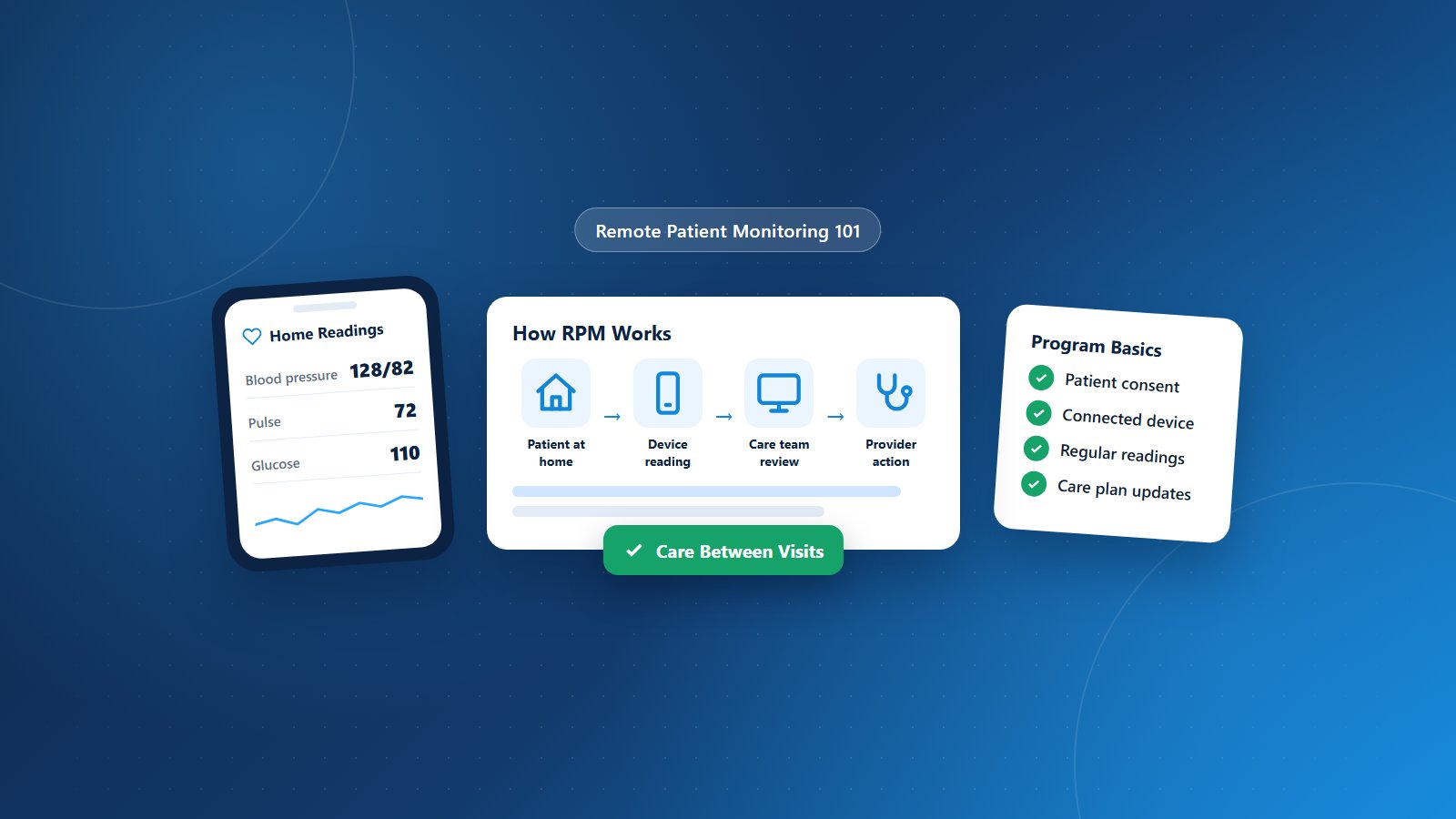
Remote patient monitoring is the use of connected medical devices to collect physiological data from patients at home and transmit it securely to their healthcare provider. The care team reviews the data, identifies concerning trends and intervenes when needed, whether that’s adjusting medication, providing education or scheduling a visit.
Common RPM devices include:
- Blood pressure monitors
- Glucometers
- Pulse oximeters
- Weight scales
- Other connected devices that measure vital signs
Many modern devices transmit readings automatically through cellular connections, which means patients don’t need a smartphone or Wi-Fi to participate.
How RPM Works
- Patient identification. The provider identifies patients who would benefit from monitoring.
- Consent and enrollment. The patient agrees to participate and receives education on the program.
- Device setup. The patient receives a connected device and learns how to use it.
- Data transmission. Readings are sent automatically to a secure platform.
- Review and intervention. Clinical staff review the data, follow up with the patient and escalate concerns to the provider.
- Ongoing communication. The care team stays in regular contact to support the treatment plan.
Which Patients Benefit Most?
| Condition | Typical device | What monitoring helps with |
|---|---|---|
| Hypertension | Blood pressure cuff | Medication adjustments and white-coat readings |
| Diabetes | Glucometer | Glucose patterns and treatment changes |
| Heart failure | Weight scale, BP cuff | Early signs of fluid retention |
| COPD | Pulse oximeter | Oxygen levels and exacerbation warning signs |
| Weight management | Weight scale | Progress and accountability |
| Post-hospital recovery | Varies | Avoiding readmissions |
Patients who have difficulty traveling to appointments, live in rural areas or need close follow-up after medication changes are also strong candidates.
Benefits of Remote Patient Monitoring
For patients
- Better control of chronic conditions through timely adjustments
- Fewer trips to the office and greater convenience
- More engagement in their own health
- Peace of mind knowing their care team is watching
For practices
- Earlier detection of problems, which can reduce emergency visits and hospitalizations
- Stronger patient relationships and loyalty
- Support for quality measures and value-based care goals
- A recurring, reimbursable service that supports practice revenue
A Patient Example
Consider a patient with newly diagnosed hypertension who starts a new medication. Without RPM, the physician might wait several weeks for a follow-up visit to see whether the medication is working. With RPM, the patient takes daily readings at home, the care team sees that blood pressure remains elevated after two weeks, and the physician adjusts the dose without waiting for the next appointment. The patient reaches their goal sooner, with fewer office visits.
What It Takes to Build a Compliant RPM Program
RPM is reimbursable by Medicare and many other payers, but billing requirements are specific. A successful program needs:
- Qualifying devices that meet payer definitions and transmit data automatically.
- Documented patient consent obtained before services begin.
- An established patient relationship and an order from the treating provider.
- Consistent data collection that meets payer requirements for readings.
- Time tracking for clinical staff and provider management activities, including interactive communication with the patient.
- Accurate documentation of readings reviewed, interventions and communication.
Because payer rules for RPM are updated from time to time, practices should review current requirements regularly and build workflows that capture everything needed for compliant billing.
Staffing and Workflow Options
- In-house: Practice nurses or medical assistants monitor readings and contact patients.
- Partnered: An RPM partner supplies devices, platform and monitoring support while your providers direct care.
- Hybrid: A partner handles device logistics and data monitoring while your staff handle clinical follow-up.
Common RPM Challenges
- Patient adherence. Patients may forget to take readings. Reminders and regular outreach help.
- Staff workload. Reviewing data and contacting patients takes time.
- Billing complexity. Missing documentation or data requirements can cause denials.
- Technology setup. Device logistics and platform integration require planning.
RPM and Chronic Care Management Together
RPM often works alongside chronic care management (CCM). While RPM focuses on collecting and acting on physiological data, CCM focuses on care coordination and a comprehensive care plan. Many patients qualify for both, and together they create a strong model for managing chronic disease between visits.
Frequently Asked Questions
Do patients need technical skills to use RPM devices?
Very little. Many devices work with a single button press and send readings automatically over cellular networks.
Who reviews the readings?
Clinical staff typically review readings and contact patients, escalating to the provider when readings fall outside set parameters.
Is RPM only for older patients?
No. Any patient with a condition that benefits from regular monitoring can be a candidate, although many RPM patients are older adults.
How do we get started?
Start with one condition, such as hypertension, define your workflow, choose devices and enroll a manageable group of patients before expanding.
Launch RPM With PRCM
Physicians Revenue Cycle Management helps practices build and run remote patient monitoring programs using state-of-the-art technology and personalized care plans. We support patient enrollment, monitoring workflows, documentation and billing, so your practice can improve outcomes without overloading your staff. Planning for the year ahead? See our guide to preparing for annual Medicare payment changes.
Ready to explore RPM for your patients? Let’s connect to discuss how a remote monitoring program could work for your practice.