Key takeaways
- Your MIPS final score determines whether future Medicare payments are adjusted up, held neutral or reduced.
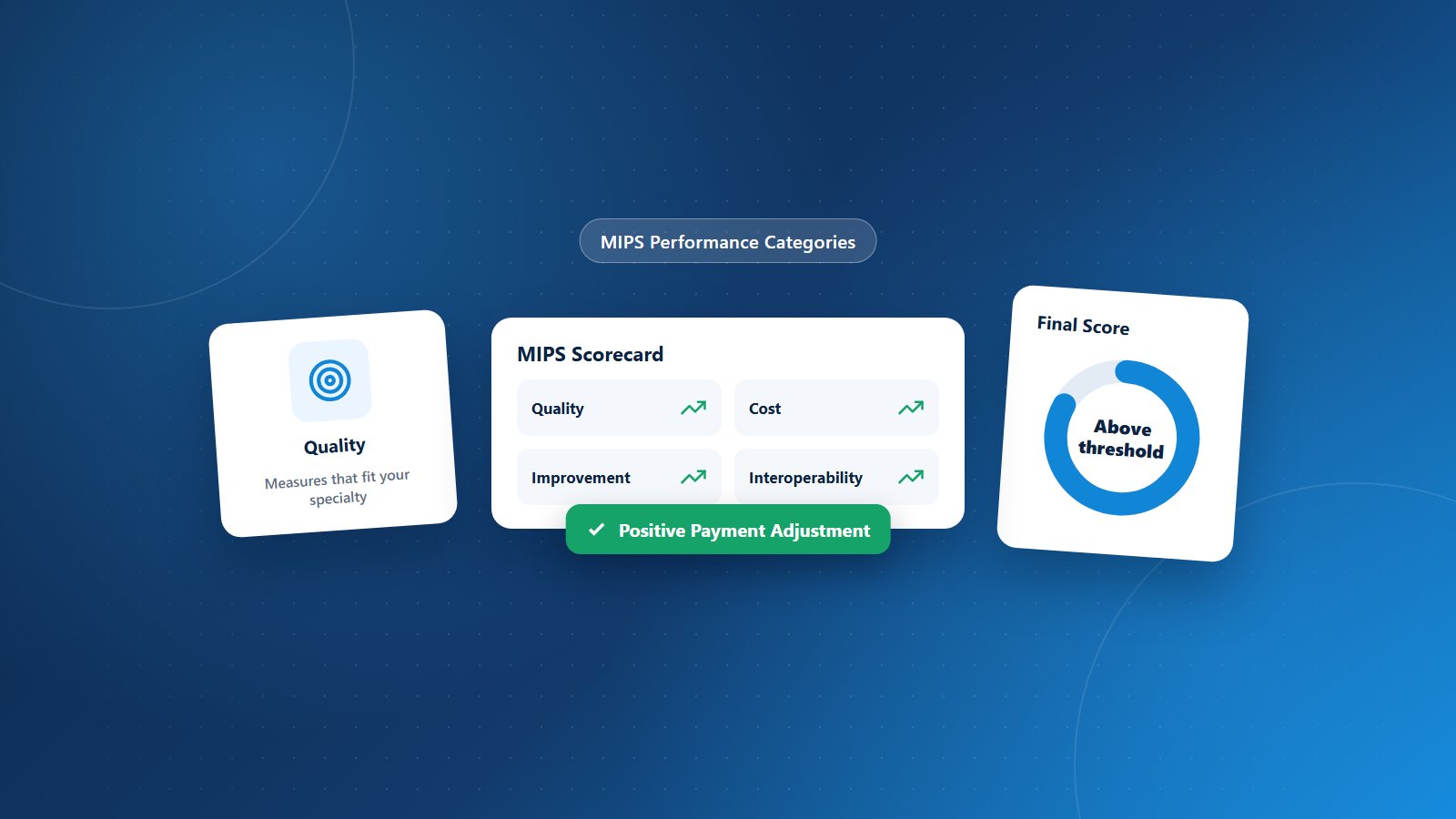
- The score is built from four categories: Quality, Cost, Improvement Activities and Promoting Interoperability.
- Quality usually carries the most weight, so measure selection and data completeness matter most.
- Treat MIPS as a year-round program, not a once-a-year submission.
For physicians who bill Medicare, the Merit-based Incentive Payment System (MIPS) has a direct influence on future reimbursement. Your performance in MIPS determines whether your Medicare payments are adjusted upward, stay neutral or are reduced. Yet many practices still treat MIPS as a once-a-year reporting chore rather than an ongoing program that rewards good planning.
Understanding how MIPS performance categories work is the first step toward protecting and improving your score. This guide explains each category in plain language and what your practice can do to perform well.
What Is MIPS?
MIPS is one of the two tracks of the Quality Payment Program created under MACRA, the law that changed how Medicare rewards clinicians for value rather than volume alone. Eligible clinicians report data across several performance categories. Each category is scored and weighted, and the combined result is a final score that determines the payment adjustment applied in a future year.
Because the adjustment applies to Medicare Part B payments, a strong or weak MIPS score can affect revenue across all of your Medicare patients.
The Four Categories at a Glance
| Category | What it measures | Do you submit data? |
|---|---|---|
| Quality | Outcomes and processes of care | Yes |
| Cost | Total cost of care for attributed patients | No, calculated from claims |
| Improvement Activities | Efforts to improve care processes, access and engagement | Yes, by attestation |
| Promoting Interoperability | Use of certified EHR technology and data exchange | Yes, unless reweighted |
1. Quality
The Quality category measures the outcomes and processes of care you deliver. Clinicians select measures relevant to their specialty and report performance data for their patients. Examples include measures related to preventive screenings, chronic disease control, medication management and patient safety.
Quality typically carries the largest share of the final score, which makes measure selection and data completeness especially important. Choosing measures you can report accurately and perform well on is one of the most impactful decisions you’ll make.
Tips for Quality
- Choose measures that reflect care you provide routinely.
- Confirm your EHR or registry can capture the required data.
- Monitor performance during the year, not just at the end.
2. Cost
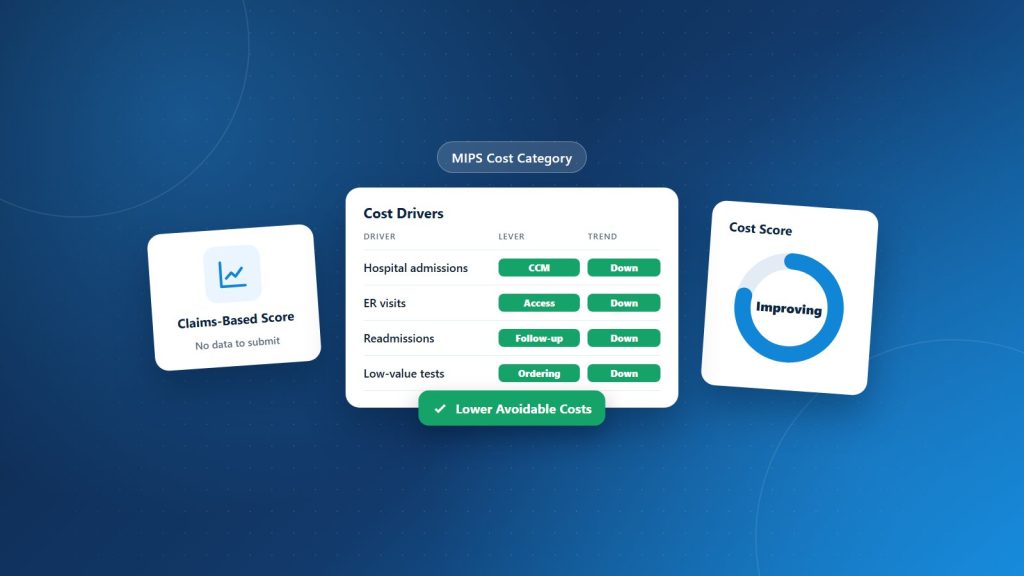
The Cost category evaluates the total cost of care for your patients, based on Medicare claims data. Practices do not submit data for Cost; it is calculated automatically. While you can’t report your way to a better Cost score, care coordination, appropriate use of services and reducing avoidable hospitalizations can influence it over time.
3. Improvement Activities
Improvement Activities recognize efforts to improve care processes, patient engagement and access. Practices attest to completing activities from an approved inventory, such as expanded access, care coordination, patient safety initiatives, population management or behavioral health integration.
Many practices already perform qualifying activities without realizing it. Documenting them properly can earn credit in this category with relatively little additional effort.
4. Promoting Interoperability
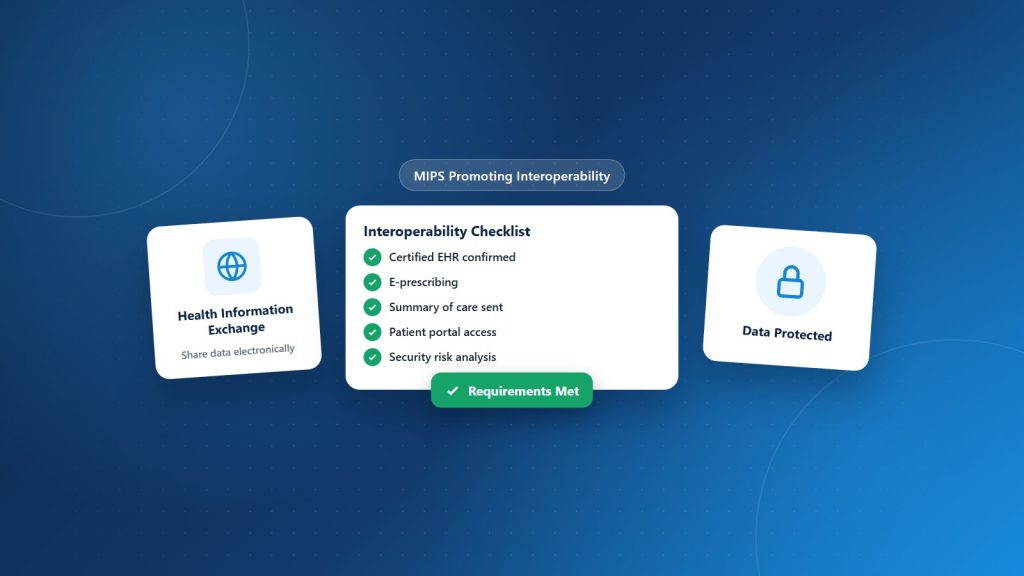
Promoting Interoperability focuses on the use of certified electronic health record technology to improve patient access to information and the exchange of health data. Measures relate to areas such as e-prescribing, health information exchange, patient access to their records and public health reporting. Security risk analysis is also a core requirement.
How Your Final Score Is Calculated
Each category is scored and then weighted to produce a final score. The weights can vary by year and may be reweighted for clinicians who qualify for certain exceptions, such as small practices or those facing extreme circumstances. Your final score is compared against a performance threshold:
- Scores above the threshold can earn a positive payment adjustment.
- Scores at the threshold receive a neutral adjustment.
- Scores below the threshold result in a negative adjustment.
Because thresholds and category weights are updated periodically, it’s important to review current program requirements each year.
Who Needs to Participate?
Eligibility depends on factors such as clinician type and the volume of Medicare patients and services. Some clinicians are exempt, while others may choose to participate voluntarily or report as a group. Practices can check eligibility for each clinician through the Quality Payment Program’s lookup tools.
Individual vs. Group Reporting
Clinicians can often report individually or as a group. Group reporting combines performance across clinicians, which can help when some clinicians perform better on certain measures, while individual reporting may benefit clinicians with strong individual results. Evaluate both options before the performance period begins.
A Year-Round MIPS Calendar
- Start of year: Confirm eligibility, choose reporting level and select measures.
- First quarter: Build EHR workflows and plan Improvement Activities.
- Quarterly: Review measure performance and close care gaps.
- Before year-end: Confirm the security risk analysis and activity documentation.
- Submission window: Validate data and submit each category.
Common MIPS Mistakes to Avoid
- Waiting until the last minute. Quality data must be tracked throughout the performance period.
- Choosing the wrong measures. Measures that don’t fit your patient population lower your score.
- Incomplete data. Missing data completeness requirements reduces points even when performance is good.
- Skipping the security risk analysis. It’s required for Promoting Interoperability and is also a HIPAA obligation.
- Not documenting Improvement Activities. Keep evidence of every activity you attest to.
Frequently Asked Questions
Is MIPS participation optional?
For eligible clinicians, not participating typically results in a negative payment adjustment. Some clinicians are exempt based on program criteria.
Which category should we focus on first?
Quality usually has the biggest impact, but Improvement Activities often offer the easiest points. A balanced plan covers all applicable categories.
Can small practices succeed in MIPS?
Yes. Small practices may have special scoring considerations, and good planning makes strong performance achievable.
Let PRCM Manage Your MIPS Reporting
MIPS rewards practices that plan, track and report carefully, but that takes time most practices don’t have. Physicians Revenue Cycle Management’s Doctors MACRA Services help clinicians across specialties understand requirements, choose the right measures, monitor performance and submit data with confidence. Combined with our medical billing services, we help ensure your quality performance supports your revenue. See also how to prepare for annual Medicare payment changes.
Want a clearer picture of your MIPS standing? Let’s connect to review your reporting strategy.