Ophthalmology practices provide a wide range of services, from comprehensive eye exams and diagnostic imaging to injections and surgery. Cataract surgery is one of the most common procedures, and it involves unique billing considerations, including co-management arrangements with optometrists, premium lens options and global surgical periods. Getting these details right protects both revenue and compliance.
Here’s how ophthalmology practices can bill cataract surgery and co-management correctly.
Eye Exam Coding Options
Ophthalmologists can often bill office visits using either general E/M codes or eye-specific exam codes, depending on the services provided and documentation. Choosing the most appropriate option based on payer rules and documentation is important.
Medical vs. Routine Vision Services
Medical eye care is billed to medical insurance, while routine vision exams and refractions may be covered by vision plans or paid by the patient. Clarify coverage with patients and bill the correct payer.
Cataract Surgery Billing
Global period
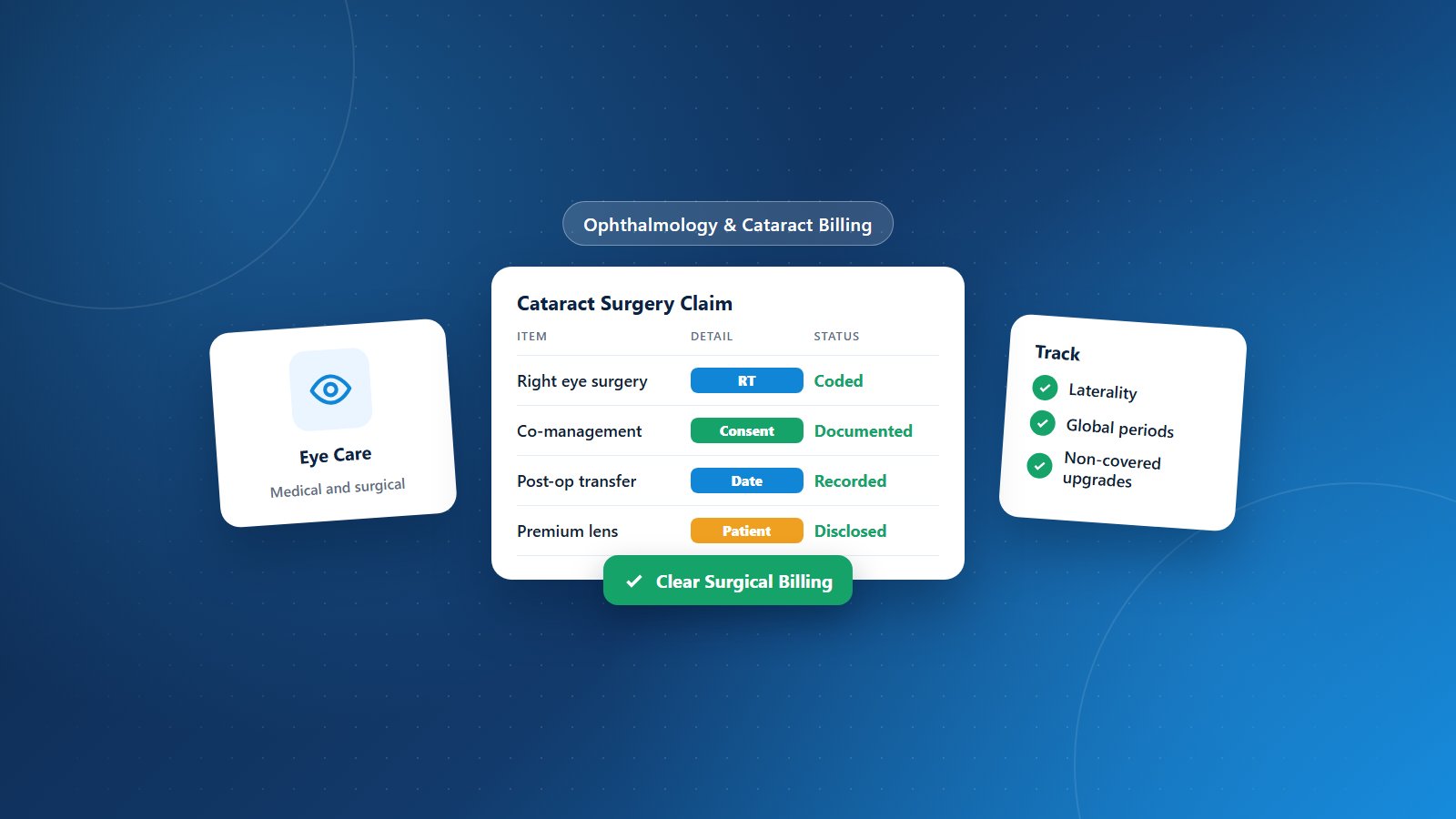
Cataract surgery generally has a global period that includes routine post-operative care. Track the global period for each eye separately.
Laterality
Use the correct modifiers to identify which eye was treated, and document laterality consistently.
Second eye surgery
When the second eye is operated on during the global period of the first, specific modifiers may apply. Make sure each surgery’s global period is tracked independently.
Co-Management With Optometrists
In co-management arrangements, the surgeon performs the surgery and the patient’s optometrist provides some or all post-operative care. Payment is divided based on the portions of care each provider furnishes, using modifiers to indicate surgical care only or post-operative care only.
- Document the patient’s consent to co-management.
- Document the transfer of care date and the agreement between providers.
- Both providers must bill with the same procedure code and date of surgery, using the appropriate modifiers.
- Co-management should be based on patient preference and clinical appropriateness, not financial arrangements.
Premium Lenses and Patient Payments
When patients choose premium intraocular lenses or additional services beyond what insurance covers, practices must clearly separate covered services from non-covered upgrades, provide written cost information and obtain patient agreement before surgery.
Diagnostic Testing
Imaging and testing such as optical coherence tomography and visual fields require documentation of medical necessity, interpretation and frequency compliance. Bill professional and technical components correctly.
Intravitreal Injections
Retina services often involve high-cost drugs. Accurate drug units, laterality, waste documentation and prior authorization are essential. See our article on drug unit and waste billing for related principles.
Ophthalmology Billing Support From PRCM
Physicians Revenue Cycle Management supports ophthalmology practices with surgical, diagnostic and co-management billing expertise through our medical billing services. See the specialties we serve.
Want cataract and co-management billing done right? Let’s connect.