Medical practices regularly invest in equipment: exam tables, diagnostic devices, imaging equipment, computers, software and office furniture. As the year draws to a close, many practice owners wonder whether purchasing equipment before December 31 could reduce their tax bill. The answer depends on your practice’s situation, current tax rules and, most importantly, whether the purchase makes business sense.
Here’s how to think about equipment purchases as part of a smart year-end tax strategy.
Note: Tax rules for equipment deductions change over time and depend on your entity type, income and other factors. Consult a qualified tax professional before making purchase decisions for tax reasons.
How Equipment Is Typically Deducted
Business equipment is generally treated as a capital asset. Rather than deducting the full cost immediately, businesses often recover the cost over several years through depreciation. However, tax rules have at times allowed businesses to deduct some or all of the cost of qualifying equipment in the year it’s placed in service, through provisions such as expensing elections and bonus depreciation.
Which options are available, and how much can be deducted, depends on current law and your practice’s circumstances.
Key Concept: “Placed in Service”
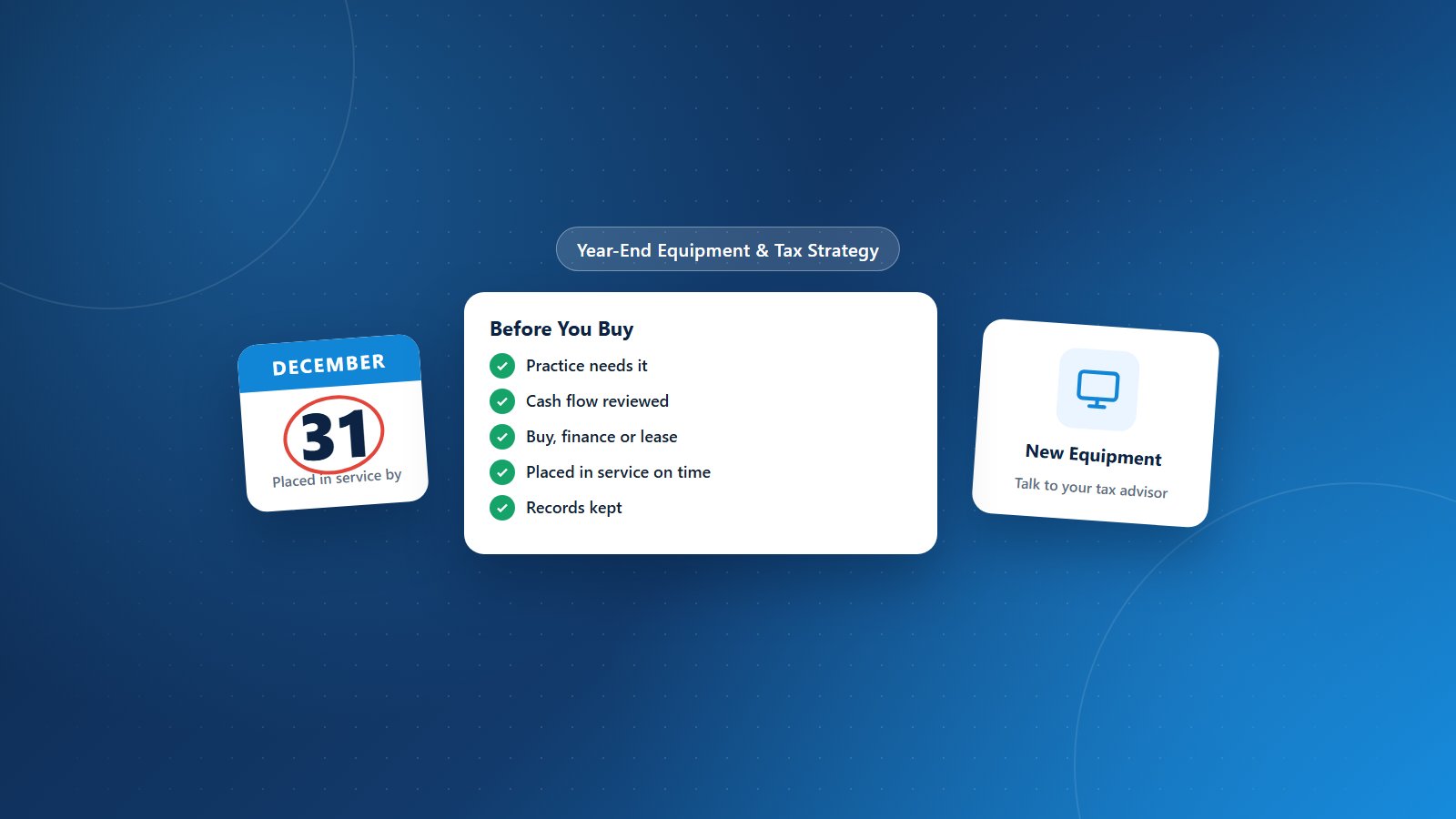
For most equipment deductions, what matters is when the equipment is placed in service, meaning it’s ready and available for use in your practice, not just when it’s ordered or paid for. Equipment ordered in December but delivered and installed in January typically counts for the following year.
Questions to Ask Before Buying
Does the practice actually need it?
A tax deduction reduces the cost of a purchase; it doesn’t make an unnecessary purchase free. Buy equipment because it improves patient care, efficiency or revenue.
How will it affect cash flow?
Year-end purchases reduce cash heading into January and February, when patient deductibles reset and collections often slow. Make sure the practice has adequate reserves.
Should you buy, finance or lease?
Financed equipment may still qualify for deductions in the year it’s placed in service, while leases are treated differently. Compare options with your accountant.
What’s your income outlook?
Deductions may be more valuable in a high-income year. If you expect higher income next year, accelerating deductions may not be the best choice.
How does it affect your entity and owners?
Deductions flow differently depending on whether your practice is a sole proprietorship, partnership, S corporation or C corporation.
Common Equipment Purchases for Practices
- Diagnostic and treatment equipment.
- Computers, tablets and networking equipment.
- Furniture and office equipment.
- Certain software.
- Patient monitoring devices for care programs.
Keep Good Records
Maintain invoices, delivery and installation dates, financing documents and records of business use. Good documentation supports deductions and simplifies tax preparation.
Combine Equipment Planning With Other Year-End Moves
Equipment purchases are one part of year-end planning, alongside retirement contributions, bonuses, estimated taxes and collections. Read our year-end tax planning tips for physicians for a broader checklist.
Financial Planning Support From PRCM
Physicians Revenue Cycle Management’s accounting and taxation services help practice owners plan major purchases, organize records and prepare accurate returns. Because we also manage billing, we see how investments affect your full financial picture.
Planning a year-end equipment purchase? Let’s connect.