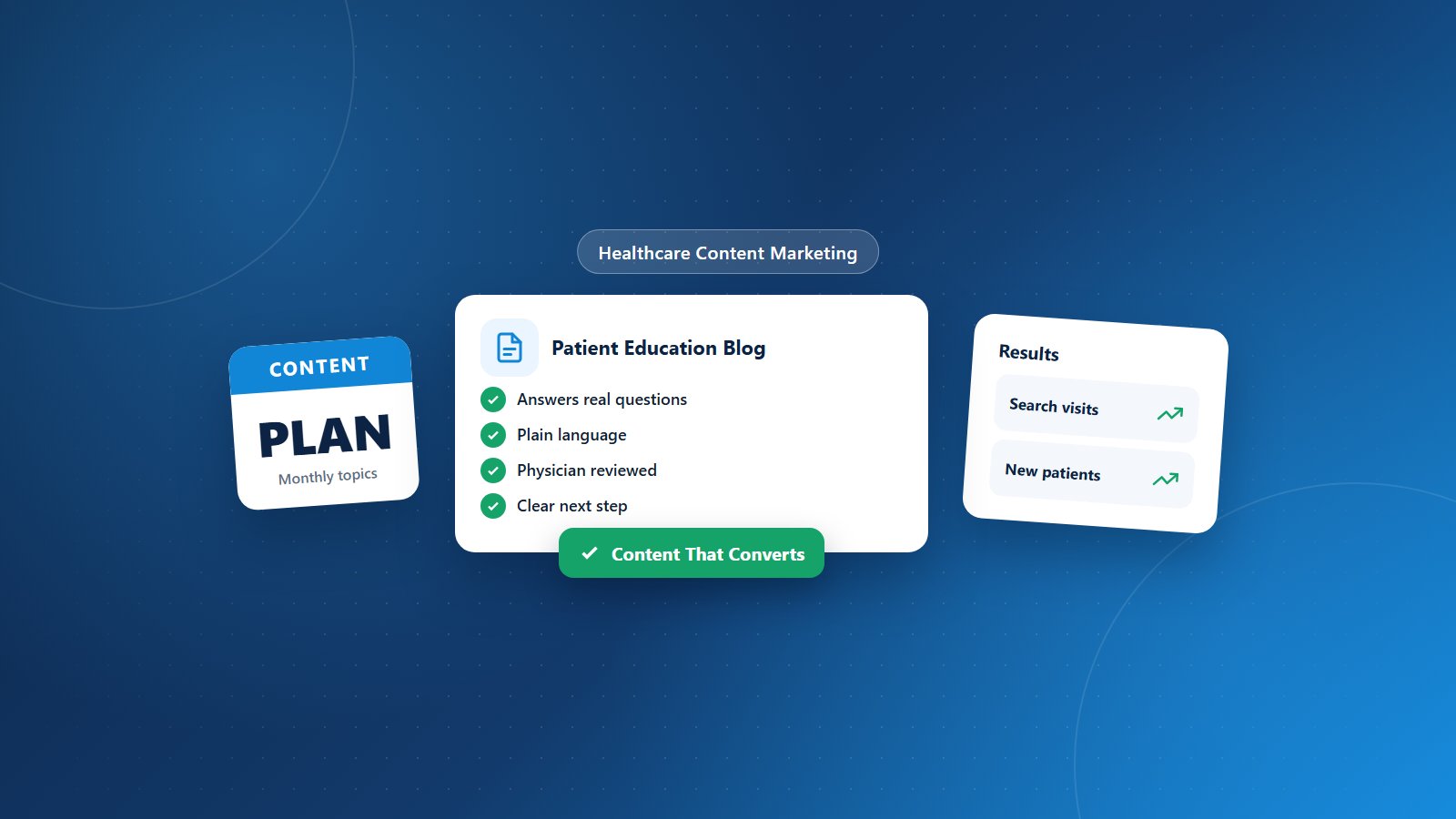
Patients search online for answers before they ever call a doctor. They want to understand symptoms, treatment options, what to expect at an appointment and how to manage their conditions. Practices that publish helpful, trustworthy content meet patients at that moment, building credibility and search visibility at the same time. That’s the power of healthcare content marketing.
Here’s how practice blogging attracts and converts new patients.
Why Content Marketing Works for Medical Practices
- Visibility: Helpful content helps your website appear for more patient searches.
- Trust: Clear, accurate information demonstrates expertise and builds confidence.
- Education: Informed patients arrive prepared and engaged.
- Longevity: A well-written article can attract visitors for years.
Step 1: Understand What Patients Ask
Start with questions your staff hear every day. What do patients ask about conditions, procedures, insurance, preparation or recovery? Each common question is a potential article.
Step 2: Plan Topics Around Your Services
Align content with the services you want to grow. A cardiology practice might write about heart health screenings; a pediatric practice about well-child visits and vaccines. Link each article to the related service page.
Step 3: Use a Content Calendar
Plan topics month by month around seasons and health awareness months, such as flu season, back-to-school, Heart Month or Diabetes Month. A calendar keeps publishing consistent.
Step 4: Write for Patients, Not Physicians
- Use plain language and short paragraphs.
- Explain medical terms when you use them.
- Use headings so readers can scan.
- Focus on practical information.
Step 5: Make Content Trustworthy
Have clinical content reviewed by a physician, keep it accurate and update it as needed. Include author or reviewer information when appropriate. Avoid exaggerated claims.
Step 6: Optimize for Search
Use the terms patients search for in titles, headings and naturally in the text. Write compelling meta descriptions and link related articles together. Read our medical SEO guide.
Step 7: Include a Clear Next Step
End every article with a helpful call to action, such as scheduling an appointment, calling the office or learning about a related service.
Step 8: Share Your Content
Promote articles through email newsletters, social media and your patient portal to extend their reach.
Step 9: Measure Results
Track page visits, time on page, search rankings and appointment requests from blog pages. Update older articles that perform well to keep them current.
Compliance Considerations
Avoid sharing patient stories or photos without written authorization, include disclaimers that content is educational and not a substitute for medical advice, and follow advertising rules for healthcare.
Content Marketing Support From PRCM
Physicians Revenue Cycle Management’s healthcare digital marketing services help practices plan and publish content that builds trust and attracts patients. Learn more about building an annual marketing plan.
Ready to turn your expertise into patient-attracting content? Let’s connect.