May is Older Americans Month, celebrating the contributions of older adults and encouraging healthy aging. For Medicare patients, the Annual Wellness Visit (AWV) is a valuable preventive service focused on creating and updating a personalized prevention plan. AWVs support early detection, care planning and patient engagement, but they’re also a frequent source of billing confusion and patient surprise bills.
Here are billing best practices for Annual Wellness Visits.
What Is an Annual Wellness Visit?
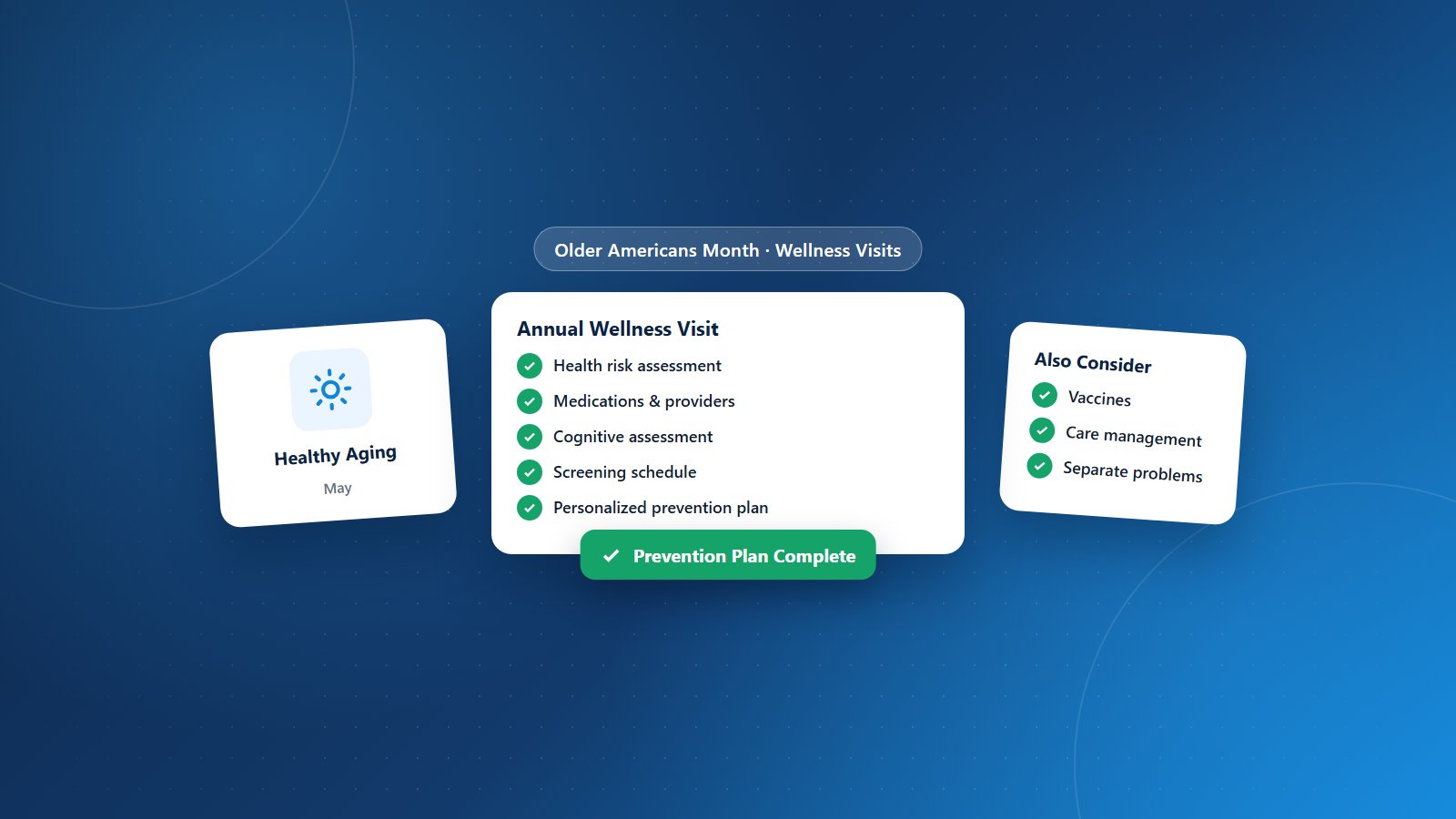
The AWV is a preventive visit for Medicare beneficiaries that focuses on health risk assessment, review of medical and family history, a list of current providers and medications, measurement of basic vitals, cognitive assessment, review of functional ability and safety, screening schedules and personalized health advice. It’s different from a comprehensive physical exam.
Best Practice 1: Distinguish AWV From a Physical
Patients often expect a “yearly physical.” The AWV generally doesn’t include a full head-to-toe exam or problem-focused care. Explain the difference when scheduling so expectations are clear.
Best Practice 2: Verify Eligibility and Timing
Medicare has rules about when patients are eligible for an initial AWV and subsequent AWVs, and about related preventive visits. Check the patient’s history before scheduling to avoid denials.
Best Practice 3: Complete All Required Elements
Use structured templates to capture every required component, including the health risk assessment and cognitive assessment. Missing elements can lead to denials on audit.
Best Practice 4: Handle Problem-Oriented Care Correctly
If a significant problem is addressed during the AWV, such as managing a chronic condition or evaluating a new symptom, a separate problem-oriented E/M service may be billable with appropriate documentation and modifier. Patients may owe cost sharing for that portion, so explain this when it happens. See our modifier 25 guide.
Best Practice 5: Bill Additional Preventive Services
Screenings, vaccines and certain counseling services provided during the AWV may be billed separately when requirements are met.
Best Practice 6: Use the AWV for Care Planning
The AWV is an ideal opportunity to identify patients who may benefit from chronic care management or remote patient monitoring and to begin those conversations.
Best Practice 7: Support Risk Adjustment Documentation
While the AWV focuses on prevention, it’s also a chance to review chronic conditions. Conditions should be documented accurately when evaluated. Learn more about risk adjustment documentation.
Best Practice 8: Use Staff Efficiently
Many AWV elements, such as the health risk assessment, can be completed by clinical staff under physician supervision, freeing physician time.
Best Practice 9: Track AWV Completion
Run reports of eligible Medicare patients who haven’t completed an AWV and conduct outreach. AWVs support quality measures and patient health.
AWV Billing Support From PRCM
Physicians Revenue Cycle Management helps primary care and geriatrics practices bill AWVs and related services accurately through our medical billing services.
This Older Americans Month, help your Medicare patients plan for healthy aging. Let’s connect.