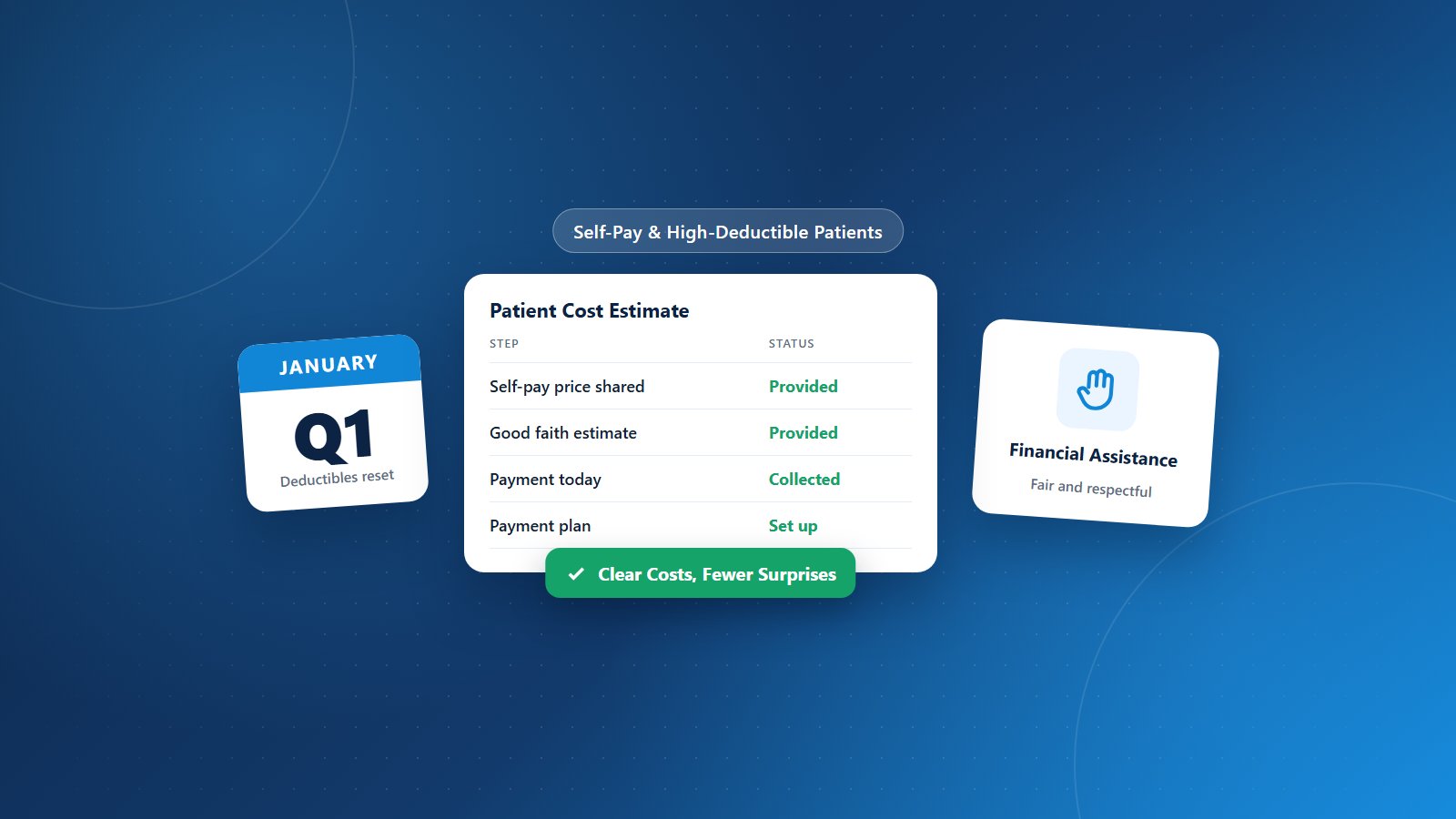
The start of the year brings a wave of patients paying more out of pocket. Some are uninsured or between coverage, while many more have high-deductible plans that reset in January. For practices, self-pay and high-deductible patients require a different approach than traditional insurance billing: clear expectations, transparent pricing and flexible payment options.
Here’s how to manage self-pay and high-deductible patients fairly and effectively.
Understand Your Patient Mix
Review how many patients are self-pay, have high-deductible plans or carry significant balances. Understanding the scope helps you design workflows and staffing.
1. Offer Transparent Self-Pay Pricing
Uninsured patients want to know what care will cost. Publish or provide clear self-pay prices for common services, and consider prompt-pay discounts where appropriate and compliant with your payer contracts and applicable rules.
2. Provide Good Faith Estimates
Uninsured and self-pay patients may be entitled to receive good faith estimates of expected charges for scheduled services. Build a process to provide accurate estimates in advance.
3. Verify High-Deductible Benefits
For insured patients, verify deductible status and cost sharing before each visit, especially early in the year.
4. Set Expectations Before the Visit
Share expected costs in appointment reminders and at check-in. Patients who know what to expect are more likely to pay.
5. Collect Deposits or Payments at Service
For self-pay visits, collect payment at the time of service. For high-deductible patients, collect known amounts and use card-on-file for balances after insurance processing.
6. Offer Payment Plans
Clear, written payment plans help patients manage larger balances. Automate payments where possible to reduce follow-up.
7. Screen for Coverage and Assistance
Some self-pay patients may qualify for Medicaid, marketplace coverage or financial assistance programs. Screening helps patients and improves collections.
8. Have a Financial Assistance Policy
A written policy for hardship discounts and assistance ensures fairness and consistency.
9. Communicate With Empathy
Financial conversations can be stressful. Train staff to listen, explain options and treat every patient with respect.
10. Follow a Consistent Collection Process
Use clear statements, reminder messages and defined timelines before balances move to further collection steps. Read about patient statements that get paid.
Patient Financial Support From PRCM
Physicians Revenue Cycle Management helps practices manage patient responsibility with eligibility verification, estimates, statements and payment plans through our medical billing services.
Seeing more self-pay and high-deductible balances? Let’s connect.