A confusing medical bill is one of the most frustrating experiences patients have with healthcare. When statements are cluttered with codes, unclear dates and unfamiliar terms, patients don’t know what they owe or why. Many call the office with questions, some delay payment and others never pay at all. Clear, patient-friendly statements speed up payments and improve the patient experience.
Here’s how to design medical statements that get paid.
Why Statement Design Matters
- Clear statements lead to faster payments.
- Fewer billing calls free up staff time.
- Patients trust practices that communicate transparently.
- Confusing bills often lead to complaints and negative reviews.
1. Put the Amount Due Front and Center
The amount the patient owes and the due date should be the most prominent information on the statement, impossible to miss.
2. Explain Charges in Plain Language
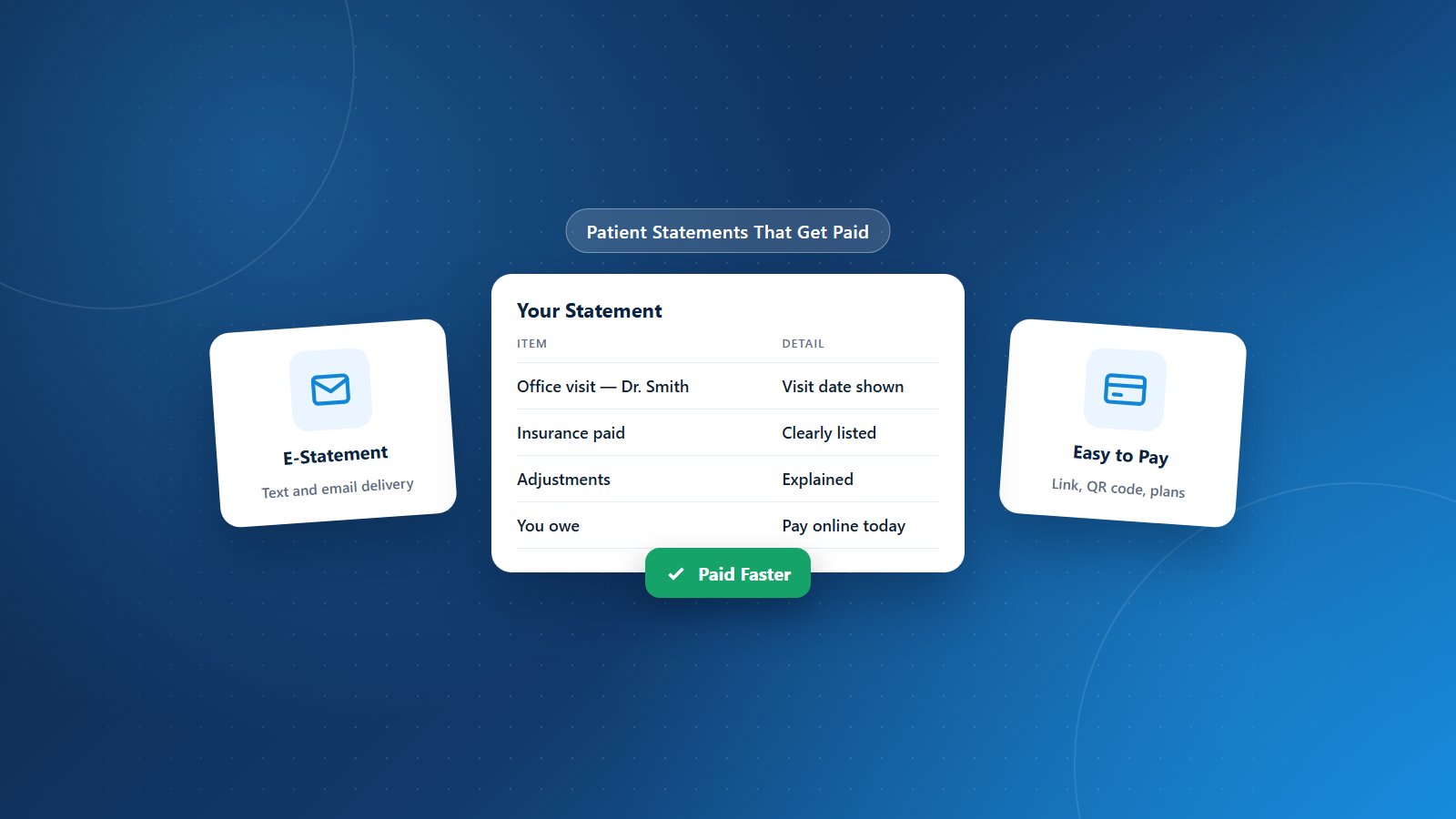
Replace or supplement codes with simple descriptions such as “Office visit with Dr. Smith” or “Lab tests.” Patients shouldn’t need medical billing knowledge to understand their bill.
3. Show What Insurance Paid
Clearly show the original charge, what insurance paid, any adjustments and the remaining patient responsibility. Patients want to know the bill reflects their coverage.
4. Include Dates and Provider Names
Dates of service and provider names help patients recognize the visit.
5. Make Payment Easy
- Include a website link or QR code for online payment.
- Offer text-to-pay and phone payment options.
- List accepted payment methods.
- Mention payment plan options.
6. Provide a Clear Contact for Questions
List a phone number, hours and online contact option for billing questions. Make sure calls are answered by knowledgeable staff.
7. Use Clean, Readable Design
Use clear fonts, white space and simple layouts. Avoid clutter and excessive fine print.
8. Send Statements Promptly
Send statements soon after insurance processes the claim, while the visit is still fresh in the patient’s mind.
9. Offer Electronic Statements
Many patients prefer email or text notifications with secure links to view and pay statements. Electronic statements arrive faster and cost less than paper.
10. Follow a Consistent Statement Cycle
Define how many statements are sent, at what intervals, and when reminder calls or messages occur. Consistency improves collections and sets clear expectations.
Combine Statements With Upfront Communication
The best statement is one that confirms what the patient already expected. Cost estimates and time-of-service collections reduce statement balances in the first place. Read about preparing your front desk for patient balances.
Patient Billing Support From PRCM
Physicians Revenue Cycle Management produces clear patient statements, supports patient billing inquiries and manages payment posting as part of our medical billing services.
Want statements patients actually understand and pay? Let’s connect.