Launching a remote patient monitoring (RPM) program is only the first step. The programs that succeed, clinically and financially, are the ones that enroll the right patients and keep them engaged month after month. When patients stop taking readings, care teams lose visibility, outcomes suffer and billing requirements aren’t met.
Here are strategies to grow your RPM program through effective patient enrollment and engagement.
Part 1: Enrolling the Right Patients
Use data to identify candidates
Run EHR reports to find patients with conditions that benefit from monitoring, such as uncontrolled hypertension, diabetes, heart failure or COPD, as well as patients with recent hospitalizations or medication changes.
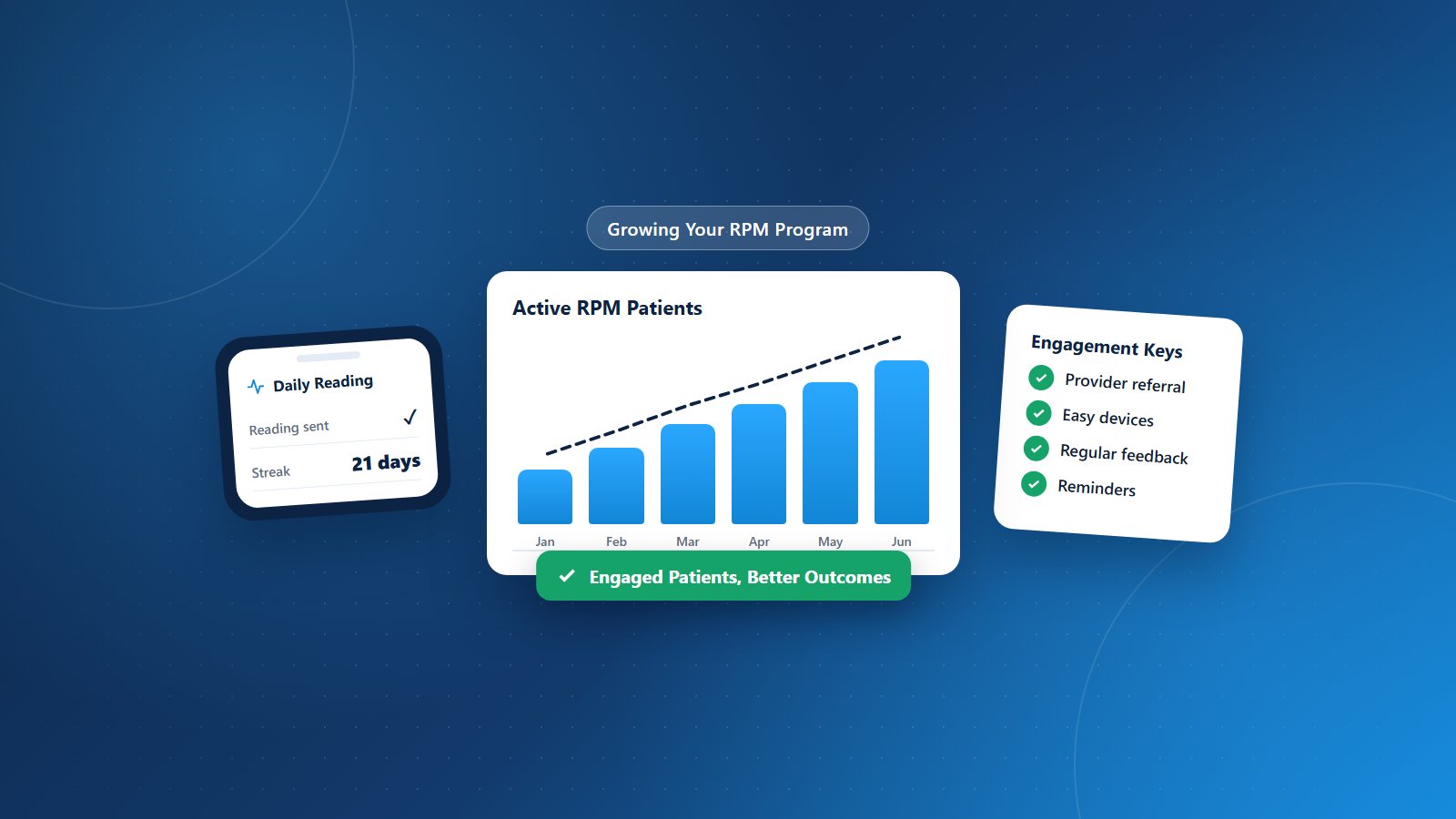
Let providers recommend the program
Patients are far more likely to enroll when their own physician recommends it. A brief, personal recommendation during a visit is the most effective enrollment tool.
Explain the “why” simply
Focus on benefits patients care about: fewer office trips, faster medication adjustments, peace of mind and a care team watching their health.
Address costs and concerns upfront
Explain any cost sharing, how devices work and how their data is protected. Transparency builds trust and prevents dropouts.
Make setup easy
Choose devices that work out of the box, ideally with cellular connectivity, and provide hands-on training or simple instructions.
Part 2: Keeping Patients Engaged
Set expectations
Explain how often to take readings and why consistency matters.
Close the loop
Patients stay engaged when they see their readings lead to action. Regular calls or messages discussing their data show the program is working.
Send reminders
Automated reminders help patients who forget readings. Outreach when readings stop can re-engage patients before they drop out.
Celebrate progress
Share improvements, such as better blood pressure averages or more stable glucose, to motivate patients.
Involve caregivers
Family members can help with devices and reminders, especially for older patients.
Personalize communication
Adjust frequency and channel (phone, text, portal) to each patient’s preference.
Part 3: Measuring Program Health
- Enrollment rate among eligible patients.
- Percentage of patients meeting monthly data requirements.
- Dropout rates and reasons.
- Clinical outcomes, such as blood pressure control.
- Program revenue and staff time.
Pair RPM With Care Management
Patients enrolled in chronic care management are often more engaged in RPM, because regular care manager contact reinforces the value of monitoring. Learn the basics in our RPM beginner’s guide.
Grow Your RPM Program With PRCM
Physicians Revenue Cycle Management helps practices enroll patients, manage devices, support monitoring and bill accurately through our remote patient monitoring services.
Want more patients engaged in your RPM program? Let’s connect.