Every year, a practice’s claims tell a story: which services were coded accurately, where denials clustered, which providers struggled with documentation and where revenue slipped away. A year-end coding review turns that story into lessons that improve accuracy and revenue in the new year.
Here’s how to conduct a year-end medical coding review and carry its lessons forward.
Step 1: Review Denial Patterns
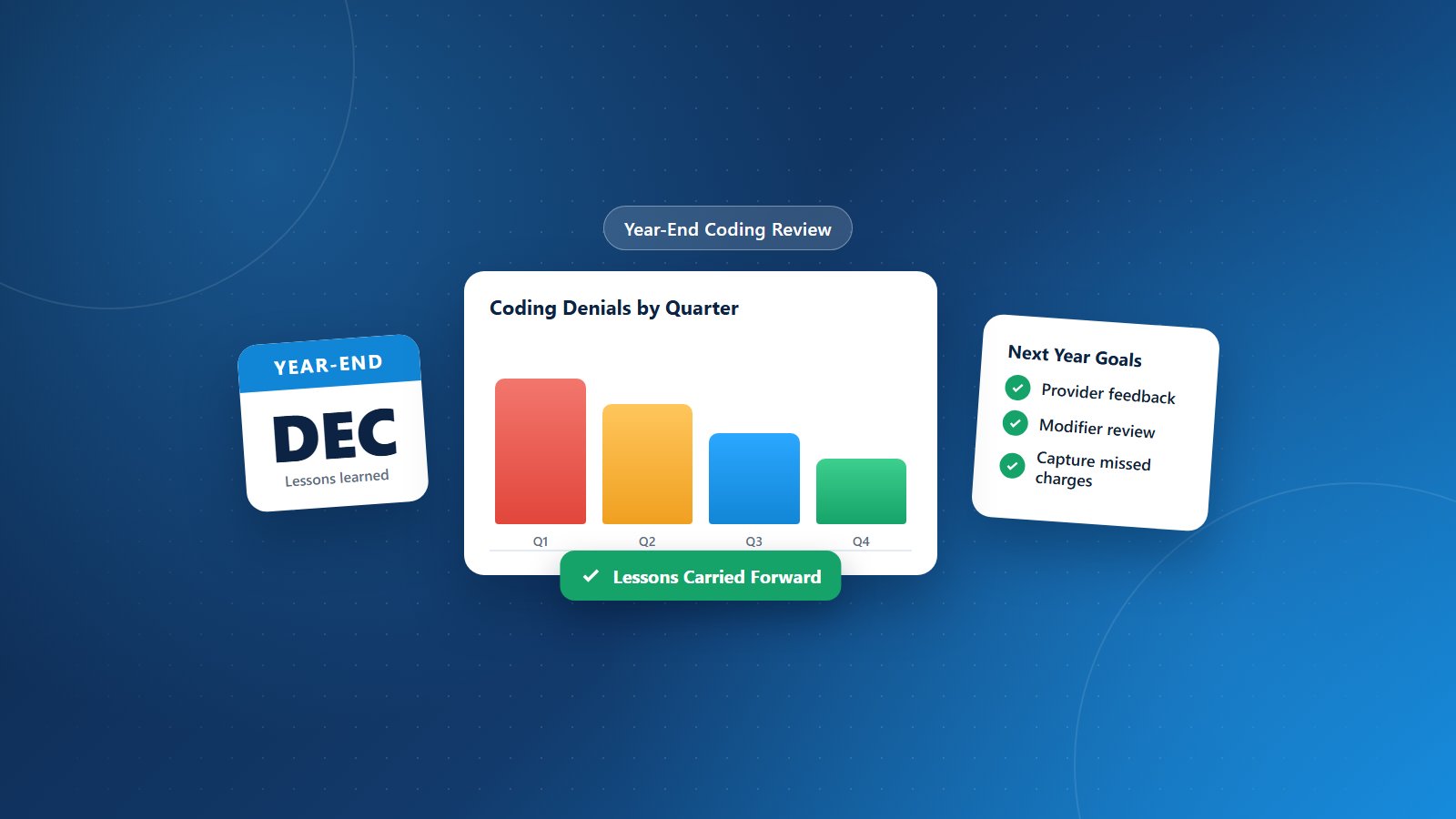
Pull a full-year report of denials by reason code, payer, provider and service. Coding-related denials, such as invalid codes, modifier issues, bundling edits and medical necessity, point to specific training needs.
Step 2: Analyze Code Distribution
Compare your E/M level distribution and high-volume procedure codes with prior years and specialty benchmarks. Significant shifts or outliers deserve review for both undercoding and overcoding.
Step 3: Review Modifier Usage
Modifiers are a common source of errors and audit attention. Review usage of frequently used modifiers by provider and service. Learn more in our modifier 25 guide.
Step 4: Sample Charts for Documentation Quality
Select a sample of encounters from each provider and compare documentation with the codes billed. Look for cloned notes, missing elements and documentation that doesn’t reflect the complexity of care.
Step 5: Look for Missed Charges
Compare services documented with services billed. Common misses include injections, supplies, care management time, screenings and add-on services.
Step 6: Review Payer-Specific Issues
Identify payers with unusual denial patterns or downcoding. These issues may require workflow changes, education or payer escalation.
Step 7: Check Readiness for Code Updates
Annual code updates take effect at the start of the year. Confirm systems, templates and training are ready. See our guide to preparing for CPT updates.
Step 8: Share Findings Constructively
Provide each provider with individualized feedback focused on improvement, not blame. Highlight what’s going well along with specific opportunities.
Step 9: Set Goals for the New Year
Turn findings into measurable goals, such as reducing coding-related denials, improving documentation for a specific service or increasing capture of care management time.
Step 10: Schedule Follow-Up Reviews
Plan quarterly or mid-year check-ins to confirm improvements are taking hold.
When to Bring in Outside Help
An independent reviewer adds objectivity and benchmarking. Read about internal vs. external coding audits.
Coding Review Support From PRCM
Physicians Revenue Cycle Management’s audit and coding services help practices review the year, educate providers and start the new year with stronger coding accuracy.
What did your coding tell you this year? Let’s connect.