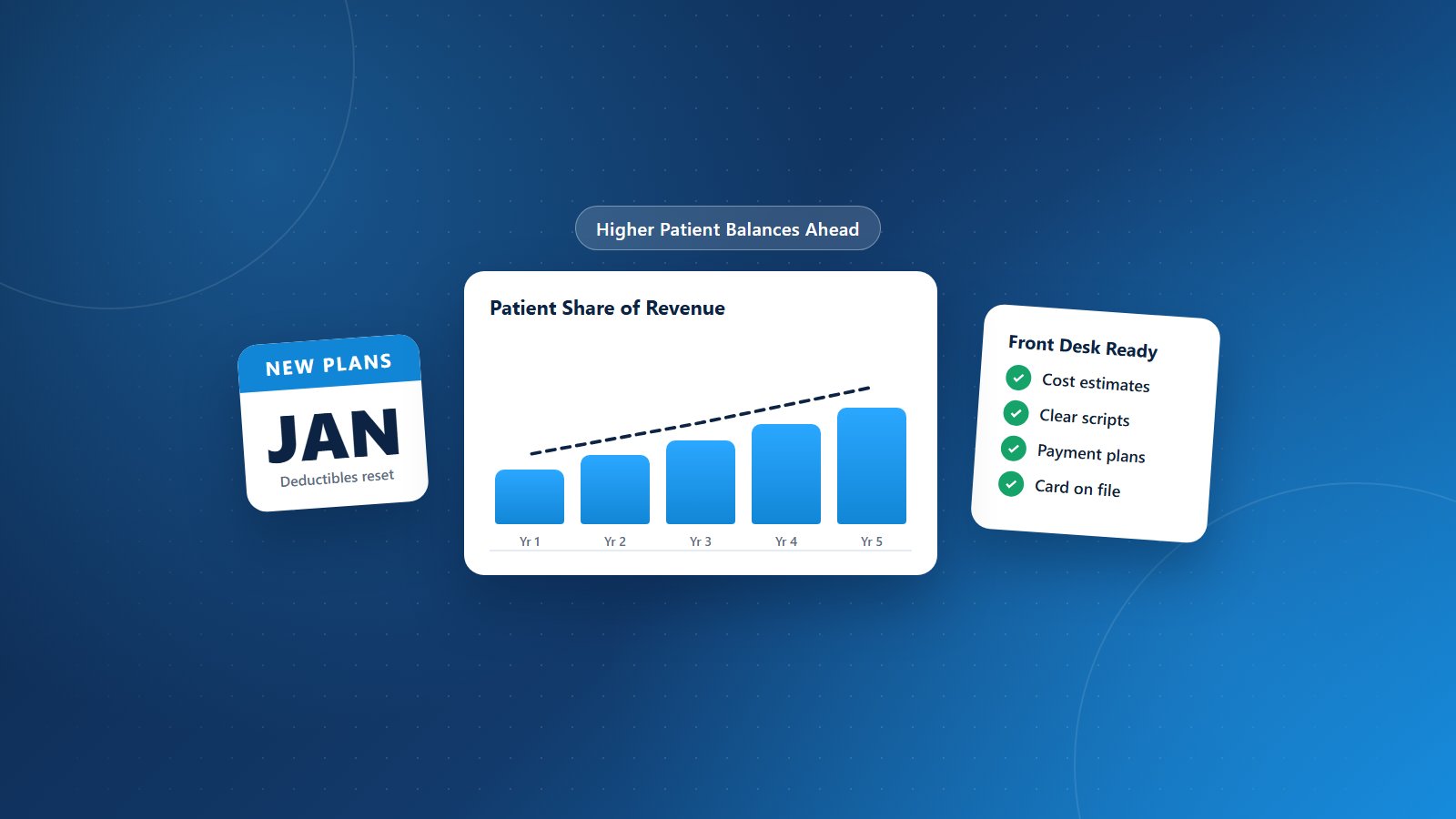
Patients are paying a larger share of their healthcare costs than ever before. High-deductible health plans, rising coinsurance and changes in coverage mean that patient balances make up a growing portion of practice revenue. As open enrollment approaches and patients choose plans for the coming year, practices should prepare their front desk for the reality of higher patient responsibility.
Here’s how to communicate costs clearly and collect patient balances effectively.
Why Patient Responsibility Is Growing
- More patients enrolled in high-deductible health plans.
- Higher copays and coinsurance in many plans.
- Patients changing plans during open enrollment to lower premiums in exchange for higher out-of-pocket costs.
- Coverage changes that leave some patients with less comprehensive benefits.
The Challenge for Practices
Patient balances are harder and more expensive to collect than insurance payments. Many patients are surprised by what they owe, and unpaid balances quickly become bad debt.
1. Train Staff on Benefits Basics
Front-desk staff should be able to explain deductibles, copays, coinsurance and out-of-pocket maximums in plain language. Confidence comes from understanding.
2. Verify Benefits Before Every Visit
Know each patient’s deductible status and cost-sharing before they arrive, especially early in the plan year.
3. Provide Cost Estimates
Share expected patient costs before or at check-in. Estimates reduce surprises and improve payment rates.
4. Use Clear Scripts
Simple, respectful language makes financial conversations routine: “Based on your plan, your estimated cost for today’s visit is this amount. How would you like to pay?”
5. Collect at Time of Service
Collect copays, known deductibles and prior balances at check-in. Read our guide to time of service collections.
6. Offer Flexible Payment Options
- Card-on-file programs for balances after insurance.
- Payment plans for larger balances.
- Online, text-to-pay and HSA/FSA payments.
7. Send Clear Statements Quickly
Easy-to-read statements sent promptly after insurance processing improve payment rates.
8. Have a Financial Assistance Process
Patients experiencing hardship need a respectful path forward. Clear financial assistance policies support access to care and fair collections.
9. Prepare for January
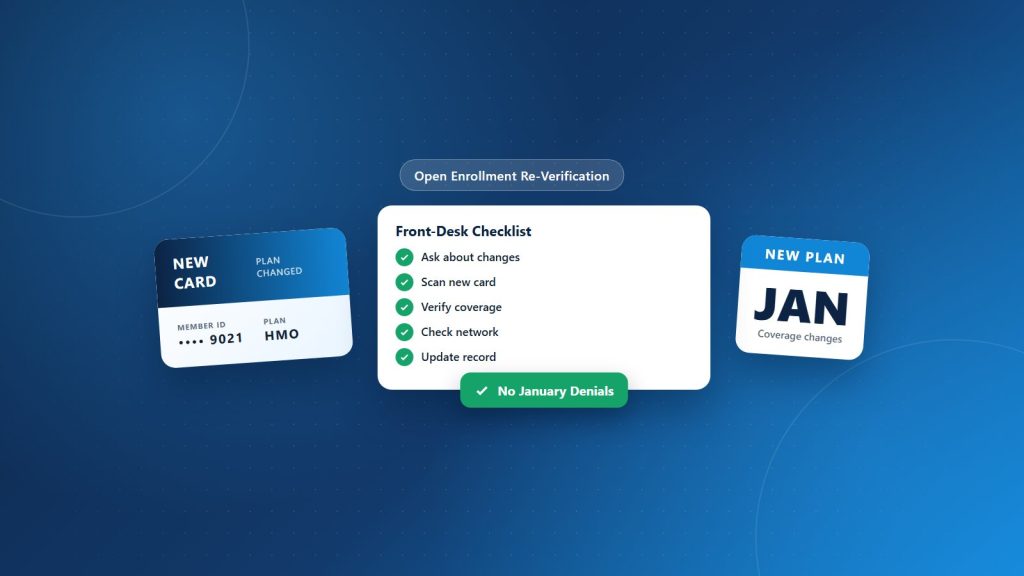
Patients who change plans during open enrollment will need eligibility re-verification and cost estimates when deductibles reset. Plan staffing and workflows for the January surge. See our Q1 patient collections strategies.
10. Measure Patient Collections
Track point-of-service collections, patient A/R aging and bad debt. Use the data to coach staff and refine processes.
Patient Collections Support From PRCM
Physicians Revenue Cycle Management helps practices manage patient responsibility with eligibility verification, estimates, statements, payment posting and follow-up through our medical billing services.
Is your front desk ready for higher patient balances? Let’s connect.