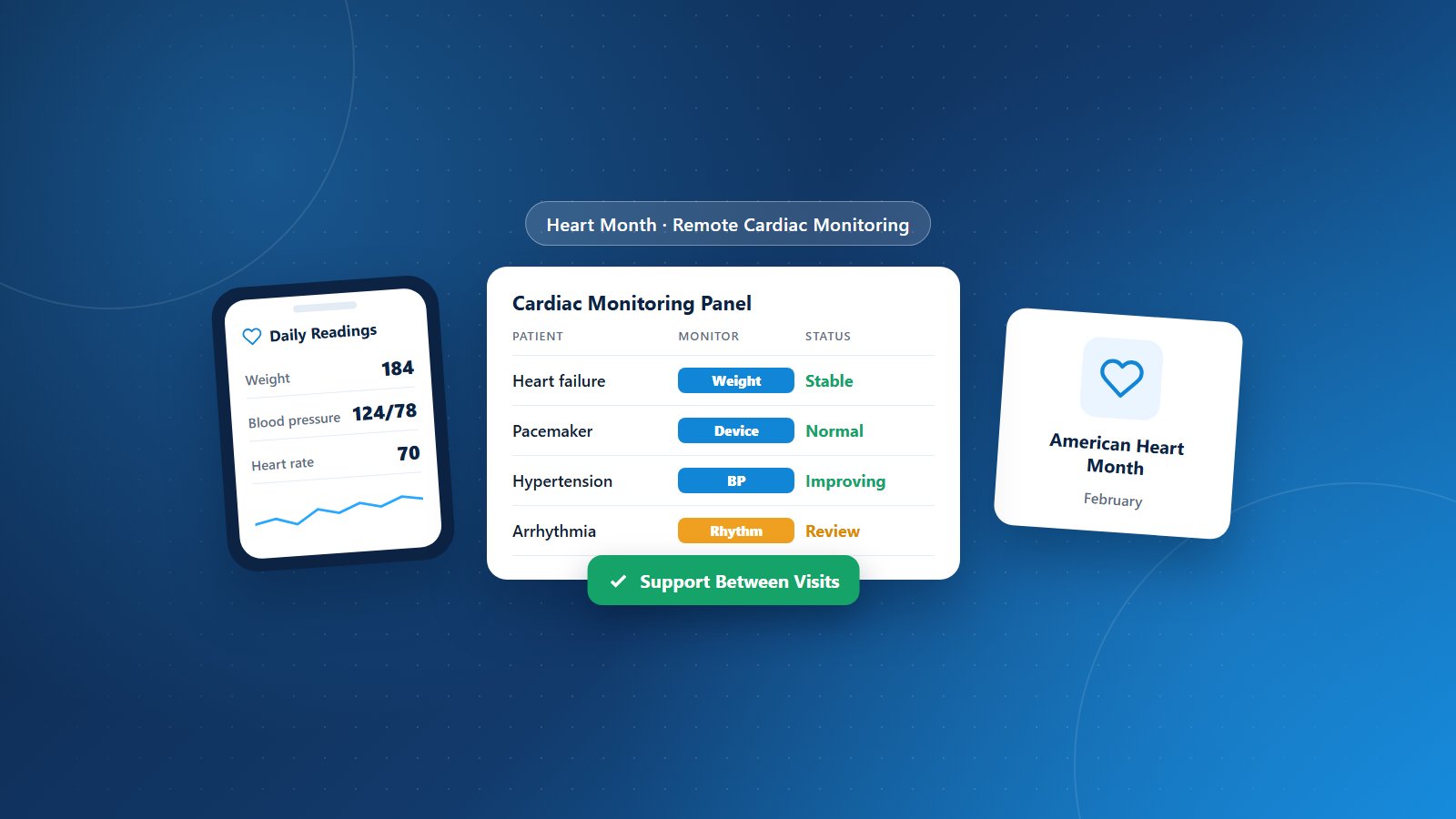
February is American Heart Month, a time to focus on preventing and managing cardiovascular disease. For cardiology practices, one of the most effective tools for supporting heart patients between visits is remote monitoring. Patients with heart failure, hypertension, arrhythmias and implanted cardiac devices can all benefit from regular data that reaches their care team without a trip to the office.
Here’s how cardiology practices can use remote cardiac monitoring to improve outcomes and build a sustainable program.
Types of Remote Cardiac Monitoring
Remote physiologic monitoring
Connected blood pressure cuffs, weight scales and pulse oximeters transmit readings from home. For heart failure patients, daily weights can reveal fluid retention days before symptoms become severe.
Implanted device monitoring
Pacemakers, implantable defibrillators, cardiac resynchronization devices and implantable loop recorders can transmit data remotely. Practices review device function, arrhythmia events and other parameters on a regular schedule.
Ambulatory rhythm monitoring
Wearable monitors capture heart rhythm over days or weeks to diagnose arrhythmias that don’t appear during office visits.
Clinical Benefits
- Earlier detection of heart failure decompensation through weight and vital sign trends.
- Better blood pressure control through home readings and timely medication adjustments.
- Prompt identification of arrhythmias and device issues.
- Fewer avoidable emergency visits and hospital readmissions.
- More engaged patients who understand their condition.
Practice Benefits
- More efficient follow-up for high-risk patients.
- Support for quality measures and value-based arrangements.
- Recurring, reimbursable services when requirements are met.
- Stronger patient relationships and retention.
Building a Remote Cardiac Monitoring Program
1. Identify the right patients
Prioritize patients with heart failure, recent hospitalizations, uncontrolled hypertension, new medications or implanted devices.
2. Set clear protocols
Define what readings or device alerts trigger outreach, who responds and how quickly. Heart failure protocols often focus on weight changes and symptoms.
3. Staff the program appropriately
Monitoring requires clinical staff time to review data and contact patients. Some practices use dedicated device clinic staff, while others partner with an RPM provider.
4. Educate patients
Teach patients how to use devices, when to take readings and when to call the office directly.
5. Document and bill correctly
Device monitoring and physiologic monitoring have distinct billing requirements for data collection, review frequency and documentation. Keep billing aligned with current payer rules.
Pairing Monitoring With Care Management
Many cardiac patients have multiple chronic conditions. Combining remote monitoring with chronic care management provides both data and care coordination. For billing tips specific to cardiology, read our guide to common cardiology billing denials.
Cardiac Monitoring Support From PRCM
Physicians Revenue Cycle Management helps cardiology practices implement remote patient monitoring programs with technology, monitoring workflows and compliant billing.
This Heart Month, give your patients support between visits. Let’s connect.